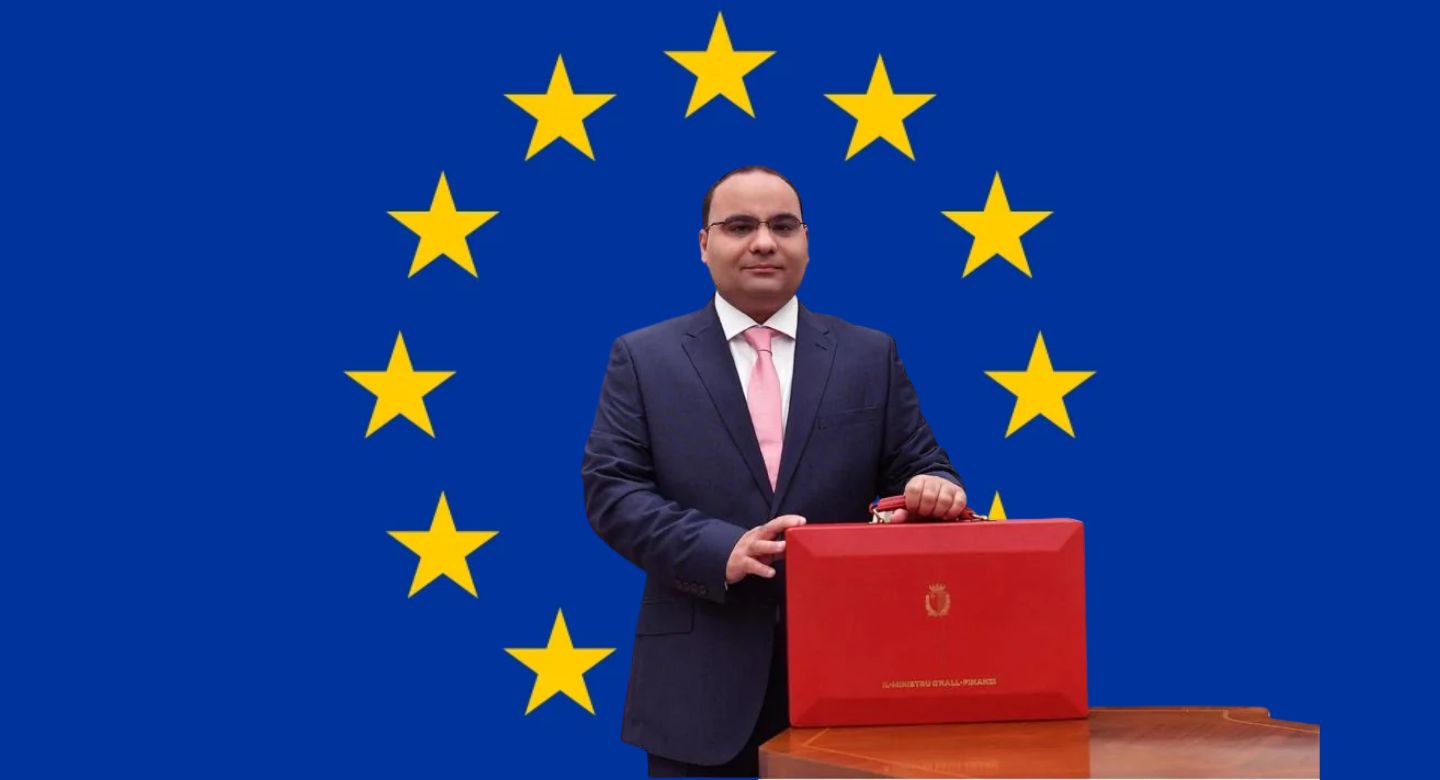

The European Commission expects Malta to run a bigger deficit than Finance Minister Clyde Caruana projected in his October budget, citing fading passport and residency scheme revenue and higher spending on energy subsidies and the public payroll.
Brussels forecasts a deficit of 2.8% of GDP this year, up from 2.1% in 2025, and expects it to stay at that level through 2028.
Caruana told parliament the deficit would be 2.6% this year and next. The government’s budget figures put it at 2.2% in 2028, when the gap between the two forecasts widens to 0.6 percentage points.
Caruana had originally forecast a 2.8% deficit for 2026. He lowered that estimate in his latest budget after stronger-than-expected revenue helped Malta close 2025 with a smaller deficit than he had projected. Brussels now puts this year’s deficit back at his original figure and sees no narrowing through 2028 under current policies.
The Commission links this year’s widening deficit to income tax cuts, the phasing out of revenue from citizenship and residency schemes, and rising expenditure on subsidies, public sector pay, goods and services. It expects government consumption, adjusted for inflation, to rise by 7.5% this year, up from 4.4% in 2025.
Next year, higher tourism taxes and work permit fees are expected to help offset rising spending, including the new €1,000 annual super bonus payment to eligible workers. Caruana told parliament that energy subsidies alone would account for about half of next year’s deficit.
Brussels identifies the government’s pledge to keep retail energy prices unchanged as a significant uncertainty.
Its 2028 forecast assumes the government will absorb the fuel price impact of the EU’s new carbon pricing system. The Commission projects that public debt will rise from 46.3% of GDP in 2025 to 47.2% by 2028, even as the economy continues to grow.
Sign up to our newsletter Stay in the know
"*" indicates required fields
MHRA’s eco-tax contractor linked to £594,521 UK collapse


Rota not impressed by Bonett’s cycling strategy

Received a tax bill? It pays to challenge it…

Former President gives disputed Gżira padel courts a publicity boost for charity
Tags
#Clyde Caruana
#debt
#deficit
Other News
MHRA’s eco-tax contractor linked to £594,521 UK collapse
Rota not impressed by Bonett’s cycling strategy
Received a tax bill? It pays to challenge it…
Former President gives disputed Gżira padel courts a publicity boost for charity

Keith Schembri gets green light for new BOV account

Budget TCN measures to increase Malta’s cost of living – EU warns
Spanish fuel fraud suspect Rodrick Grech was sanctioned by US over Libyan fuel smuggling
PN demands publication of secret MHRA eco-tax deal
Townsquare’s €103.5 million price tag revealed as Stivala launches bond offer
Arts Ministry in limbo five months after Agius Galea took office

Bonnet and Kurt Farrugia break recruitment record at Transport Malta
