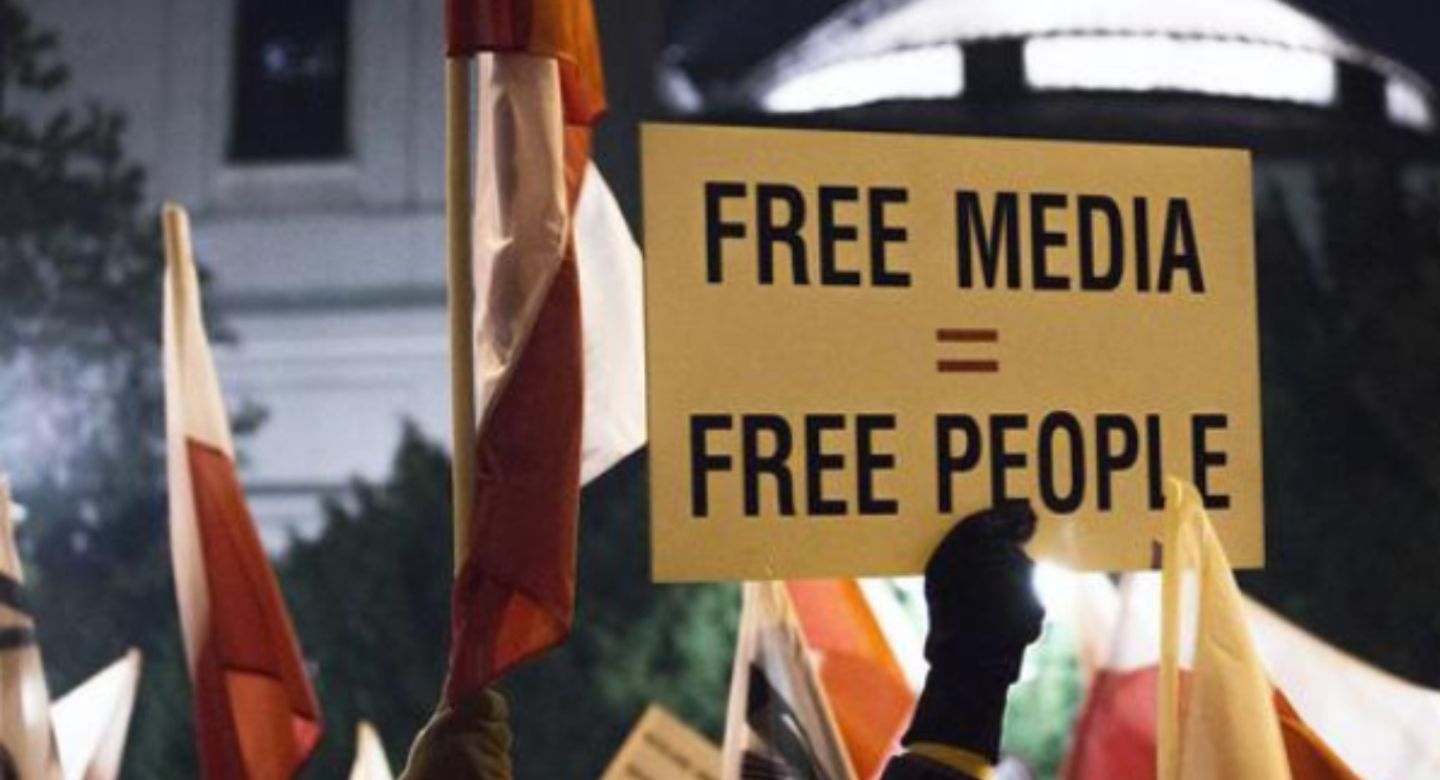

The question is not whether journalists should have standards. They should. Nor is it whether journalists should be accountable for what they publish. They already are. The question is who gets to decide who is entitled to perform journalism in the first place.
You could argue it would protect the public from possible propaganda and misinformation from people like Ricky, who is ironically defending the call for warrants. Yet he is paid by the State (taxpayers) to drive government messages.
Warrants, in this context, are dangerous because those who decide (and we all know how that works in Malta) may rule that Ricky and Wenzu are good to go, but those holding government to account are a nuisance.
The press association has opposed it, saying, “Warrants make journalism far less accessible as a job and would lead to a pool of journalists who write and think the same, to the detriment of the sector and our country’s democracy.”
Once a warrant becomes a condition for practising journalism, someone has to issue it. Someone has to decide who qualifies. Someone has to decide whether a person remains fit to hold it. And someone has to have the power to refuse or withdraw it.
That is a power the state should never possess over the press.
The idea was already being discussed in Parliament in 2012, when then-Nationalist MP Franco Debono floated a system requiring journalists to hold a warrant to practise. It resurfaced during the 2017 debate over a new Media and Defamation Act, which proposed requiring news and current affairs websites to register with a government Media Registrar. In July 2020, Labour MP Jean Claude Micallef explicitly called for journalists to require a warrant to practise, arguing that this would help raise standards in journalism.
The irony is difficult to miss.
The 2020 proposal emerged just three years after Daphne Caruana Galizia was assassinated while investigating corruption involving political and business figures. Malta is hardly an obvious place in which to give the political establishment another mechanism for deciding who could legitimately work as a journalist.
The fundamental problem with licensing journalism does not disappear because the people designing the licence are well-intentioned. It is precisely the existence of the power that is dangerous. International press freedom standards are clear on this point.
ARTICLE 19, the international freedom of expression organisation, has examined journalist licensing schemes specifically. Its conclusion is that requiring media workers to obtain official permission before working can become a political tool used to prevent critical or independent journalists from publishing. It considers such licensing schemes incompatible with the right to freedom of expression because the right to impart information through the media belongs to everyone, not only those who satisfy a government-approved definition of a journalist.
The Council of Europe takes a similarly cautious position. Its recommendation on the protection of journalism says accreditation systems should facilitate journalism rather than restrict it, and explicitly states that the exercise of journalism and journalistic freedoms should not depend on accreditation.
There is a reason for this.
Journalism does not happen only inside newsrooms.
A whistleblower may publish evidence. An academic may uncover wrongdoing and publish it independently. A local resident may document abuse by a public authority. A freelancer may spend months investigating corruption without belonging to a media organisation. A new publication may be established tomorrow by people who do not yet have years of experience but whose reporting may nevertheless expose something the established media missed.
Who decides whether they are journalists?
And what happens when their reporting embarrasses the government?
The answer cannot be that the government decides whether they are sufficiently professional to continue.
The problem becomes even more acute in Malta because the state itself is frequently the subject of investigative journalism.
Reporters Without Borders currently ranks Malta 67th out of 180 countries in its 2026 World Press Freedom Index. Its assessment says journalists operate in a highly polarised environment heavily influenced by political parties. It notes that the ruling party exerts strong influence over the public broadcaster and uses state advertising as a source of pressure, while journalists regarded as hostile can be sidelined or targeted. RSF also notes that journalists already require a government-issued access card to cover government events and press conferences.
That is the environment into which a warrant system would be introduced.
International organisations have spent years warning Malta that the state has failed to create a sufficiently safe and independent environment for investigative journalism. A joint mission by ARTICLE 19, the Committee to Protect Journalists, the European Centre for Press and Media Freedom, the European Federation of Journalists and RSF returned to Malta in 2021 specifically to press for implementation of the recommendations of the Daphne Caruana Galizia public inquiry and broader reforms to establish a safe and enabling environment for journalists.
The public inquiry found that the Maltese State bore responsibility for creating an atmosphere of impunity surrounding Daphne’s assassination. Five years after its report was delivered, most of its recommendations remained outstanding.
If the objective is better journalism, Malta has plenty of options that do not involve licensing speech.
Whenever journalism has been under pressure, the proposed solution has repeatedly been to regulate journalists rather than the forces trying to silence them.
The European Commission’s assessments have recorded problems with access to information, noting that journalists routinely encountered refusals, delays and failures to respond to information requests. Its 2025 rule of law report says, “This deliberate foot-dragging reveals a government more interested in protecting its own interests than safeguarding the fundamental democratic principle of press freedom.”
The answer to poor journalism is not a state-approved class of journalists. The most uncomfortable journalist in a democracy is often precisely the one who would never receive the establishment’s approval.
Daphne was not dangerous because she lacked professional credentials. She was dangerous to powerful people because she kept asking questions, following money, naming names and publishing information that those people did not want published.
That is what investigative journalism is supposed to do.
A warrant system creates a subtle but profound reversal of the relationship between the state and the press. Instead of journalists being free to scrutinise those who exercise power, those in power gain a role in deciding who may legitimately scrutinise them.
Imagine a government-controlled or politically influenced authority refusing a warrant to an investigative reporter on the grounds of inadequate professional qualifications. Imagine a warrant being suspended while a journalist is facing a politically sensitive complaint. Imagine an independent journalist being told that without a warrant, their investigation cannot be treated as legitimate journalism.
Even if none of those things happened, the possibility would alter behaviour. The journalist would know that the right to continue working depended on somebody else’s approval.
There is an even broader point.
The public does not need protection from journalism. It needs protection from censorship, propaganda, disinformation and the abuse of power.
Those problems are not solved by restricting who can publish. They are solved by more journalism: more scrutiny, more competing voices, better verification, greater transparency and stronger editorial standards.
And where journalism is wrong, the answer is more speech, corrections and proportionate legal remedies, not permission slips.
Malta has already seen what happens when powerful interests treat critical journalism as an enemy to be neutralised. The assassination of Daphne was the most catastrophic expression of that culture. The subsequent public inquiry found that the state itself had helped create the conditions in which such impunity could develop.
Against that background, the political class should be exceptionally wary of proposing new mechanisms capable of determining who is entitled to practise journalism.
There is nothing wrong with wanting better journalists. There is everything wrong with giving anyone the power to decide who is allowed to b e one.
A free press does not need a warrant to speak truth to power. Power should need to learn to withstand scrutiny.
Sign up to our newsletter Stay in the know
"*" indicates required fields

Democracy is not a bargaining chip
Film Commissioner does not even bother to respect FOI deadlines
Malta’s law and order meltdown
The PN’s theatre of the absurd
Tags
#freedom of speech
#journalist warrants
#Malta
#press freedom
#Ricky
Other News
Democracy is not a bargaining chip
Film Commissioner does not even bother to respect FOI deadlines
Malta’s law and order meltdown
The PN’s theatre of the absurd
The PN’s gag order is a symptom of a party afraid of its own voice
European Commission’s rule of law report is no cause for complacency
The PN’s moment of reckoning
Robert Abela plays judge and jury as Malta preaches rule of law abroad

Criminally charged, politically rewarded: Ronald Mizzi is back
Institutions be damned: prime minister won’t apologise
From outspoken to out of line: Alex Borg’s ethics breach

ANOTHER BIG BROTHER PLOY BY LABOUR’S DICTATORIAL MINDS!