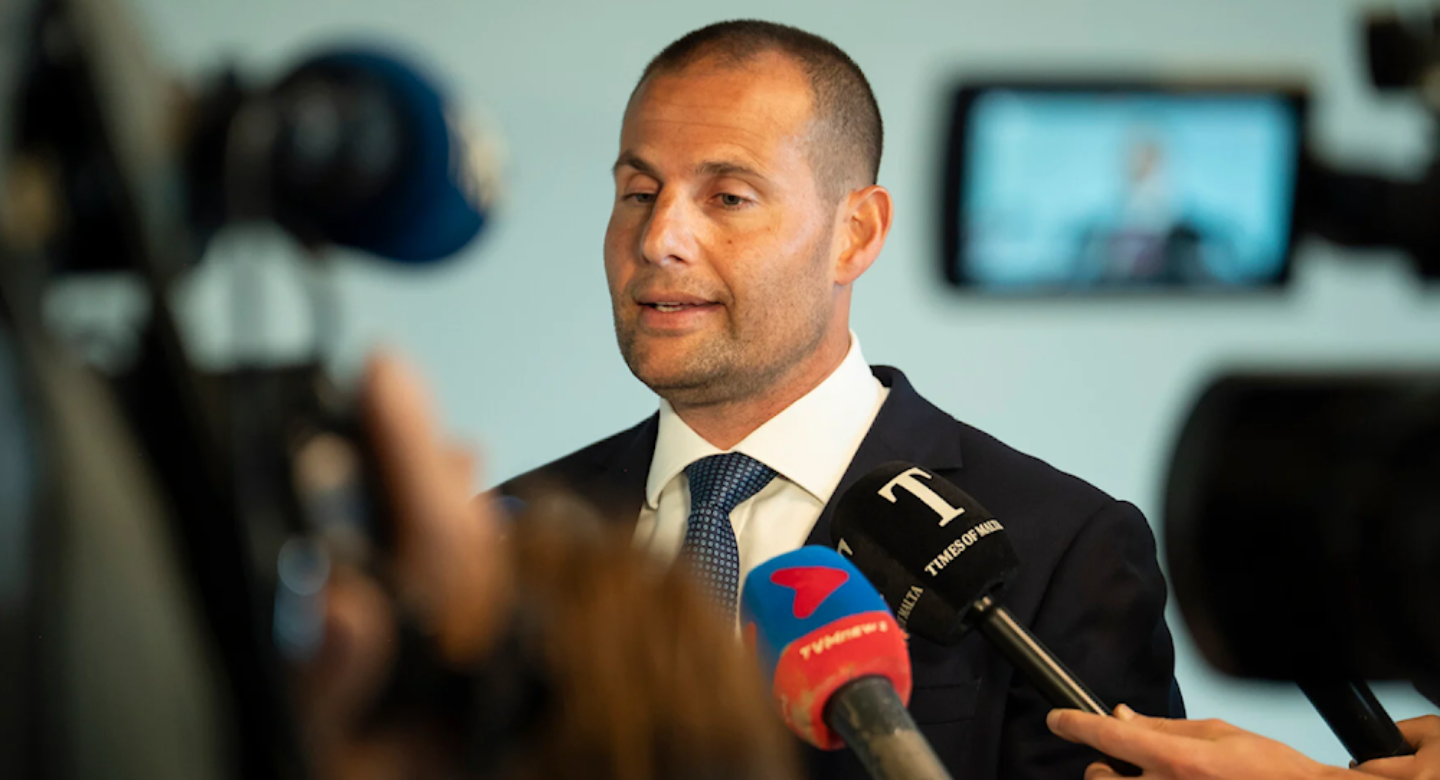

Malta has retained its position in the latest World Press Freedom Index published by Reporters Without Borders (RSF), ranking 67th globally for the second consecutive year.
The country continues to lag behind several nations with fewer resources or more complex political environments, including Liberia (58), Ukraine (55), Gabon (43), and Poland (27).
At the top of the index are Norway, followed by the Netherlands, Estonia, Denmark, Sweden, Finland, Ireland, Switzerland, Luxembourg and Portugal.

RSF’s report highlights Malta’s persistently low ranking, pointing to shortcomings in the application of European Union law. Although press freedom and access to reliable information are enshrined in the European Media Freedom Act (EMFA), which came into force in August 2025, Malta is among a number of EU member states failing to fully comply with its provisions.
In particular, the report raises concerns about the independence of public service media. In Malta, the national broadcaster PBS has long faced criticism over perceived political influence, lack of editorial autonomy, and imbalanced coverage.
Concerns about PBS have repeatedly centred on its governance structure, where key appointments, including senior management and editorial leadership, are effectively controlled by the government of the day. Media analysts and civil society organisations have argued that this creates a systemic conflict of interest, leading to cautious or selectively framed reporting on politically sensitive issues.
Allegations of disproportionate coverage favouring government activity, limited scrutiny of public officials, and the marginalisation of opposition voices have further fuelled claims that the broadcaster falls short of the editorial independence standards expected of a public service media organisation under EU norms.
RSF notes that Malta is among several countries, including Bulgaria (71), Italy (56), Slovakia (37), France (25), Lithuania (15) and Czechia (11), where public service media independence is under strain. Meanwhile, Estonia (3), despite also facing pressures on its public broadcaster, has been overtaken within the EU by the Netherlands (2).
The report also singles out Hungary (74), where the outgoing government has refused to implement the EMFA and has been accused of using regulatory tools to harass journalists and politicise media oversight. Hungary ranks among the lowest-performing EU countries, alongside Cyprus (80) and Greece (86), where RSF says media landscapes are increasingly shaped by oligarchic interests and threats to journalists’ safety.
Globally, the legal environment for journalism has deteriorated most sharply among the five indicators used by RSF – economic, legal, security, political and social. The organisation notes a broader decline across Europe and Central Asia, warning that legislation is increasingly being used to serve those in power rather than protect the public’s right to information.
For the first time in the Index’s history, more than half of the 180 countries assessed fall into the “difficult” or “very serious” categories for press freedom. RSF reports that the global average score is now at its lowest point in 25 years, with increasingly restrictive laws steadily eroding journalistic freedoms, even in democratic states.
The Americas have also seen notable declines, with the United States dropping seven places and several Latin American countries experiencing worsening violence and repression against journalists.
Anne Bocandé, RSF’s Editorial Director, said the report served as both a retrospective and a warning for the future.
“By providing a retrospective of the past 25 years, RSF isn’t just looking back; the NGO is looking squarely to the future with a simple question in mind: How much longer are we going to tolerate the stifling of journalism, the systematic obstruction of journalists and the continued erosion of press freedom?” she said.
Bocandé added that the actors behind this decline are increasingly visible. “Authoritarian states, complicit and incompetent political powers, predatory economic actors and under-regulated platforms are directly and overwhelmingly responsible for the global decline in press freedom. Given this context, inaction is a form of complicity.”
She stressed the need for stronger protections for journalists, including measures to end the criminalisation of journalism through the misuse of national security laws and strategic lawsuits against public participation (SLAPPs).
“Current protection mechanisms are not strong enough; international law is being undermined, and impunity is rife. We need firm guarantees and meaningful sanctions. The ball is in the court of democracies and their citizens. It is up to them to stand in the way of those who seek to silence the press. The spread of authoritarianism isn’t inevitable,” she said.
The Shift’s founder and editor is RSF’s correspondent in Malta.


Sign up to our newsletter Stay in the know
"*" indicates required fields

Clyde Caruana livid as Lydia crosses the line


Minister ordered to appoint Luke Dalli as PBS deputy chairman


Kurt Farrugia ‘forgot’ to publish direct orders

Malta increases its dependency on imported electricity as population surges
Tags
#EMFA
#protection for journalists
#public broadcaster
#Reporters Without Borders
#SLAPP
#World Press Freedom Index 2026
Other News
Clyde Caruana livid as Lydia crosses the line
Minister ordered to appoint Luke Dalli as PBS deputy chairman
Kurt Farrugia ‘forgot’ to publish direct orders
Malta increases its dependency on imported electricity as population surges

Turkish bank fails to lift €25 million security tied to Shoreline’s dispute

Controversial crematorium is in John Dalli’s ‘back garden’ – ERA missing in action

Doctors demand halt to health centre testing before further talks

Malta last in EU Parliament attendance rankings
One in four licensed short lets concentrated in St Paul’s Bay and Sliema

Bonnici hails progress at housing project caught in crisis that sank Galdes

Employers slam Clyde Caruana’s cheap talk

Come on shift. See the bright side. How many countries come after place 67???