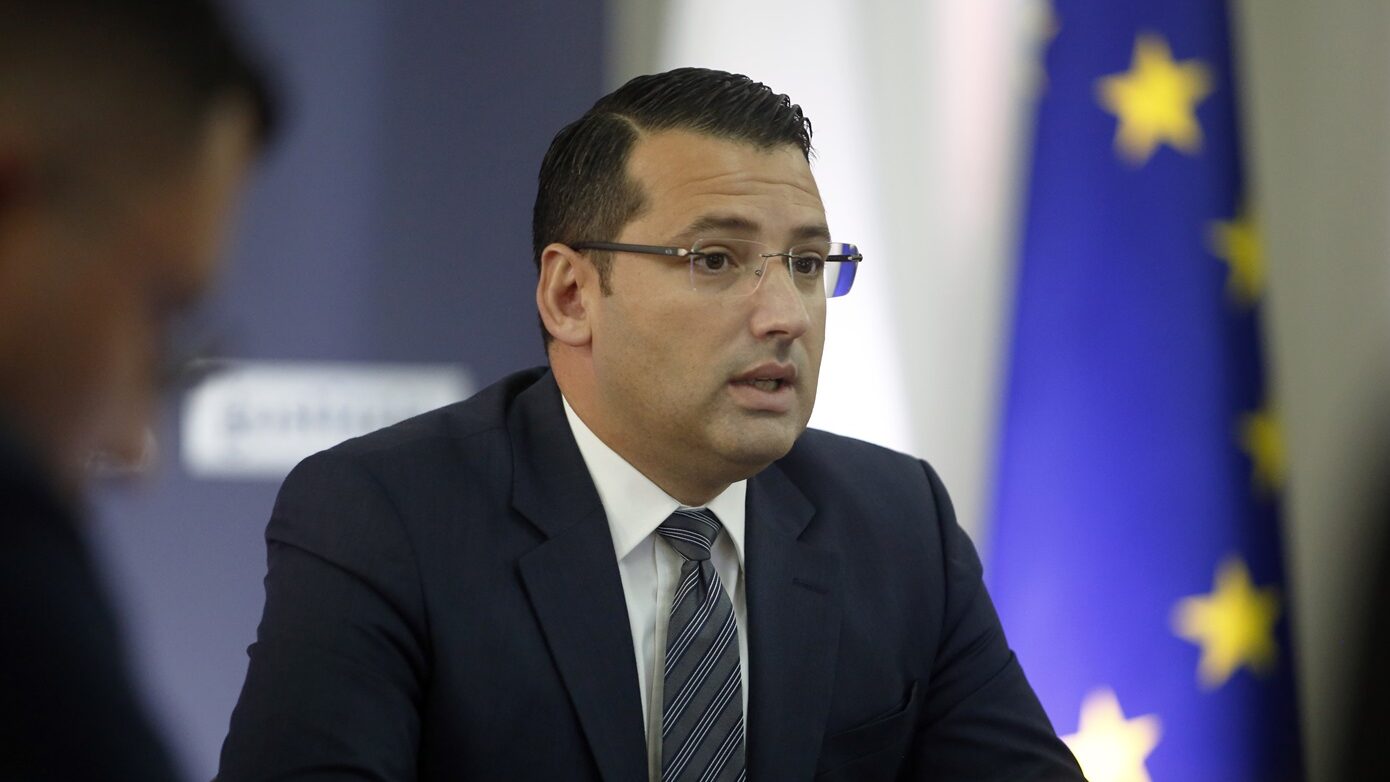

Justice Minister Jonathan Attard was quick to describe the latest Rule of Law Report from the European Commission as a “positive” for Malta. To trumpet the report as a victory while brushing aside its substantive criticisms is not only misleading — it’s dangerous.
The 2025 Rule of Law Report acknowledges progress, yes. Malta has made strides in reforming its judiciary and enhancing the efficiency of its justice system. These are real steps forward that should be encouraged.
Yet Attard’s glossed-over summary, as announced by the DOI, conveniently omits the far more troubling aspects of the Commission’s findings — particularly when it comes to media freedom and public accountability.
The report raises alarms about the safety of journalists, access to information, and the overall state of the media environment. Access to information remains a real problem, with journalists having to fight to defend Freedom of Information requests.
The Shift is at the forefront of this battle because we refuse to take the government’s word as a narrative for a story – we want the documents, we want proof of payment, we want to know what the real deal is. We are blocked at every stage, and we fight back for your right to know.
Malta continues to grapple with the chilling legacy of Daphne Caruana Galizia’s assassination. While legislative changes have been made, their implementation remains incomplete and insufficient.
2025 Rule of Law Report on #Malta: No progress on the public inquiry recommendations into Daphne’s assassination. No progress on high level corruption convictions. No progress on protecting journalists.
For @MaltaGov to welcome such an indictment is astounding ineptitude.
— David Casa (@DavidCasaMEP) July 8, 2025
The government keeps patting itself on the back that it was the ‘first to introduce anti-SLAPP legislation’, ignoring international criticism that the law is far from what is needed.
Meanwhile, the recommendations of the public inquiry into Caruana Galizia’s assassination remain unimplemented despite them being crucial for a healthy media environment in the country.
The Commission also slams the management of the public broadcaster, which has been reduced to a propaganda arm of the party in government.
The Commission notes concerns about “the effective enforcement of media pluralism and journalist protection”, and recommends further safeguards to ensure that journalism can be practiced freely and without intimidation.
“No progress in adopting legislative and other safeguards to improve the working environment of journalists and limited progress on access to official documents, taking into account European standards on the protection of journalists and on access to official documents,” the EC report noted.
And yet, in Attard’s public response, there was little to no mention of these pressing concerns. This omission speaks volumes. A government that claims to be committed to the rule of law cannot cherry-pick praise and ignore criticism — especially not when that criticism touches the core of a functioning democracy.
Media freedom is not a footnote. It is a cornerstone of the rule of law. When journalists are harassed, silenced, or undermined, it erodes public trust and weakens democratic institutions.
The Commission’s recommendations are not abstract ideals; they are urgent calls to action. For Attard to sidestep them is a disservice to both the Maltese public and the European values we are supposed to uphold.
Progress should be acknowledged — but never weaponised to deflect scrutiny. The rule of law is not a PR achievement. It is a continuous, often uncomfortable, process of self-correction.
Our political leaders would do well to embrace that discomfort, rather than paper over it with premature self-congratulation.
You can read the Commission’s report here.
Sign up to our newsletter Stay in the know
"*" indicates required fields

Ricky wants journalist warrants: Where would that leave him?

Democracy is not a bargaining chip
Film Commissioner does not even bother to respect FOI deadlines

Malta’s law and order meltdown
Tags
#European Commission report 2025
#justice
#media freedom
#Rule of Law
Other News
Ricky wants journalist warrants: Where would that leave him?
Democracy is not a bargaining chip
Film Commissioner does not even bother to respect FOI deadlines
Malta’s law and order meltdown

The PN’s theatre of the absurd
The PN’s gag order is a symptom of a party afraid of its own voice
The PN’s moment of reckoning
Robert Abela plays judge and jury as Malta preaches rule of law abroad

Criminally charged, politically rewarded: Ronald Mizzi is back
Institutions be damned: prime minister won’t apologise

From outspoken to out of line: Alex Borg’s ethics breach
