In any healthy democracy, open debate, media scrutiny, and the rough-and-tumble of political argument are not just expected—they are essential. Which makes the Nationalist Party’s latest electoral edict not only baffling, but also deeply troubling.
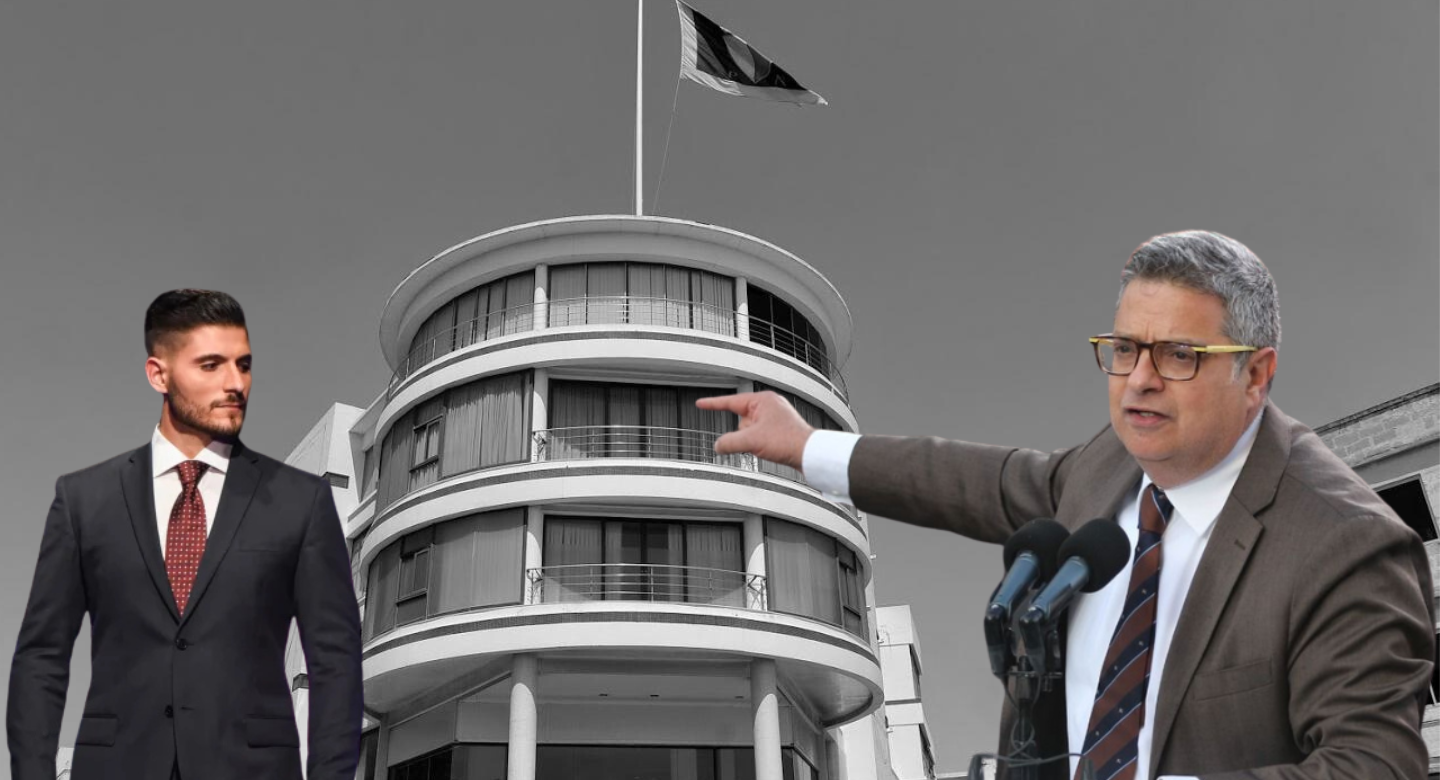
According to the party’s electoral commission, leadership contenders Adrian Delia and Alex Borg are not to invite journalists from the Labour Party’s media to their events. They are barred from debating one another, forbidden from appearing on ONE TV, restricted in what they can say, and—perhaps most extraordinarily—must seek pre-approval before engaging with the media.
Even responses to so-called “provocative questions” are to be carefully calibrated, with candidates warned against uttering anything that might veer into insult or controversy.
So the PN is effectively saying, “free speech is nice, but not that nice.” This gag order is the political equivalent of wrapping your candidates in bubble wrap, locking them in a padded room, and then insisting this is all to ‘avoid turmoil’.
If this is what internal democracy looks like within the PN, you shudder to think how the party would approach national governance.
The justifications offered—preserving party unity, avoiding division, maintaining decorum—are hardly convincing. Indeed, they are the sort of bureaucratic bromides that mask a deeper dysfunction: a party so riddled with internal mistrust that it cannot countenance its own candidates speaking freely.
This is not political discipline. This is institutionalised insecurity.
And yet, there is an elephant in the room, one the PN is all too eager to point at when it suits them: that ONE TV, the Labour Party’s media arm, does not operate as an independent journalistic entity but rather as a blunt instrument of party propaganda. This is, unfortunately, true.
But it is also true that the same description applies to NET TV. Both operate as echo chambers for their respective parties, amplifying the official line while shutting out inconvenient truths.
In that sense, the PN’s logic is not just flawed—it’s hypocritical. To decry ONE TV as a propaganda outlet while funneling all candidate coverage exclusively through NET is to engage in precisely the same behaviour it claims to reject.
The issue is not the partisanship of one station over another—it is the refusal to accept that political accountability requires exposure to challenging, even hostile, scrutiny.
One might be tempted to treat the whole affair as a political farce, were the implications not so serious. In attempting to insulate itself from the rough edges of democratic debate, the PN is eroding the very democratic norms it claims to defend. It is a party that seems more preoccupied with managing perception than fostering genuine leadership.
The Institute of Maltese Journalists (IĠM) has raised the alarm. The attempt to effectively impose editorial limits on journalists—curating not only who can ask questions, but what kind of questions they may ask—betrays a deep misunderstanding of the media’s role in public life.
It is also, frankly, insulting to the electorate. Maltese voters are being asked to trust that these candidates are capable of leading the country. Yet, the very structure of this internal contest suggests they cannot be trusted to handle a live interview—let alone a political opponent.
The Labour Party has seized the opportunity to call out the irony. When a party appears afraid of debate, allergic to scrutiny, and determined to keep its candidates cloistered from even the mildest challenge, it does not project strength. It projects fear.
Of course, the PN is under pressure. Years of internal division and electoral defeat have left it fragile. But the way to rebuild is through openness, not opacity.
This leadership contest could have been an opportunity for renewal—for ideas to clash, for personalities to emerge, and for voters to be persuaded. Instead, it risks becoming a procession of silences, monitored by a commission that seems less interested in democracy than damage control.
In the end, the PN’s greatest liability may not be any single candidate. It may be a culture that fears what its own members might say—especially when they’re speaking without a script.
Sign up to our newsletter Stay in the know
"*" indicates required fields
Ricky wants journalist warrants: Where would that leave him?

Democracy is not a bargaining chip
Film Commissioner does not even bother to respect FOI deadlines
Malta’s law and order meltdown
Other News
Ricky wants journalist warrants: Where would that leave him?
Democracy is not a bargaining chip
Film Commissioner does not even bother to respect FOI deadlines
Malta’s law and order meltdown
The PN’s theatre of the absurd
European Commission’s rule of law report is no cause for complacency
The PN’s moment of reckoning
Robert Abela plays judge and jury as Malta preaches rule of law abroad

Criminally charged, politically rewarded: Ronald Mizzi is back
Institutions be damned: prime minister won’t apologise
From outspoken to out of line: Alex Borg’s ethics breach

…let alone looking in the mirror…
Komplu ghafgu u paxxu lil pl ja qabda paprika.
This is political suicide. Some would call it sheer ignorance. Instead of embracing all those who they need to convince to even consider changing their position, ( by allowing open unfettered debate ) they mount a political event within a very closed shop with Byzantine rules prohibiting open debate. This can only lead to widening the gap at the next election. If one of the two contenders , having passed due diligence, have the balls to attack this position of the executive , they will garner votes. But .. will that be enough ? I suspect the horse has already bolted. 🙁