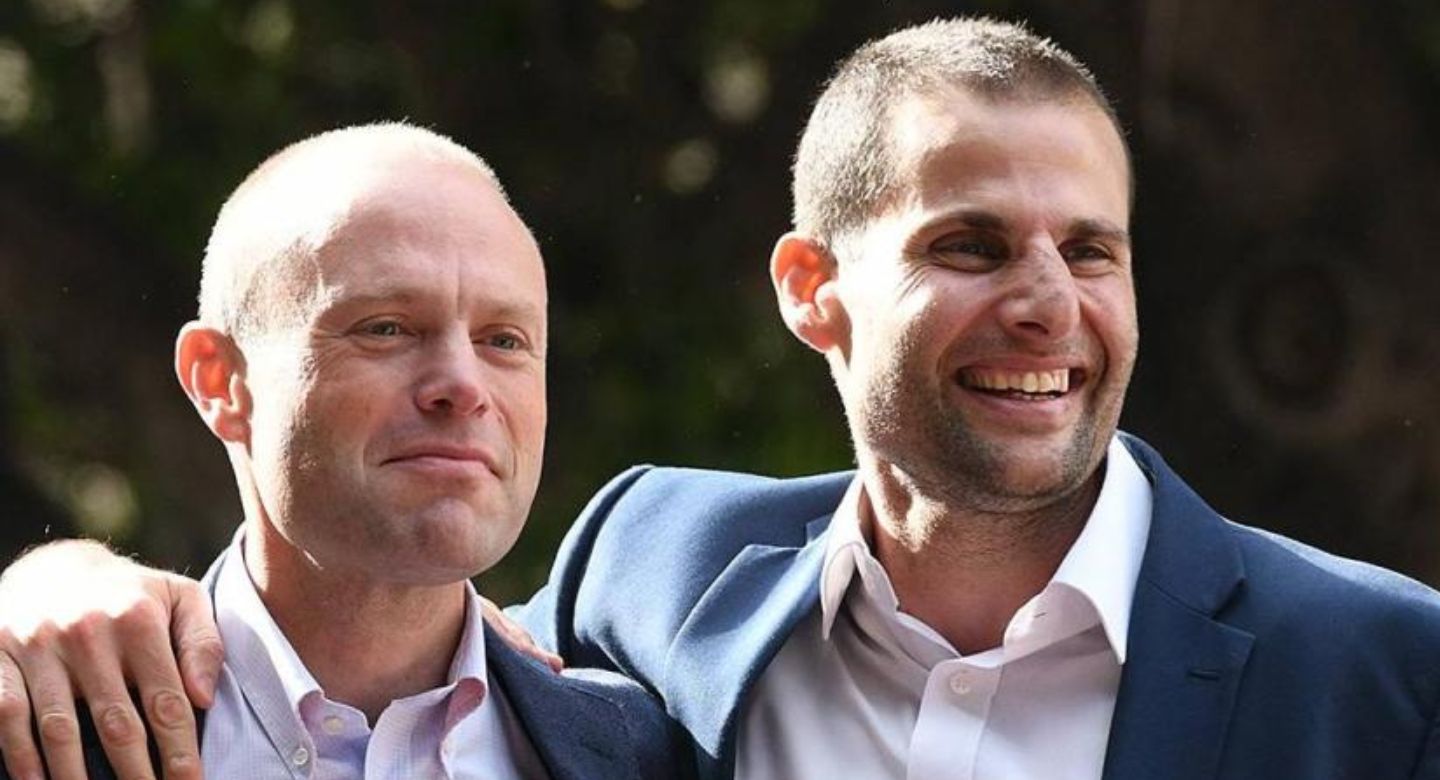
After winning four consecutive elections, the party leader declared, “There will be no more elections here so that they (the opposition) can try to seize the government, seize power”.
In a speech to thousands of government employees, the leader announced, “We will work with the… relevant institutions on laws, because we need laws that build a wall, a barrier, against the coup plotters and the traitors who sell out their country”.
Nicaraguan President Daniel Ortega didn’t start off as an authoritarian. He was a freedom fighter who fought against the authoritarian tyranny of the Somoza family. Ortega’s Sandinista victory came the same year Labour’s Dom Mintoff staged his own pseudo-victory.
Mintoff celebrated the loss of millions of pounds for the country after the British decided to stop leasing Malta’s naval base for their Mediterranean fleet when Mintoff overplayed his demands.
It took a fully fledged civil war to remove the Somoza family from power in Nicaragua. Ortega was immediately named co-ordinator of the junta in 1981, the year that Mintoff lost his majority but clung on to power in Malta.
Just three years later, Ortega became president of Nicaragua. He promised to eliminate hunger and illiteracy among the country’s impoverished and to create prosperity by increasing private sector jobs. Yet within months Ortega began restricting news coverage and denying journalists access to government.
In 1986, Salman Rushdie, famous for Satanic Verses, visited Nicaragua. He wrote a haunting portrayal of the people, politics and the poverty of Nicaragua in a book called The Jaguar Smile. The idealistic leader of Nicaragua had by then closed down several newspapers, including the country’s most read, La Prensa.
“Are such matters as the freedom of the press just cosmetic?” Rushdie asked of an editor of the Sandinista paper, Barricada. “Cosmetic, that’s the word, yes,” was the chilling remark.
Violeta Barios de Chamorro, the widow of the editor of La Prensa, told Rushdie, “The TV and radio are state-controlled; this paper was the only thing left, and now it has been taken away”.
Rushdie doubted de Chamorro’s reading of the danger Ortega posed to the nation’s freedom. He wanted to believe that Ortega would be a force for good in Nicaragua. Besides, he had an aversion to the showy jewellery Violeta Barios wore.
“The truth is that I found the idea that this aristocratic lady was closer to the people than the likes of… even Ortega very unconvincing… and I’m practically certain that my scepticism had nothing to do with the jewellery”.
Rushdie was lucky enough to survive a vicious knife attack that left him fighting for his life and blind in one eye to realise how prescient Violeta Barios was. Many, like Rushdie, ignored her warnings because she was too aristocratic, too much part of the establishment, and wore too much jewellery. But she was absolutely right.
In 1990, just three years after Labour’s Karmenu Mifsud Bonnici was kicked out of office, Ortega suffered the same fate. That aristocratic lady, Violeta Barrios de Chamorro, beat Ortega. But Ortega didn’t give up.
He lost the elections of 1990, 1996 and 2001. Meanwhile, Mifsud Bonnici didn’t give up either – but he suffered another humiliating defeat in 1992. After a brief interlude in power between 1996 and 1998, like Ortega, Labour went on to lose three successive elections in 1998, 2003 and 2008.
When Ortega returned to power in 2006, he was determined never to let go of it again. He’d learnt his lesson. Ortega brought considerable success to Nicaragua. GDP grew by 6% in 2011 and by a decent 4% in 2015. He radically cut unemployment to around 7%. Prosperity in Nicaragua increased, and the poorer classes benefitted.
Malta seemed to follow a similar trajectory on Labour’s return to power in 2013. The economy grew, job creation increased, and salaries improved on paper.
Those successes gave Ortega enough support to amend the constitution and allow him to be re-elected for a second term. In 2011, amid fraud allegations, Ortega secured a “supermajority” in the National Assembly. His true motives soon became apparent.
He became increasingly authoritarian. He remained popular with disadvantaged Nicaraguans, but the middle classes became disenchanted with his utter lack of transparency. State profits were diverted into the control of Ortega’s family and friends, whose conspicuous consumption looked increasingly like that of the Somoza family, which Ortega’s Sandinistas had deposed.
Meanwhile, back in Malta, Muscat’s Labour had captured the state. The public broadcaster had become an extension of Labour’s propagandistic ONE news.
In April 2018, disillusioned Nicaraguans protested Ortega’s methods in the streets. They chanted, “Ortega y Somoza son la misma cosa” (Ortega and Somoza are the same thing). Ortega suppressed television coverage of those protests, even by independent outlets, and then deployed brutal suppression, arbitrary detention, torture and murder. Three hundred and fifty Nicaraguans were killed, and as many as 100,000 fled the country.
One year later, Malta witnessed its own street protests triggered by national outrage over the murder of a journalist who was exposing Labour’s vilest corrupt deals and the involvement of key Labour figures in the whole morbid story. Labour also suppressed television coverage of those protests. But that didn’t save Joseph Muscat. That victory for protesters was pyrrhic. Muscat was replaced by his own legal consultant Robert Abela.
Like Ortega, Abela initially made the right moves. He removed Police Commissioner Lawrence Cutajar, but secretly rewarded him with a lucrative consultancy post. He stopped government employees from clearing the murdered journalist’s memorial. He presented himself as a moderate.
But like Ortega, Abela started amassing more and more power. Like Ortega, he called his adversaries “traitors to the homeland”. Increasingly, his leadership is grounded in secrecy and opacity.
Ortega started off embracing democratic principles, formal elections, peaceful transfers of power and social equality. His years in power changed him into a ruthless authoritarian, brazen enough to cancel elections, appoint his own wife as co-president and murder 350 of his own people.
This was only possible through his effective dismantling of the free press and by ensuring that only pro-government propaganda was broadcast. Nicaragua may be a world away, but it should be a troubling cautionary tale for us too.
Sign up to our newsletter Stay in the know
"*" indicates required fields

Labour discovers manners

Essence de Kink

Abela doubles down

Why walls keep crashing down
Tags
#authoritarianism
#Daniel Ortega
#Democracy
#enemies of the state
#Nicaragua
#press freedom
#prime minister robert abela
#traitors
Other News
Labour discovers manners
Essence de Kink
Abela doubles down
Why walls keep crashing down

Dripping poison

Bonnie says, ‘name them, Clyde’

Pull the pardon

Our students can’t read – Labour is delighted

His Own Idea, He Said.
When desperation kicks in

Is Clifton Grima pushing a Trojan reform?