

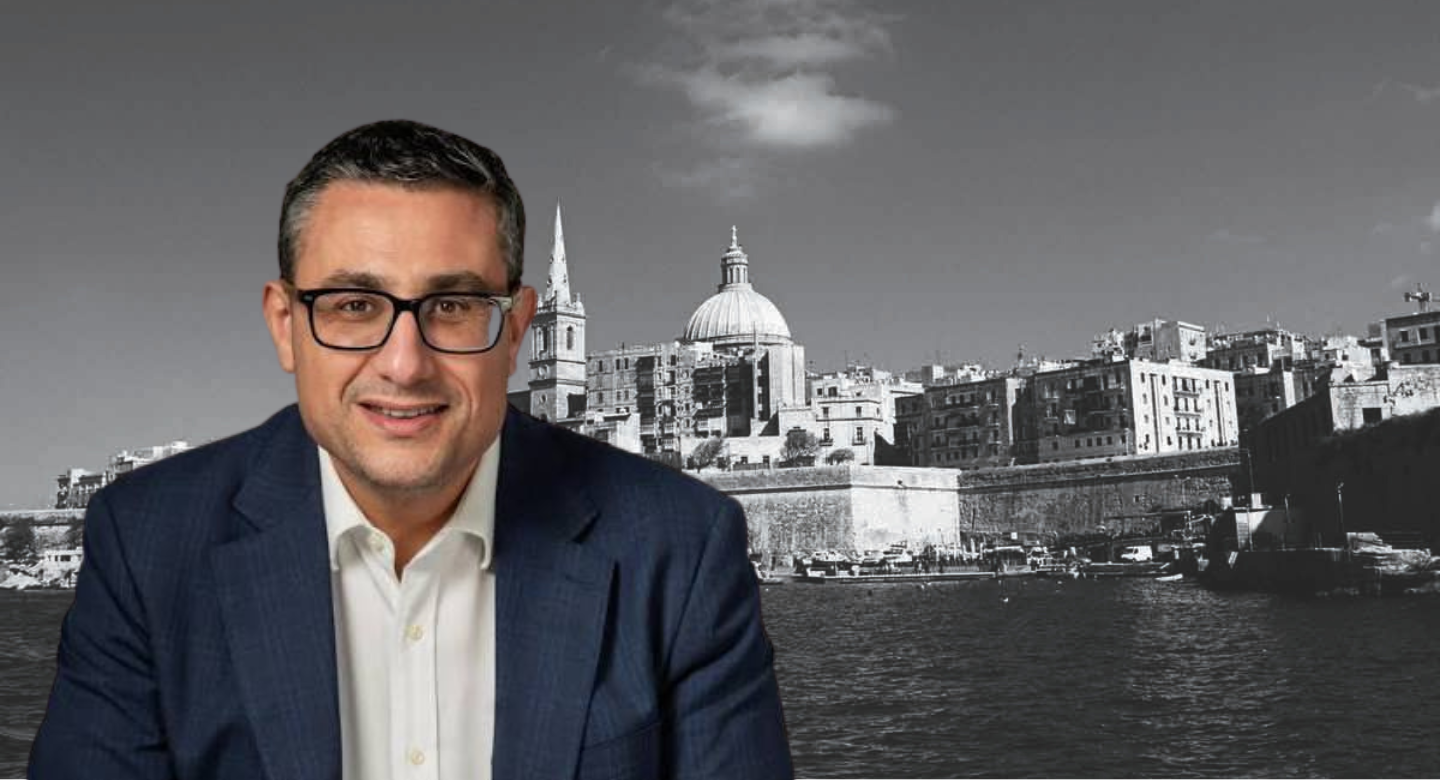
“If your ideas are a bit skewed, the tendency is that you’re going to skew the minds of the ones who are seeing you or who are watching you,” the bumbling culture minister, Malcolm Paul Agius Galea, said. He insisted that creativity must adhere to certain “norms” and that artists must recognise the difference between “right and wrong”.
“If you’re an artist,” the minister warned, “you have to do it right”. And of course the one to decide what’s “right” isn’t the artist; it’s the minister or maybe the ruling party.
History is littered with people in power who insisted that art must conform to “certain norms”, as the hopelessly incompetent Agius Galea did. Hitler called non-conforming art degenerate. Mao Zedong demanded that art serve the revolution. Stalin, like our culture minister, expected art to be “ideologically correct” and supportive of socialism. Those artists and writers who didn’t live up to Stalin’s expectations faced imprisonment and death.
Mussolini, too, encouraged art that promoted the political objectives of Fascism – and linked artistic patronage to political loyalty. Francisco Franco was probably most aligned with Agius Galea in his views. He permitted only art and culture consistent with traditional social values and Catholic morality. That’s probably what Agius Galea meant by “right and wrong”.
Franco imposed his rules by censoring literature, theatre, cinema and other forms of cultural expression. Works he considered politically subversive, irreligious or morally unacceptable were prohibited.
Mintoff’s friend Nicolae Ceaușescu enforced tight ideological control over cultural and intellectual life. Artistic “experimentation” was restricted, while only officially approved cultural productions which celebrated socialism and the leader were allowed.
In 1937, Hitler’s Nazi regime organised the Degenerate Art Exhibition, which sought to publicly ridicule modern artists. Agius Galea seems to have organised his own “Malta Festival of Ideas”, where he publicly mocked the very people engaged in the arts. He hectored those present, calling them “presumptuous and dangerous” for being creative. He accused “everyone” of thinking “they’re God’s gift to the world and that they’re the most important part of Maltese culture”. He called their ideas “a bit skewed”.
Of course, Agius Galea is no Hitler. He’s not Stalin or Mao or Nicolae Ceaușescu. He’s no Franco. But his total ignorance of the historical links between the worst authoritarians and attempts to rein in art and culture exposes his entire unfitness for his role.
The idea that art should serve the state or reinforce the values held by the minister or the prevailing political order is as repressive and retrograde as it gets. The minister’s ideas hark to a dark past where political authority dictated the boundaries of legitimate artistic expression.
No wonder the backlash was so fierce. Almost 3,000 artists, cultural workers, organisations and members of the public signed an open letter calling for his resignation. The Malta Entertainment Industry and Arts Association (MEIA) pointed out that the minister’s inappropriate comments were not his first. They reminded the public how the very same foot-in-mouth minister had suggested that Daphne Caruana Galizia wasn’t necessarily murdered because of her work.
PEN Malta said the minister’s “poverty of ideas on display was matched only by the contempt his remarks showed for the arts”. The MEIA called for Prime Minister Abela to remove Agius Galea and appoint a culture minister with “competence, understanding and respect the sector deserves”.
Abela didn’t sack him, but he gave Agius Galea a stinging public dressing down, calling his comments “insensitive”. The Prime Minister made it clear that he expected his minister “to engage directly with the sector in the coming days to address the fallout from his comments”.
Most damning was Abela’s remark that Agius Galea “needs to adjust to this sector”. “His comments,” Abela added, “show that we haven’t arrived yet”. That was a polite way of saying the minister was a complete disaster who had, in one fell swoop, dismantled the years of effort Labour had put into courting the artistic sector.
Agius Galea’s colleagues in the cabinet didn’t react kindly to his catastrophic fumbling. Minister Miriam Dalli said, “God forbid” when asked whether she agreed with Agius Galea that creativity was dangerous.
Minister Chris Fearne said arts were key to Malta’s development. Not even Minister Glenn Bedingfield was ready to defend Agius Galea. When asked whether Agius Galea is the right person for the job, Bedingfield refused to comment: “The Prime Minister can decide that”.
Parliamentary secretary Alicia Bugeja Said too refused to express a view on whether Agius Galea is fit for his role.
And as if Agius Galea hadn’t done enough damage, when confronted by journalists about his comments, Agius Galea simply said, “I could have used better words”. His defence was that his comments weren’t meant for the public. “They were made in a closed environment,” he said.
The problem, according to Agius Galea, isn’t that he’s peddling the ideas of history’s worst tyrants but that somebody dared to leak his comments to the press. He claimed that his comments were only meant “to provoke”.
In an indication of how far out of his depth he is, the minister told reporters “maybe I came across as being insensitive”. He didn’t come across as insensitive. He simply showed that he’s got absolutely no clue.
The minister has inadvertently and stupidly revealed the medieval nature of his mentality relating to the portfolio he leads.
The whole saga reveals something deeper and more worrying. His rambling speech belies a total lack of preparation, staggering amateurism, and breathtaking short-sightedness. But what’s even more concerning is that Robert Abela thought fit to appoint this man to his job. That says far more about Abela’s judgement than about the embattled minister himself.
Sign up to our newsletter Stay in the know
"*" indicates required fields
The company they pay

Roderick Galdes is still nursing his wounds
Culture, with permission

‘Mela jien inqas’? The Budget’s answer to TCNs
Tags
#artists
#Culture Minister
#Malcolm Agius Galea
Other News
The company they pay
Roderick Galdes is still nursing his wounds
Culture, with permission
‘Mela jien inqas’? The Budget’s answer to TCNs

Another acquittal, thanks to Gafa’s police force

The rent won’t pay itself

King Corrupto and the blame game

The danger of a leader who brands his opponents traitors

Labour discovers manners
Essence de Kink

Abela doubles down
