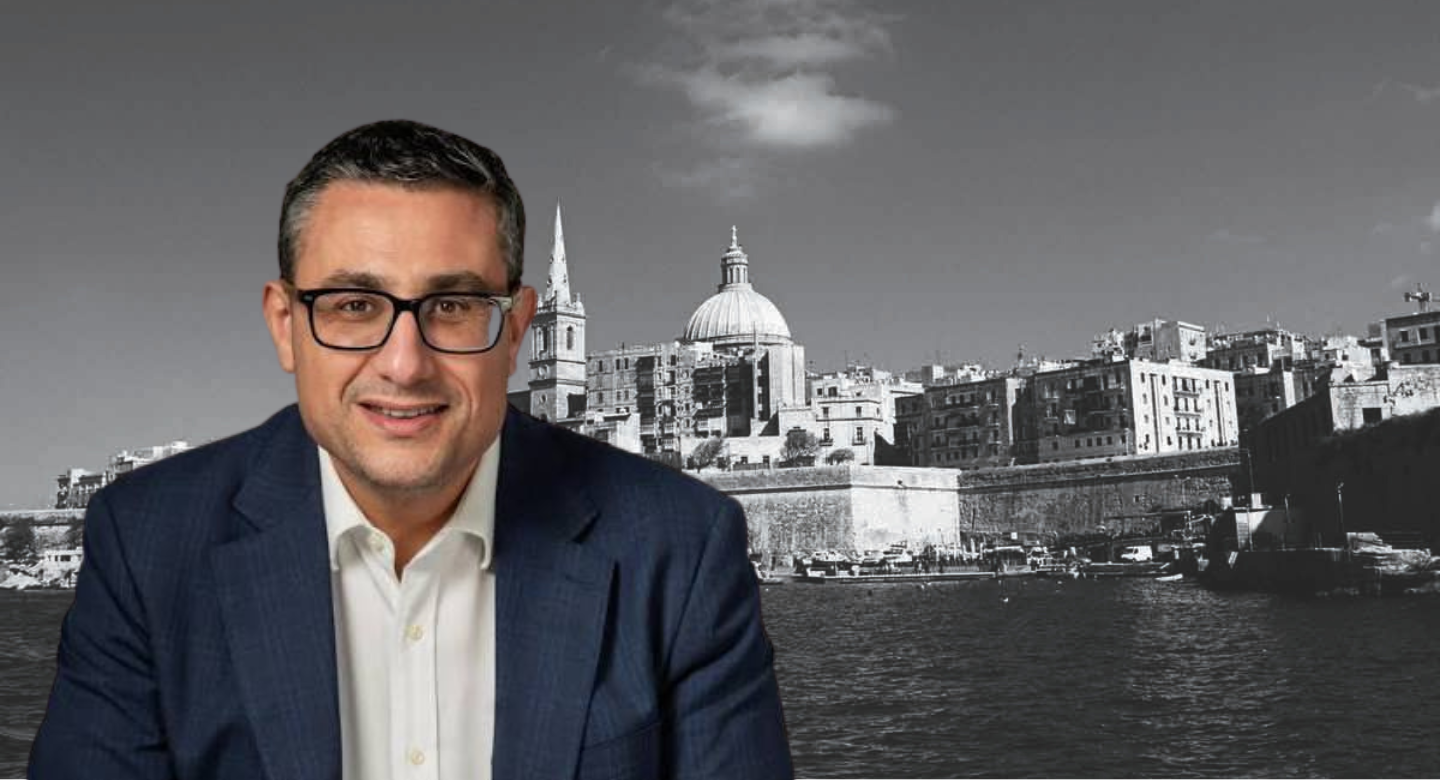

Malta’s Culture Minister, Malcolm Paul Agius Galea, seems to have found a new approach to creativity. Artists should be creative, as long as they follow the norms.
He has told artists that they may think outside the box, but they’re not actually allowed out of it. The minister has also taken it upon himself to distinguish good from bad. How very reassuring. Perhaps he could explain whose definition he proposes to use.
His own? The parish priest’s? The imam’s? Or should we resurrect the Board of Censors, dust off its rubber stamps and put its members back to work protecting us from the dangerous possibility of having to think for ourselves?
The problem is not that the minister has opinions about what constitutes good art. He is perfectly entitled to them, however ill-informed they might be. The problem arises when someone holding the public purse begins confusing his personal ideas, such as they are, with the standards by which culture should be judged.
Art has an inconvenient habit of challenging precisely those norms which respectable people, particularly respectable people in authority, would prefer to leave undisturbed. Much of what we now regard as great literature, painting, theatre and music was once denounced as obscene, blasphemous, subversive or simply unacceptable. With the minister’s way of thinking, cultural history would have been considerably less troublesome.
Nobody is suggesting that artists enjoy immunity from laws meant to protect others. But the norms with which the minister is so clearly enamoured are not such laws. Frequently, they are little more than prejudices which have survived long enough to acquire an air of respectability.
A Culture Minister who cannot distinguish between the two has a rather fundamental problem with his job description.
The minister is fascinated by crowds as an indication of cultural success. Is he actually serious?
If attendance figures are the measure of artistic achievement, we might as well dispense with cultural policy altogether and appoint someone from the National Statistics Office to count heads.
A packed village square would automatically outrank an experimental theatre production. A concert attracting thousands would be culturally superior to a chamber recital attended by 50. The Eurovision Song Contest would become the ultimate arbiter of musical excellence.
And, by the same logic, a queue outside a pastizzi shop would establish a triumph of gastronomy.
There is something spectacularly worrying about a Culture Minister who appears unable to distinguish popularity from artistic merit.
Some art, if you’ll forgive the sweeping statement, is difficult, uncomfortable, deliberately provocative or simply beyond the immediate appreciation of the average punter. That is not a defect to be corrected by ministerial decree.
Indeed, if the market is to decide what deserves to exist, why bother having a Culture Ministry? Leave everything to ticket sales, corporate sponsors and social media algorithms. At least the algorithms don’t pretend to possess a moral philosophy.
There is a particularly delicious irony in all this. Malta’s National Cultural Policy recognises the importance of artists challenging society and pushing boundaries. Someone should send Agius Galea a copy, with the relevant passages highlighted in fluorescent yellow, lest the more challenging concepts escape him.
The allocation of public funds should depend on transparent criteria and independent artistic judgment, not on whether a minister approves of the message, considers it sufficiently wholesome or thinks it will fill a hall.
The entire point of supporting culture is that it allows work to exist which might otherwise be smothered by people who think the way the minister does.
The minister is not the nation’s headmaster, its spiritual director or its entertainment promoter. Nobody appointed him guardian of the public’s morals, still less arbiter of its aesthetic tastes.
His job is to facilitate culture, not domesticate it.
If he finds that difficult to stomach, if the prospect of artists offending cherished beliefs or performing before audiences too small to impress him causes such distress, there is a straightforward solution.
There’s the door; don’t let it hit you on the way out.
Sign up to our newsletter Stay in the know
"*" indicates required fields

‘Mela jien inqas’? The Budget’s answer to TCNs

Another acquittal, thanks to Gafa’s police force


The rent won’t pay itself

King Corrupto and the blame game
Tags
#art
#artists
#Culture
#Culture Minister
#Minister Malcolm Paul Agius Galea
Other News
‘Mela jien inqas’? The Budget’s answer to TCNs
Another acquittal, thanks to Gafa’s police force
The rent won’t pay itself
King Corrupto and the blame game

The danger of a leader who brands his opponents traitors

Labour discovers manners
Essence de Kink

Abela doubles down

Why walls keep crashing down

Dripping poison

Bonnie says, ‘name them, Clyde’

Well stated!
Min fejn isibuhom dawn il-bozoz!