
Another summer, another national ritual: checking whether the lights will stay on.
A night without electricity during a heatwave is bad enough. Four consecutive days of power cuts is something else entirely. It is no longer an inconvenience. It is a failure of governance.
As I write this, the power has gone yet again. Fans fall silent. Air conditioners die. Fridges warm up. People open windows only to let in hotter air. Families sit in the dark hoping this outage will be shorter than the last. Businesses count their losses. Elderly residents worry about the heat. Parents try to settle children who cannot sleep.
And the response from Energy Minister Miriam Dalli? Don’t worry, it’s not a shortage of electricity.
Technically, perhaps she is right. According to Dalli, Malta has enough generating capacity. The problem lies in the distribution network. The electricity exists; it just cannot reliably reach the people paying for it.
That is hardly reassuring.
Imagine telling airline passengers that the aircraft is fully fuelled, but the wings keep falling off. Or assuring motorists that there is plenty of petrol while admitting the roads have collapsed. Supply means little if the infrastructure delivering it repeatedly fails.
This explanation also raises an uncomfortable question. If generation is not the problem, then what exactly has the government been doing while Malta’s population has surged, construction has exploded, and electricity demand has climbed year after year?
Minister Dalli has spent much of her tenure cultivating an image as the minister of Malta’s green transition. She has announced renewable energy schemes, electric vehicle grants, offshore wind studies, solar incentives and hydrogen ambitions.
Internationally, she speaks the language of climate leadership. Domestically, however, her most basic responsibility has been to ensure the country’s electricity system is resilient enough to withstand predictable summer demand.
In the summer of 2023, widespread power cuts left thousands without electricity for days. Government inquiries blamed unprecedented temperatures and cables that had literally overheated and melted. Dalli promised that lessons had been learned, emergency investments would be accelerated, and the network would be reinforced before the following summers.
Yet here we are again.
Across Malta, residents from Naxxar, Mosta, St Paul’s Bay, Mellieħa, Rabat, Mġarr, parts of Żebbuġ, Attard, Qormi, Balzan, Iklin, and different areas in the south have flooded social media with complaints. Some report losing power several times a day. Others describe outages lasting hours, only for electricity to return briefly before disappearing again.
People speak of sleepless nights, spoiled food, interrupted work, malfunctioning lifts and vulnerable relatives left sweltering in homes that have become ovens.
If the explanation has shifted from melting cables to faults in the distribution network, it merely confirms that the underlying problem was never fully addressed.
A resilient electricity grid is not built through press conferences after a crisis. It requires years of sustained investment, planning and anticipating future demand.
These are no longer isolated incidents. They are becoming the defining image of Maltese summers.
Meanwhile, government messaging continues to insist everything is under control. Every failure is presented as an isolated technical issue. Every outage is temporary. Every summer supposedly brings lessons that will solve the next one.
Yet the next one always arrives looking remarkably similar.
This is where Dalli’s political responsibility begins. Ministers are not judged solely on whether they can explain failures after they occur. They are judged on whether they prevented foreseeable failures in the first place.
The Opposition’s energy spokesperson, Mark Anthony Sammut, pointed to an NAO report published two years ago, which concluded that chronic underinvestment in Malta’s high-voltage electricity network had significantly weakened the system’s resilience.
According to that investigation, annual investment in the network between 2014 and 2023 was roughly one-third of the level invested during the previous decade. This, while the population continued to increase – another predictable outcome based on the government’s policies.
Governments love inaugurating shiny projects. They are less enthusiastic about spending political capital on replacing cables buried underground that nobody ever sees. Infrastructure maintenance is invisible until it fails spectacularly. And it has, again.
The irony is impossible to ignore. Labour has repeatedly celebrated Malta’s economic miracle, boasting about record growth, record investment and record surpluses. Yet a supposedly modern European economy cannot guarantee something as basic as keeping the lights on during summer.
The outcome was entirely predictable. If the network was not strengthened to cope with that demand, this is not bad luck. It is bad planning.
These failures are Minister Dalli’s responsibility. Leadership is not measured by optimistic press conferences or carefully worded explanations after systems collapse. It is measured by whether essential services actually function.
People are not asking for miracles. They are asking for electricity.
Not promises. Not explanations. Not another summer of sweating through government excuses while the lights flicker off once again.
Sign up to our newsletter Stay in the know
"*" indicates required fields

Benefit fraud ‘mastermind’ paid €126,000 as TM medical consultant


PA removes Stivala’s illegal paving after chief acknowledged 5,000 cases awaiting direct actio

Watchdog exposes government recruitment chaos but keeps ministries unnamed

PA boss’s manoeuvre is a ‘joke’ – NGOs insist on his exit
Other News
Benefit fraud ‘mastermind’ paid €126,000 as TM medical consultant
PA removes Stivala’s illegal paving after chief acknowledged 5,000 cases awaiting direct actio
Watchdog exposes government recruitment chaos but keeps ministries unnamed
PA boss’s manoeuvre is a ‘joke’ – NGOs insist on his exit

Government’s chief civil servant tells PL president that he has no conflict

No board meetings but still paid from public coffers

Malta’s public healthcare increasingly dependent on foreign workers
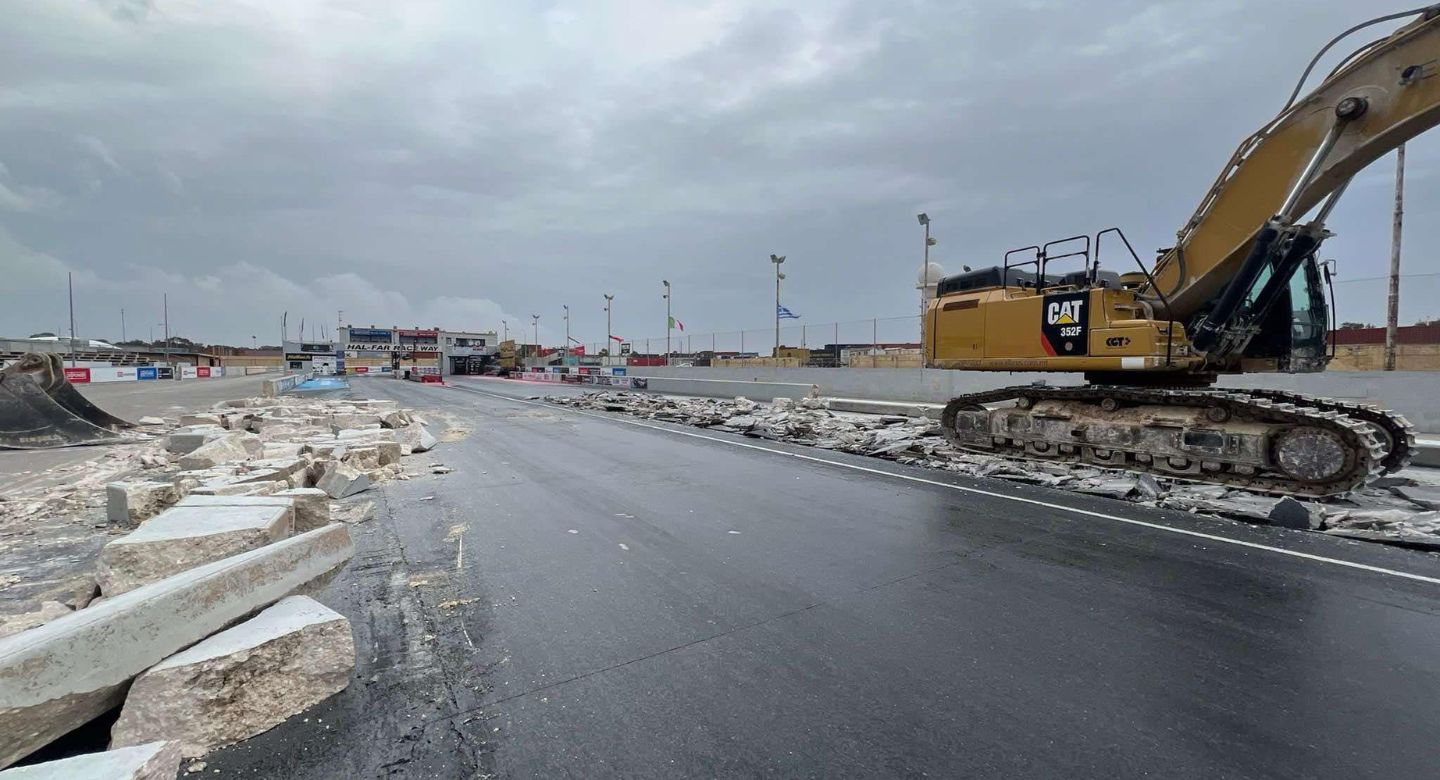
Abela’s promised €16.5m racetrack still stuck at the starting line

Restaurant and takeaway prices rise 5.6% as food costs bite

Gaffarena still to pay 2012 fine over illegal Ċavett restaurant site

Delta seeks financial assistance to keep Malta flights in 2027
If you remove all the corrupt politicians put them in prison where they belong, you. can then take all their ill gotten gains and assets and use the money to build better and stronger infrastructure for electricity and other things.
THE POWER CUTS OF PREVIOUS YEARS HAVE NOT TAUGHT ANYTHING TO DALLI. THEREFORE, SHE IS EITHER INCOMPETENT OR STUPID.
THE BEST THING SHE CAN DO IS RESIGN. MALTA WILL NOT REGRET SEEING HER GO!
Not incompetent or stupid, most definitely both
Din n nofs kedda ta mara wahda mil l aghar Ministru, hlief ghal pozi mhiex kapaci. Tefghat it-tort fuq l PN ghax qalet kieku nvestew kieku m hawnx dal qtugh! U le le. Problema krejawha huma b zieda ta eluf kbar kull sena barranin u ghandhom l wicc iwahhlu f haddiehor! Possibli hadd min dal gurnalisti ma jaf jirribatti lura!
F hafna kazijiet, Malta mhux gurnalisti hawn imma semplici reporters. Tan Net Minkejja l ftahir li qed jaghmlu l morally, hemm kap tal ahbarijiet gwejjed u gurnalisti medjokri li lanqas biss jafu jippronunzjaw isem. Per ezempju dik li tefghat ritratt mal boyfriend tal One f jum l elezzjoni qaltilna ftit ilu li l PM l Ingilterra se jkun Andy Burn-Ham! Mohhha fil priezet ghadha…
Verita!
L aqwa li ccarrat wicca u tipprova taghmila tal ferhana bil falzizmu li ghandha. Il problema li l pn partit tad delettanti u il pl jitmejjel bin nies.sewwa kien qal zammitlouis poplu gahan.
With one or two borderline exceptions, Labour ministers are barely fit to occupy a basic clerical position, let alone occupy high government office. Add to that the penchant for seeking to corrupt anything under the sun, and one has a recipe for total disaster in every sector. Miriam Dalli is a prime example of this unfathomable mediocrity, much as she would like us to believe otherwise with her catwalk posturing.
In any normal country, this administration would have long been consigned to oblivion. The fact that it continues to garner substantial popular support in an indictment both on a sterile opposition merely content to go through the motions and to an electorate which has allowed itself to be bought off by the crumbs shoved into its face by a corrupt regime.
Your concluding paragraph summarizes the situation exactly. Pajjiz ma jistax ikun aghar izjed milli hu w jibqa jitla dal gvern b maggoranza kbira! Biex tara x nies hawn!
Dal l ahhar iddecidejt li nwarrab il-karrozza w nibda nuza tal-linja. Qatt ma kont uzajtha!., gimgha ssaportajt..xarabank mimlija sa ruh ommha kollha barranin, wicc imiss ma wicc..tal qtuh tan-nifs. Titla x hin titla dejjem l istess! Nies ihokku mieghek…seats inkallati..Ahna go pajjizna ma nistghux nuzaw tal-linja w qeghda ssusidjatha biss ghal barrani (ghax huma biss qed juzawha)li mlewna bih ghal gwadan taghhom. U haddiehor bhali li jixtieq juza tal-linja biex jifranka li joqghod ihabbel fejn ser jipparkja w jevita t traffiku dan ma jistax jaghmlu go pajjizu stess, u minflokk inqumu rewwixta nergghu helu helu jmmorru lura ghal karrozza kurnuti bis-sitwazzjoni li dahluna fiha! Gvern sehet pajjiz, fottilna hajjitna, ghal gwadan taghhom u ghad hawn hafna ghadom jappogjaw lil dal gvern! X jista jigri aghar biex dal poplu ta habba gozz( skuzani imma hekk hu ) jqum min din r-raqda!? Bhalissa kullhadd aljenat bil loan u il-kantun, dak biss sar importanti! U hajjitna?? Tal qamel!.,
First and foremost, don’t we need the infrastructure to be improved? As Malta’s population grows the demand for electricity will grow higher and higher. If some of the connectors are from the early 1900s how can this problem be resolved without those ancient parts being entirely removed and the infrastructure done in a modern way?
In a word money!
If you remove all the corrupt politicians put them in prison where they belong, you. can then take all their ill gotten gains and assets and use the money to build better and stronger infrastructure for electricity and other things.
Back to the 1980s. And the sheer cheek of blaming it on previous administrations. The only administrations that are to blame are the ones that did nothing for the last 13 years and instead, helped inflate the population numbers through the importation of foreigners. Call a protest against this government…. any day….. any time….. and myself and several others will be there!
Who will call a protest? Alex Borg? Ma tarax…. Inkella jkun negattiv u personali… he already told us way back that he doesn’t believe in confrontation…. Inkella jhammeg l ghenuq tal qomos bojod u Sarah jizzelgilha l make up fis shana…