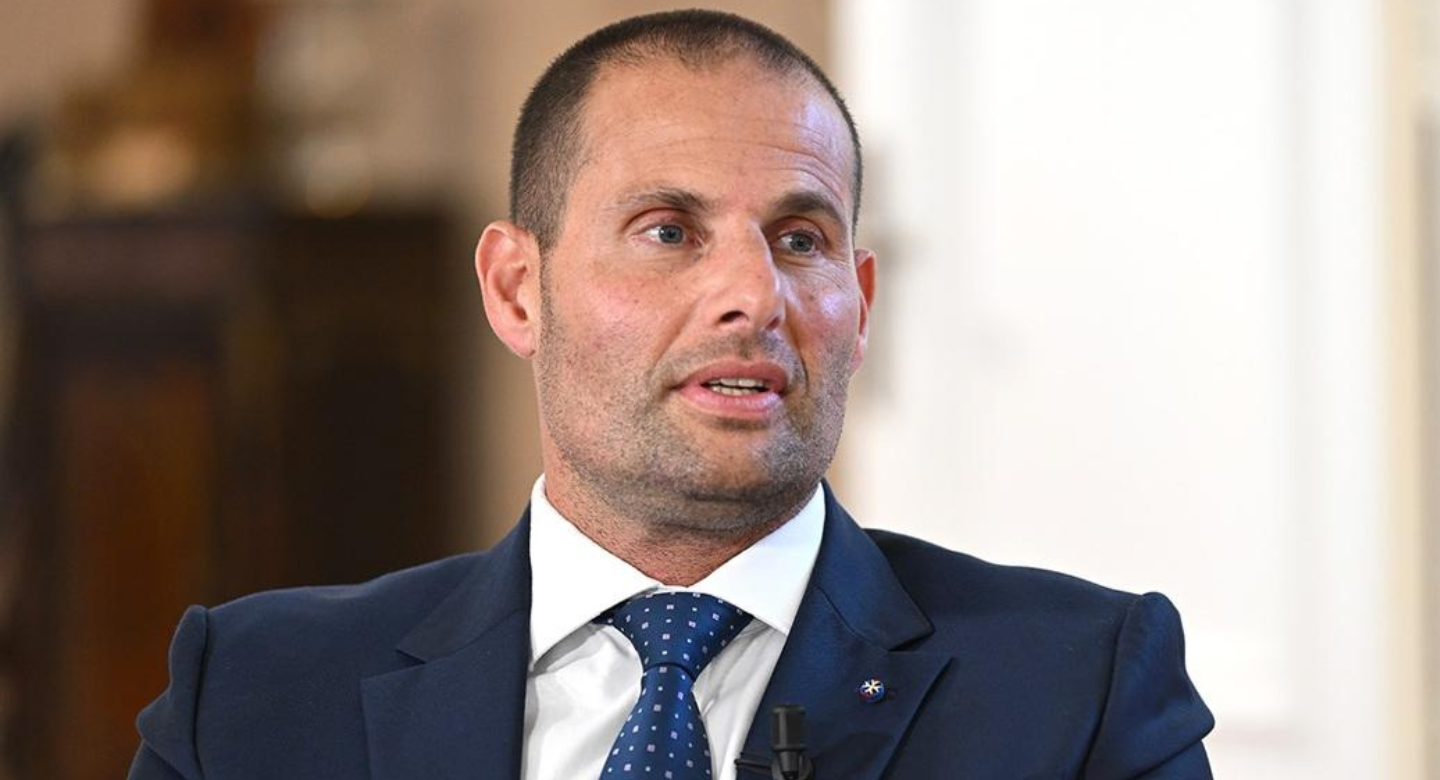
In one of Prime Minister Robert Abela’s rare interviews with the press beyond the Labour Party media, he attempted to explain his government’s record, except it was about carefully chosen anecdotes, selective statistics and false choices.
In his interview with The Times of Malta, he attempted to recast visible consumption as proof of national prosperity while dismissing growing concerns about governance, overdevelopment and the rising cost of living as the inevitable complaints that accompany success.
It presents Labour’s fourth consecutive electoral victory as irrefutable proof that Malta is more prosperous than ever. The message is simple: the economy is booming, people are buying cars and boats, and anyone questioning the government’s direction simply refuses to acknowledge success.
It is an attractive narrative. It is also one that falls apart under closer examination.
Abela’s most eye-catching claim is that Maltese families have become wealthier because they can now afford “luxuries”. His evidence is not based on productivity, disposable income or living standards but on the visibility of expensive cars and pleasure boats. This is politics by showroom window.
No one disputes that Malta has experienced economic growth over the past decade. But GDP growth is not the same as prosperity, and visible consumption is not the same as financial security.
If the average Maltese family is genuinely better off than ever before, why has the government spent years warning about the cost-of-living crisis while distributing one cheque after another to cushion the impact of rising prices?
Why has it repeatedly intervened with energy subsidies if household finances are as comfortable as Abela suggests?
The answer is obvious. Many families are struggling.
Home ownership has become increasingly unattainable for young workers despite record employment. Property prices have risen far faster than wages.
Rent has consumed an ever-larger share of household income. Everyday expenses continue to outpace salary increases. Yet, tax evasion and money laundering have created ‘a new middle class’, while salaried workers get no respite.
Meanwhile, wealth has become increasingly concentrated among those who already own property and assets. An individual who inherited a house now develops it into a block of flats and becomes a millionaire, at the exorbitant prices the market now dictates. Yet, someone entering the housing market today faces a completely different reality.
None of this fits comfortably with the image of universal prosperity portrayed in the interview.
Abela also reaches for another familiar argument: traffic congestion is simply the unavoidable consequence of success. His argument is designed to shut down criticism before it begins. Should the government stop young people from buying cars simply because roads are busy? It is a false choice.
The criticism is that successive Labour administrations have spent billions widening roads while failing to build a transport system capable of reducing dependence on private vehicles.
Malta now has one of the highest rates of car ownership in Europe, yet traffic continues to deteriorate because the government’s solution has almost always been to accommodate more cars rather than provide realistic alternatives.
Every new flyover quickly fills with more traffic. Public transport remains unreliable for many commuters. Cycling infrastructure is fragmented and often unsafe. Pedestrian infrastructure frequently remains an afterthought.
Congestion is not merely the by-product of prosperity; it is also the product of political choices.
The same selective reasoning appears in Abela’s defence of construction. He presents relentless development as the inevitable price of economic success, implying that those who object simply fail to appreciate the benefits growth has delivered.
Yet opposition to Malta’s construction model is no longer confined to environmental campaigners. Architects, doctors, business organisations, resident associations, local councils and even sections of the tourism industry have warned that the country’s overdevelopment is eroding the very qualities that make Malta attractive.
Quality of life is not measured solely by GDP. It is measured by whether children have open spaces to play, whether neighbourhoods remain liveable, whether air quality damages public health, whether historic townscapes survive, and whether people can enjoy peace in their own homes without living beside an endless construction site.
For years, the government has treated these concerns as obstacles to be managed rather than symptoms of a development model that has become increasingly unbalanced.
Perhaps the most revealing aspect of the interview is not what Abela says, but what he does not say. Governance barely features.
There is little acknowledgement of the corruption scandals that have defined Malta’s international reputation over the past decade. Little mention of the recommendations emerging from the public inquiry into the assassination of Daphne Caruana Galizia, which concluded that the State created a culture of impunity that emboldened her killers.
No serious engagement with repeated concerns raised by the European Commission, the European Parliament, the Council of Europe, the Venice Commission, and international watchdogs regarding the rule of law, transparency, and institutional independence.
Nor is there any reflection on Malta’s continuing decline in international press freedom rankings, despite repeated promises to strengthen protections for journalists after Caruana Galizia’s murder.
Economic growth cannot simply erase these issues. In many respects, they are intertwined. One of the defining questions of modern Malta is whether extraordinary economic expansion has been accompanied by an equally extraordinary weakening of democratic institutions and public accountability.
That question is almost entirely absent.
Abela repeatedly returns to Labour’s election victories as evidence that his government’s direction is correct. Electoral success undoubtedly confers democratic legitimacy. It gives the government the authority to implement its programme. Yet, it does not make them infallible.
History is full of governments that repeatedly won elections while pursuing deeply flawed policies or allowing institutions to deteriorate. Elections measure political popularity, not administrative competence, ethical standards or the long-term wisdom of public policy. A large parliamentary majority does not invalidate legitimate questions about procurement, planning, transparency or the use of public funds.
Perhaps the greatest weakness in Abela’s argument concerns what comes next.
Malta’s economic model has become increasingly dependent on continuous population growth driven by imported labour, relentless construction, soaring property values, expanding public expenditure and billions of euro in energy subsidies. These pillars have generated impressive short-term growth, but each carries significant long-term risks.
Economists have repeatedly questioned whether Malta can continue to ‘import’ workers at the current pace without overwhelming its infrastructure and public services. Business organisations have warned that productivity growth has failed to keep pace with labour growth.
The National Audit Office has repeatedly identified weaknesses in public procurement and governance. European institutions continue to question aspects of Malta’s regulatory framework. Even Finance Minister Clyde Caruana has publicly cautioned that permanent energy subsidies cannot continue indefinitely.
Yet none of these structural vulnerabilities intrudes upon the optimistic portrait painted in the interview.
Instead, prosperity is presented almost as a permanent condition rather than an economic model that depends on choices, trade-offs and increasingly expensive interventions by the State.
That is ultimately the interview’s greatest weakness. It confuses political messaging with reality.
That is the conversation Abela chose not to have. And it is precisely the conversation Malta needs most.
Sign up to our newsletter Stay in the know
"*" indicates required fields

Ricky relegated to late-night TVM slot, but the money keeps rolling in

Abela given ultimatum over Johann Buttigieg

Portelli exits illegal concrete batching plant as Ta’ Dirjanu takes control


Curia deficit deepens to €3.44 million as property spending questions persist
Tags
#Economy
#labour government
#prime minister robert abela
#quality of life
#standard of living
Other News
Ricky relegated to late-night TVM slot, but the money keeps rolling in
Abela given ultimatum over Johann Buttigieg
Portelli exits illegal concrete batching plant as Ta’ Dirjanu takes control
Curia deficit deepens to €3.44 million as property spending questions persist
Malta’s new EU judge handpicked without fresh call for applications

Fierce battle over WasteServ’s €125 million workforce contract
UPDATED – PL Deputy Leader questioned in EPPO-led probe into EU funds procurement

Police station to poolside guesthouse? FAA objects to Birkirkara plan
Senior TM officer and minister’s canvasser suspended
EU allocates Malta €4 million for Storm Harry
Lilu is no longer ‘king’
It is the conversation The Times allowed him to have because it is scared shitless of him…
TM under the direct intervention of Bonnet and the Acting CEO engaged hundreds of incompetent persons, promoted them to management, some in senior positions whilst it COMPLETELY ignored those employees with degrees in Transport / Logistic studies….! Bobby does not give a f…k, what is important is the vote cast during election time and the difference between Labour and PN is that Labour NEVER changes allegiance, whilst the Nationalists have always voted using their conscience.
but many buy luxury boats and cars to show off, probably with debt.. then go to LIDL for cheap food, cry because TEMU is taxed 3 euros and grumble when milk goes up 10 cents.. i think these people think they are rich but are in fact incredibly poor…
Malta receives roughly €150–250 million more from the EU each year than it contributes, making it a net beneficiary of the EU budget.
This is due to EU funding mechanisms and is not, in itself, an achievement of the PL.
PLease. Think twice.