
Malta has just launched direct flights to New York in the hope of attracting more American visitors. Better connectivity is good for tourism, business and investment.
But almost simultaneously, one of America’s largest newspapers delivered a reality check that should make every policymaker in Castille uncomfortable.
The New York Post described Malta as Europe’s most overcrowded island and warned that the government’s ambition to increase annual tourist arrivals to 4.5 million by 2034 risks pushing the country beyond breaking point.
It cited research showing that Malta records more than 38,000 overnight stays per square kilometre – the highest tourism density of any European island – and questioned whether the country can continue growing without destroying the very qualities that attract visitors in the first place.
For many in Malta, there was nothing surprising about the article.
What is shocking is not that an American newspaper noticed. It is that everything it described is recognisable to anyone who lives here.
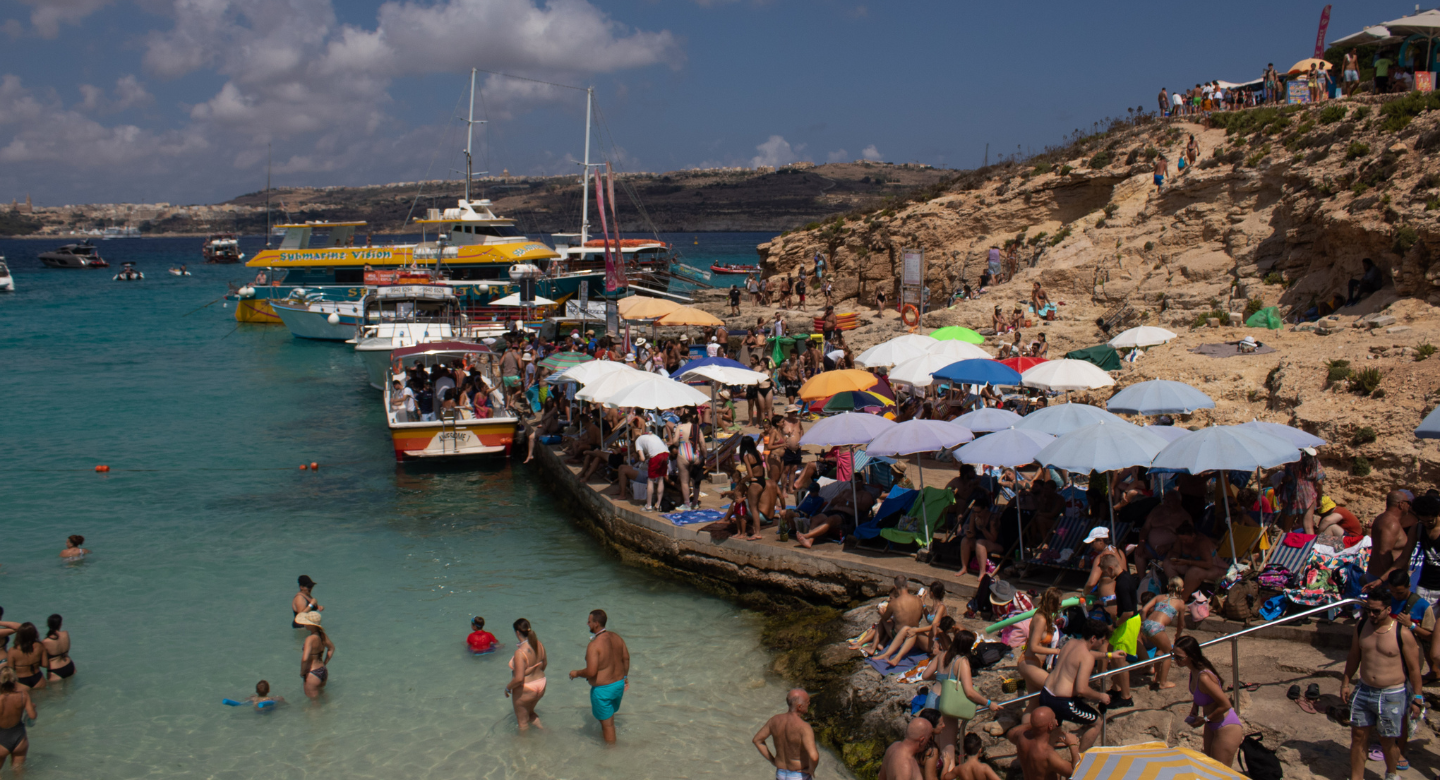
Every morning, thousands of people waste hours in traffic that no longer resembles congestion but permanent gridlock. Roads widened at enormous public expense fill up almost as quickly as they are completed.
Pavements have become obstacle courses, cluttered with overflowing rubbish bags and stained by leaking waste. Entire localities are overwhelmed during the summer months. The infrastructure is failing to keep pace with relentless population growth and record tourist numbers.
These are not isolated inconveniences. They are symptoms of a country operating beyond its carrying capacity.
The Shift has reported on the environmental degradation of Comino, where commercial exploitation transformed one of Malta’s most iconic natural sites into a cautionary tale of overtourism before authorities were finally forced to introduce visitor caps.
It has investigated the relentless construction boom, the planning policies that favour developers over residents, and the failure to invest in infrastructure at the same pace as economic expansion.
Again and again, the pattern is the same: growth first, planning later. Or, more accurately, planning never.
The irony is that government ministers continue to measure success almost exclusively through bigger numbers: more arrivals, more hotel beds, more construction, more cranes. Little attention is paid to the diminishing returns.
The Malta Hotels and Restaurants Association has repeatedly warned that Malta must abandon its obsession with volume and instead focus on quality tourism, arguing that simply increasing visitor numbers without addressing infrastructure, cleanliness, transport, and the visitor experience risks undermining the industry’s long-term competitiveness. Its officials have stressed that the country’s tourism product cannot be judged solely by arrival statistics, even as residents and visitors alike struggle with congestion and declining standards.
The Malta Chamber of Commerce has likewise argued that economic success cannot continue to be measured solely by headline growth figures. It has repeatedly called for a carrying-capacity study, warning that infrastructure, planning and public services are failing to keep pace with population growth and economic expansion. The Chamber has urged policymakers to place sustainability, productivity and quality of life ahead of a model driven by ever-increasing numbers.
Even the National Audit Office has highlighted recurring failures in long-term planning across major infrastructure projects, while the Auditor General has repeatedly criticised weak coordination between government entities responsible for delivering sustainable development.
Yet the government continues to pursue a strategy that assumes bigger automatically means better.
Tourism undoubtedly remains one of Malta’s most important economic sectors. It provides livelihoods for thousands of families and supports countless businesses. But the industry’s success increasingly depends on another uncomfortable reality: a vast workforce of Third Country Nationals.
These workers keep hotels functioning, restaurants serving, hospitals, cleaning, construction sites operating and public transport moving. Without them, Malta’s tourism machine would grind to a halt.
Yet when public frustration boils over, it is often directed at the workers rather than the policies that created the dependence in the first place.
Third Country Nationals become convenient scapegoats because they are the most visible part of a much larger system. They did not decide to pursue an economic model based on perpetual expansion. They simply responded to the demand that government and business created.
Criticising them while applauding endless growth is like blaming waiters because a restaurant keeps accepting reservations long after every table is full.
The real question is not whether Malta needs foreign workers. It is whether Malta has any intention of slowing a model that demands ever more workers, ever more construction and ever more pressure on already failing infrastructure.
Economic booms have a dangerous habit of convincing governments that growth can continue indefinitely. History suggests otherwise. Every boom reaches a point where the costs begin to outweigh the benefits.
Malta appears determined to discover where that point lies by driving straight through it.
The New York Post article is embarrassing not because foreigners are criticising Malta, but because they are observing what many Maltese have been saying for years.
Tourism depends on reputation. Reputation depends on experience. Visitors who spend their holiday sitting in traffic, navigating overflowing pavements, dodging construction sites, riding buses so stuffed they can barely breathe, and struggling through overcrowded public spaces rarely become ambassadors for the destination.
The government’s target of 4.5 million tourists is presented as a vision of prosperity. It may instead become a measure of how spectacularly Malta failed to recognise its own limits.
Growth is not an achievement if it destroys the product being sold.
Sign up to our newsletter Stay in the know
"*" indicates required fields
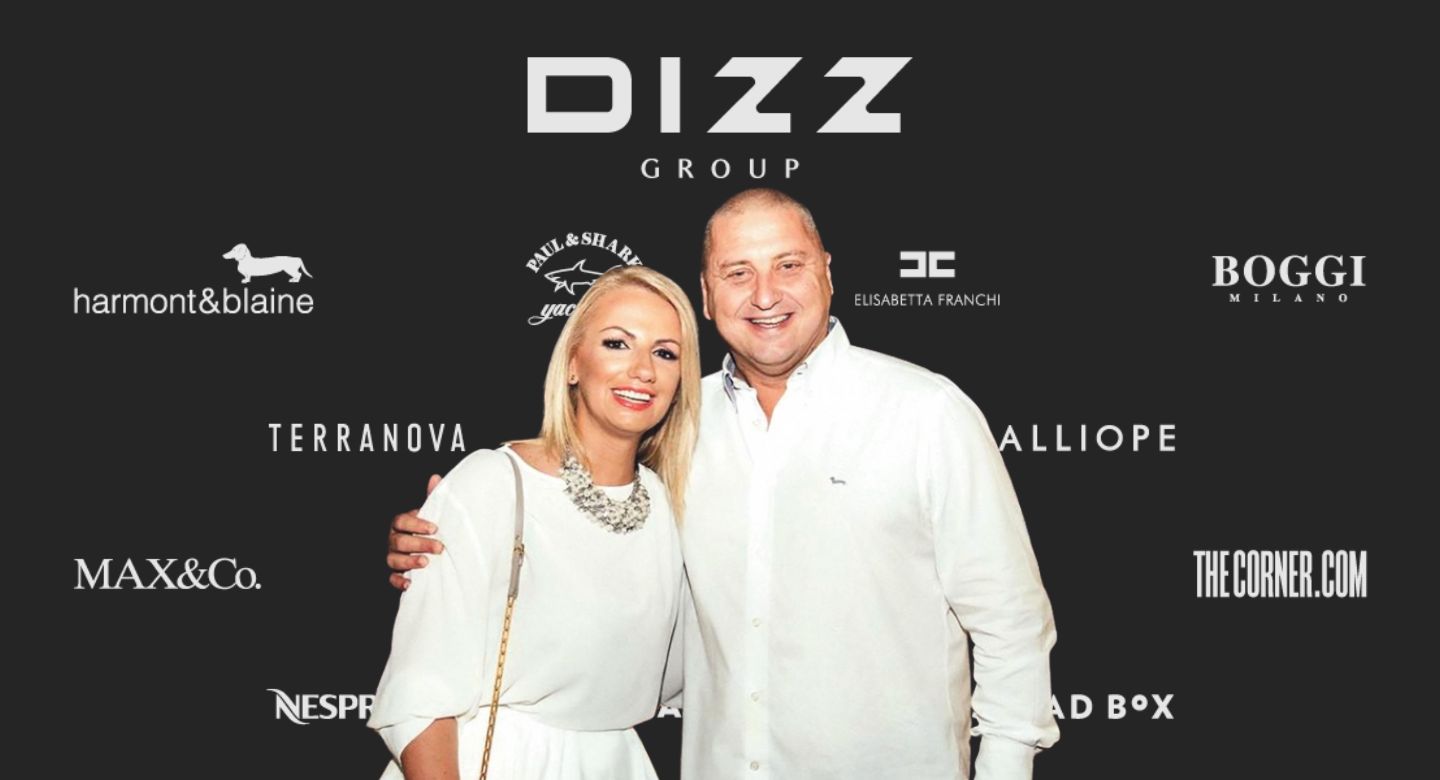
Dizz repays €8 million bond after completing Tigne shopping mall company sale

PN loses more experience as Alex Borg sacks his spokesman


Abela gets another drubbing by PL delegates
Galdes ‘parked’ at National Skills Council
Tags
#Comino
#Malta
#overcrowding
#Tourism
#tourists
Other News
Dizz repays €8 million bond after completing Tigne shopping mall company sale
PN loses more experience as Alex Borg sacks his spokesman
Abela gets another drubbing by PL delegates
Galdes ‘parked’ at National Skills Council

MTA in financial meltdown

International press freedom groups urge Abela to open media bill to scrutiny
Buttigieg stops short of direct action against Carlo Stivala’s new illegal structure
Revealed – Minister awards €53,300 property lease direct order to his own agency chair
PA postpones Saqqajja flats decision amid ground stability concerns
Convicted PL executive candidate given promotion before election

Galdes points fingers at Owen Bonnici over latest social housing standstill
Even the very low level and cheap quality tourists will eventually not come if everywhere is all polluted and drainage is flowing out in every street and bay.. but this government is run by people of a lower level of even these tourists so what can you expect?
Spot on.
Typical of the incompetence governing the island. Find a source of wealth and continue pushing. Like toddlers playing with shape sorters. Only these toddlers keep trying to fit whatever comes to hand in the same hole.
Sure, something works in the beginning. But then it mutates and becomes something else, and does not fit anymore. Go and try to explain this “complex” thinking to the simpletons who run our country though.
Put incompetent people in top positions; get incompetence. As simple as that.
It’s also worth pointing out that the Instagram account overtouristedmalta is playing an important role in increasing awareness of the problems associated with tourism in Malta. I find it quite bizarre that this article fails to mention it, when the NY Post article did.
All I can say is this: go to the Arrivals Lounge at MIA and observe, observe, even for 10 minutes, and you would know the extent of ‘quality tourism’!! Malta gibniha z-zibel tal-Mediterran!
Just been back from one of my frequent journeys, aboard LH and the sheer number of louts and drunken youths on that flight which made my three hours on board A MISERY! And the crew do nothing about it!
Do you still believe that the Tourism Authority / Ministry genuinely does anything to to strengthen the industry? The only reason why they worked hard to get the direct flights,, and God knows what it’s costing the exchequer, is to sell more passports. That’s what interests them. Has anybody dug up what Henley &Partners (and P.A.R.T.N.E.R.S.) still get out of every sale? What about other under the table payments to facilitate addresses, etc?
This happens everywhere in the world. Every major city in the Western world has suffered from “urban sprawl”, as well, which “pushes” lower income households further and further out of the city – if they were ever there in the first instance. This was bound to happen to Malta as well, and the article makes a good point that this isn’t really about tourism or TCNs. It’s an inevitability given Malta’s infrastructure, and the growing burden on that infrastructure (long-dated, e.g., electricity). Instead of seeing this through a partisan lens, maybe looking back to political commitments made by the likes of Harry Vassallo should be re-examined, and every Maltese person can ask him or herself why the ideas espoused in his writing and speeches were often discarded out of hand – including with regard to property taxation. Many wealthy nationalists are against that as well – and this measure alone would do a lot of good for the country, even today.
Qrajt l intervista ghax ma niflahx nisimghu jitkellem jaqq, fuq times tal Prim Ministru mafia! Tat tqallih! U mbad hawn xi hadd qed jahseb li dal gvern mafia ser ibiddel xi haga. Izjed nies qalilna, l poplu qed jixtri l boats u qed jixtri izjed karrozzi w ghalhekk hawn l flus fl idejn u ghal dan trid taccetta l konsegwenzi l igibu maghhom bhat traffiku!! Fuq l bini qalilna tghid mhux ser icahhad il-poplu milli jibni l art li ghandu! Hahaaaa…kullhadd ghandu art x jibni skond l bobby! Hadd mhu zviluppatur min dawn l kbar li hu jinheba wara isimhom!! Kullhadd ghandu dritt jibni skond l policies qal!! Anke tibni fl odz skond il policies?? Anke tibni llegalment skond il-policies? Juza liz-zghir biex ikompli b din il-politika, ma tarax ser iwaqqaf dal bini mbarazz li tiela meta huma kollha mdefsa fih jinhbew wara isem l izviluppatur u ma tarax li ser jieqaf idahhal barranin meta dawn iridu jaghmlu tajjeb ghal business taghhom! Jaqqqq! Gesu hanin kemm hu jaqq u mafia! Ghal dan jivvota l poplu!! Komplu hu go fik!! Summary.Traffiku qallek oqghod kurnut tieghu ghax inti sinjur zghir qed tixtri l karrozzi, bini, izjed bini ghax z zghir kullhadd bl art u mhux ser jghidlu tibniex ma tarax! L barrani ser ikompli jigi ghax qed ikabbar l ekonomija! Nerga nghidlek hu go fik poplu! Mbad hawn xi hadd jahseb li dan l mafia qieghed kastilja ghax ihobb lil Malta!!
Fis sena 2025 gew Malta 14,000 haddiem barrani. L Prim Ministru qalilna li huwa numru baxx. Qalilna li l haddiem barrani ser ikomplu jgibuh. Tistghu timmaginaw kif Malta ser tispicca. Diga spiccuta!