

Deputy Prime Minister Ian Borg has emerged as the biggest winner from Labour’s post-election internal confirmation vote, securing a stronger endorsement from party delegates than Prime Minister Robert Abela himself and reinforcing growing speculation that he is increasingly being viewed as Labour’s natural successor.
The confirmation vote, required under the Labour Party statute following the general election, saw Borg comfortably outperform both Abela and the party’s deputy leader for party affairs, MEP Alex Agius Saliba.
Of the 672 delegates who cast a ballot, Borg received 639 votes in favour and only 15 against.
By comparison, Abela, fresh from a successful electoral campaign, secured 627 votes in favour but attracted 36 votes against, while Agius Saliba received the weakest endorsement, with 598 votes in favour and 55 delegates voting against him.
Although all three comfortably obtained the delegates’ confirmation, the political significance lies not in whether they were approved, as this was overwhelmingly expected, but in the level of support each attracted.
For many within Labour, Borg’s result confirms what has increasingly become a widespread assessment inside the party and at Castille: that if Labour intends to remain in government beyond the next general election, it may eventually need to present a new leader.
Multiple Labour sources told The Shift that while Robert Abela remains firmly in control following his electoral victory, many senior party officials have already begun looking beyond the current legislature.
According to these sources, Labour’s latest electoral victory has not removed concerns about the party’s longer-term prospects, particularly with Abela at the helm. Although it is still early days, internal discussions are increasingly focused on whether Labour can realistically contest yet another general election under Abela’s leadership if the political momentum that has kept the party in office for over a decade continues to erode.
Abela is not considered particularly charismatic, even by some of his closest allies, including the majority of members of his own Cabinet, sources said.
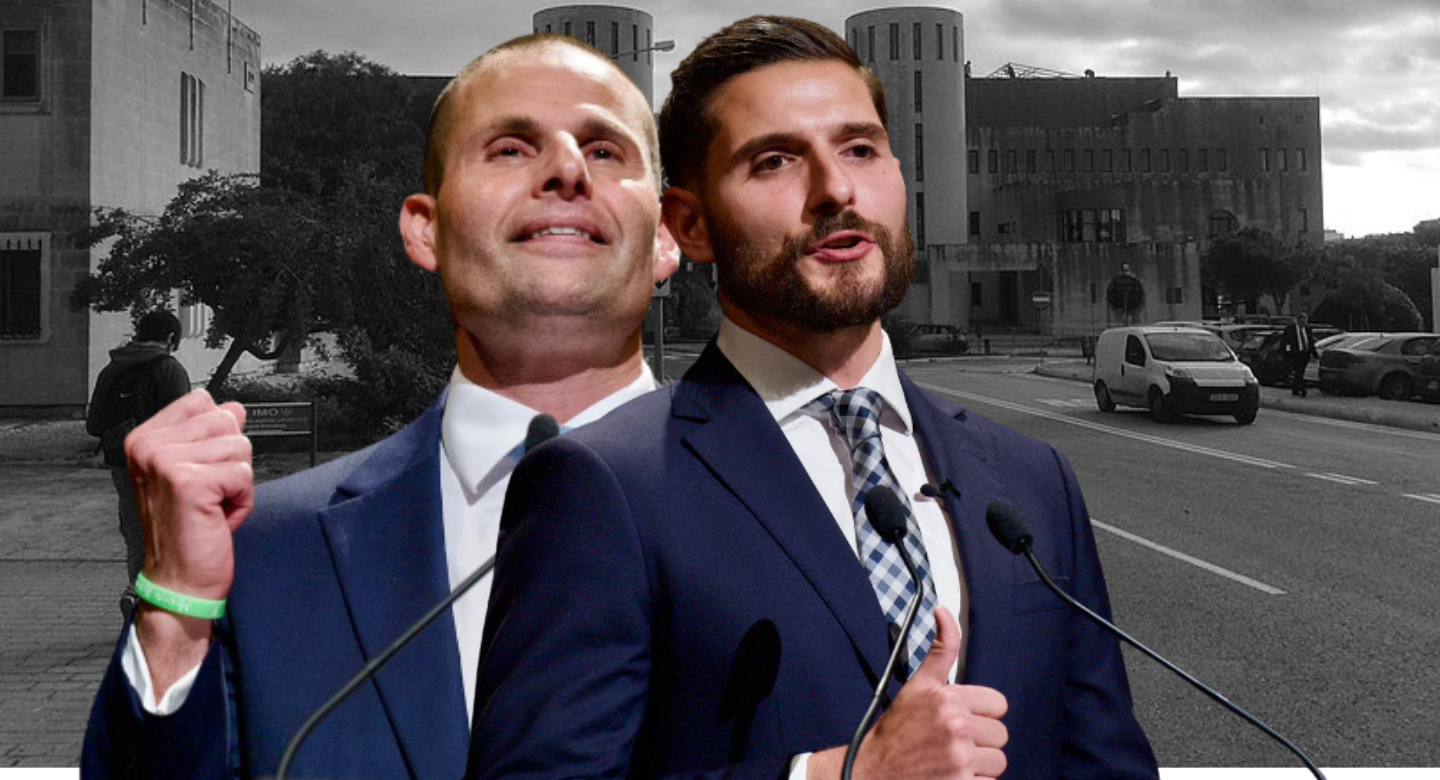
One of the factors driving these discussions is the emergence of Nationalist leader Alex Borg.
Although still at an early stage of his leadership, and despite the Nationalist Party being expected to recover naturally after spending so many years in opposition in Malta’s two-party political system, Borg is widely regarded as having injected fresh energy into the Opposition.
Labour insiders acknowledge that his youth, communication style and broader appeal present a different political challenge from that posed by previous Nationalist leaders even though he is also at a more favurable electoral timing as after many years, Labour is in descent.
They also point to the fact that the Nationalist Party succeeded in almost halving Labour’s electoral advantage at the last general election.
While Labour still secured a comfortable victory, party strategists are aware that another electoral swing of a similar magnitude would place the next election firmly within the Opposition’s reach.
It is against this backdrop that Ian Borg’s standing has steadily grown.
Senior Labour sources told The Shift that, unlike many senior Labour politicians, Borg is viewed by party insiders as one of the few figures capable of matching the appeal of a younger Nationalist leader while retaining the confidence of Labour’s traditional base. Sources describe him as one of the government’s most electable politicians, enjoying strong support among Labour loyalists while also attracting moderate and floating voters who would not normally back Labour.
The latest delegate vote is expected to further strengthen Borg’s position inside the party.
Many Labour officials now interpret the result as more than a routine confirmation exercise, seeing it instead as an indication that the party’s grassroots already regard him as Labour’s strongest long-term electoral asset.
Ironically, Borg arrives in this position despite carrying political baggage of his own.
During his years as infrastructure minister, he became synonymous with the government’s massive road-building programme and has repeatedly faced criticism over planning and governance issues. His most notable controversy remains the court-annulled permit for a swimming pool at his Rabat residence, which was declared illegal twice by the courts after he had already completed the development. Despite repeated calls for his resignation, Borg weathered the controversy and remained one of the government’s most popular ministers.
Sources familiar with internal discussions said the next major political milestone is widely seen as the 2029 European Parliament elections. Should Labour underperform in those elections, pressure on Abela to step aside before the following general election could increase substantially.
Several Labour officials believe such a scenario could pave the way for an orderly leadership transition midway through the legislature, allowing a new leader sufficient time to establish himself before asking the electorate for another mandate.
Sign up to our newsletter Stay in the know
"*" indicates required fields
Government makes U-turn on Chambray, leaves protection and public access unclear

Dalli’s trusted aide leaves regulator after clash over interference

Dripping poison


Rare PL-PN unity as Siġġiewi vows to stop crematorium

Tags
#Alex Borg
#Ian Borg
#pl future
#popularity
#Robert Abela
Other News
Government makes U-turn on Chambray, leaves protection and public access unclear
Dalli’s trusted aide leaves regulator after clash over interference
Dripping poison
Rare PL-PN unity as Siġġiewi vows to stop crematorium

MeDirect rejects bond disclosure allegations, warns Vaswani of damages claim
Dalli finds the culprit of Wied Speranza: water in a valley
Pama directors’ bonuses rise 21% as operating profit falls

Clyde Caruana livid as Lydia crosses the line

Minister ordered to appoint Luke Dalli as PBS deputy chairman

Kurt Farrugia ‘forgot’ to publish direct orders

Malta increases its dependency on imported electricity as population surges

Whoever is PL leader is largely irrelevant.
Alex Borg is devoid of the substance normally associated with PN leaders and is more focussed on his own image as a handsome cool dude.
Were the PN ever to come remotely close, the PL will compensate through even more vote buying and all sorts of corrupt practices, which the PN has clearly chosen to turn a blind eye to.
And Ian Borg, who nominated Trump for the Nobel Peace prize, is considered charismatic by Labour?! Surreal.
Ian Borg is well-qualified to become the next PL leader: another raging narcissist, just like Abela, and Muscat before him.