
Police investigators probing Daphne Caruana Galizia’s murder had not yet heard Keith Schembri’s name in connection with the case until Melvin Theuma was arrested in late 2019 while holding an ice cream box containing recordings, devices, documents and a photo of himself with the former chief of staff of the prime minister.
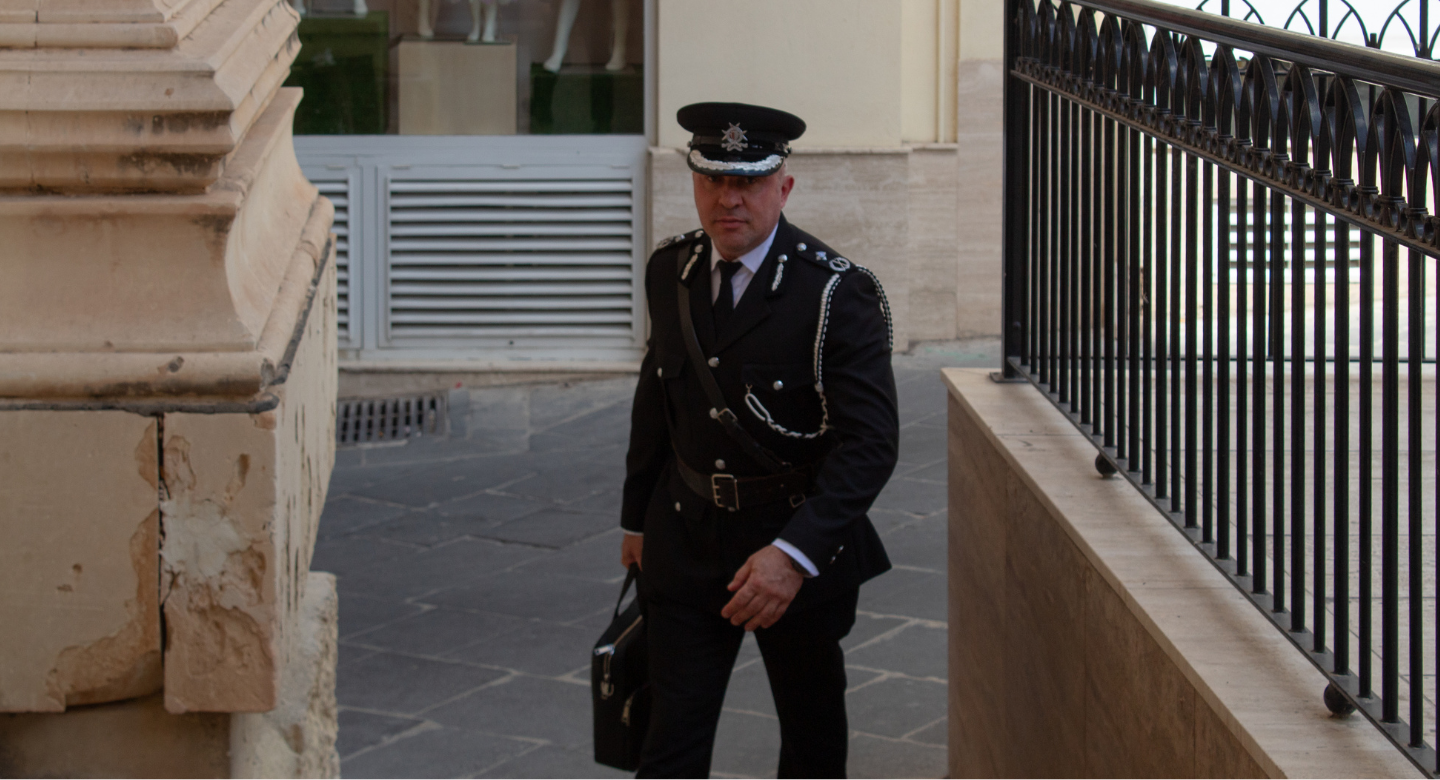
That evidence box marked a turning point in the investigation, which was led by Assistant Commissioner Keith Arnaud. Arnaud was testifying on Friday during the trial of Yorgen Fenech, who stands charged with complicity in Caruana Galizia’s voluntary homicide and criminal association.
Fenech denies the charges, which place him at the centre of a conspiracy that sought to eliminate Daphne Caruana Galizia due to the investigative work she was publishing about Fenech’s business interests and the corruption allegations surrounding them.
While Schembri faces multiple criminal charges from several ongoing corruption cases, the disgraced former chief of staff has not been convicted of any crimes.
“We didn’t see any reason other than her work why she would have been killed, so it was almost an inevitable conclusion that her work was linked with her murder,” Arnaud noted.
The assistant commissioner’s testimony, which began on Friday morning and continued later on in Friday afternoon, walked the jury through the path which led investigators from the Bidnija crime scene to the arrest of the executors and, eventually, to Theuma, the alleged middleman who would later become the prosecution’s key witness against Fenech.
Theuma had initially attempted to insulate Fenech from the men who carried out the murder by initially refusing to reveal the name of the person allegedly funding the assassination. Arnaud told the court that investigators began closing in on Theuma after Vincent Muscat approached police in April 2018 through his lawyer, Arthur Azzopardi.
Muscat’s version, Arnaud said, aligned “perfectly” with evidence police had already gathered. He told investigators the plan had first involved attacking Caruana Galizia with a rifle before the men settled on a bomb as a more definitive method.
Muscat also named Melvin Theuma as the person who had approached Alfred Degiorgio to request the killing. The murder fee was set at €150,000, with a €30,000 deposit divided between the three men who later admitted carrying out the assassination.
Later on in the testimony, Arnaud clarified that, according to Theuma’s estimates, the middleman ended up transferring around half a million euro to the Degiorgio brothers to ensure their legal expenses paid for and to reassure them they would be taken care of.
Muscat’s information was largely hearsay and could not, on its own, be used as evidence. Police therefore needed corroborating material before moving against Theuma, and sought to build a strategy which would lead to Theuma’s capture without risking the loss of the secret recordings which the police was already aware of after spending months monitoring calls that the Degiorgio brothers were making from prison.
The request for a presidential pardon for Muscat was initially rejected. By then, investigators had also become concerned that the criminal group had learned Muscat was speaking to police. Arnaud said this raised security concerns, including for Muscat himself.
The investigation then turned more closely towards Theuma. Police identified his professional links to Portomaso and monitored his behaviour, which Arnaud described as increasingly panicked. By May 2018, investigators believed Theuma was “spiralling” and worried about a then-unknown individual with whom he had a serious problem.
By June 2018, police understood that Theuma was secretly recording conversations with the still unidentified person. Arnaud said investigators did not know whether those recordings had any evidential value or whether Theuma was attempting to entrap the individual, who was later identified as Fenech.
Faced with the risk of alerting Theuma, Arnaud said he argued against arresting him prematurely. An interrogation without enough evidence, he said, could have revealed what police knew while still forcing them to release Theuma after 48 hours.
In 2019, police opened a parallel money laundering investigation into Theuma’s black market lotto operation. The Financial Crimes Investigation Department was brought in, with Major Crimes standing by.
By October, police had set a date for a raid. But on 14 November 2019, investigators learned Theuma was aware of the planned operation and moved to arrest him immediately.
Arnaud said that, despite Theuma’s tough outward manner, he quickly said he wanted to speak about Caruana Galizia’s murder and did not want anyone else to handle the recordings he had kept in an ice cream box.
One of the first things Theuma said, according to Arnaud, was that he wanted a lawyer “from the Nationalist Party”, implying distrust of government-linked figures.
The box was opened before the inquiring magistrate later that day. Inside, police found three mobile phones, a voice recorder, three USB sticks, cables, sheets of paper, chat screenshots and a photo of Theuma with Schembri at Castille, after Theuma had been given a phantom job.
Arnaud said Theuma insisted on a presidential pardon before disclosing everything he knew. By 19 November 2019, a final agreement had been prepared and signed by the Prime Minister, the Attorney General and the Police Commissioner.
After Theuma’s intel proved to be actionable and truthful, the presidential pardon was issued.
The trial continues.
Sign up to our newsletter Stay in the know
"*" indicates required fields

Verdict: 8-1 – Yorgen Fenech not guilty


‘May God help you in your decision’: Fenech jury begins deliberations
Judge expected to wrap up trial tomorrow

Judge: Theuma’s pardon does not make his testimony automatically true
Tags
#Alfred Degiorgio
#Daphne Caruana Galizia
#FCID
#George Degiorgio
#keith arnaud
#Keith Schembri
#Major Crims Unit
#Melvin Theuma
#portomaso
#Yorgen Fenech
Other News
Verdict: 8-1 – Yorgen Fenech not guilty
‘May God help you in your decision’: Fenech jury begins deliberations
Judge expected to wrap up trial tomorrow
Judge: Theuma’s pardon does not make his testimony automatically true

Where are the messages between Keith Schembri and Keith Arnaud? – defence asks
Theuma promised pardon before Fenech’s arrest, defence tells jury

Prosecution tells Fenech jury it wants ‘the whole truth’ uncovered

‘Keith Schembri effectively gave himself a pardon’, Fenech defence claims
Fenech defence: Evidence pointing to Keith Schembri was deliberately blocked by police
Fenech defence alleges ‘cover-up and frame-up’ as testimony ends

‘If I could turn back time’: Fenech challenged over failure to report murder plot
Melvin Theuma implika lil Yurgen u Keith l Kasco f ittra li kiteb handwritten ghax dawn t tnejn kienu warbuh wara li hadu kull ma riedu minnu w kien qed jibza li ser joqtluh! Wara li interroggawh l pulizija qal li Keith huwa lmdahhal ukoll imma ftit wara biddel l verzjoni w qal li Keith m ghandux x jaqsam! L kohhu w shabu semmew lil Cardona u kienu qalu mil habs li ser jikxfu izjed nies! Xejn ma gara min dan!., yurgen wera li ma jafdax lil Arnaud! Tghid ghaliex!! Kollox ha johrog!! Hekk jidher!! Kollox pjanat imma!!