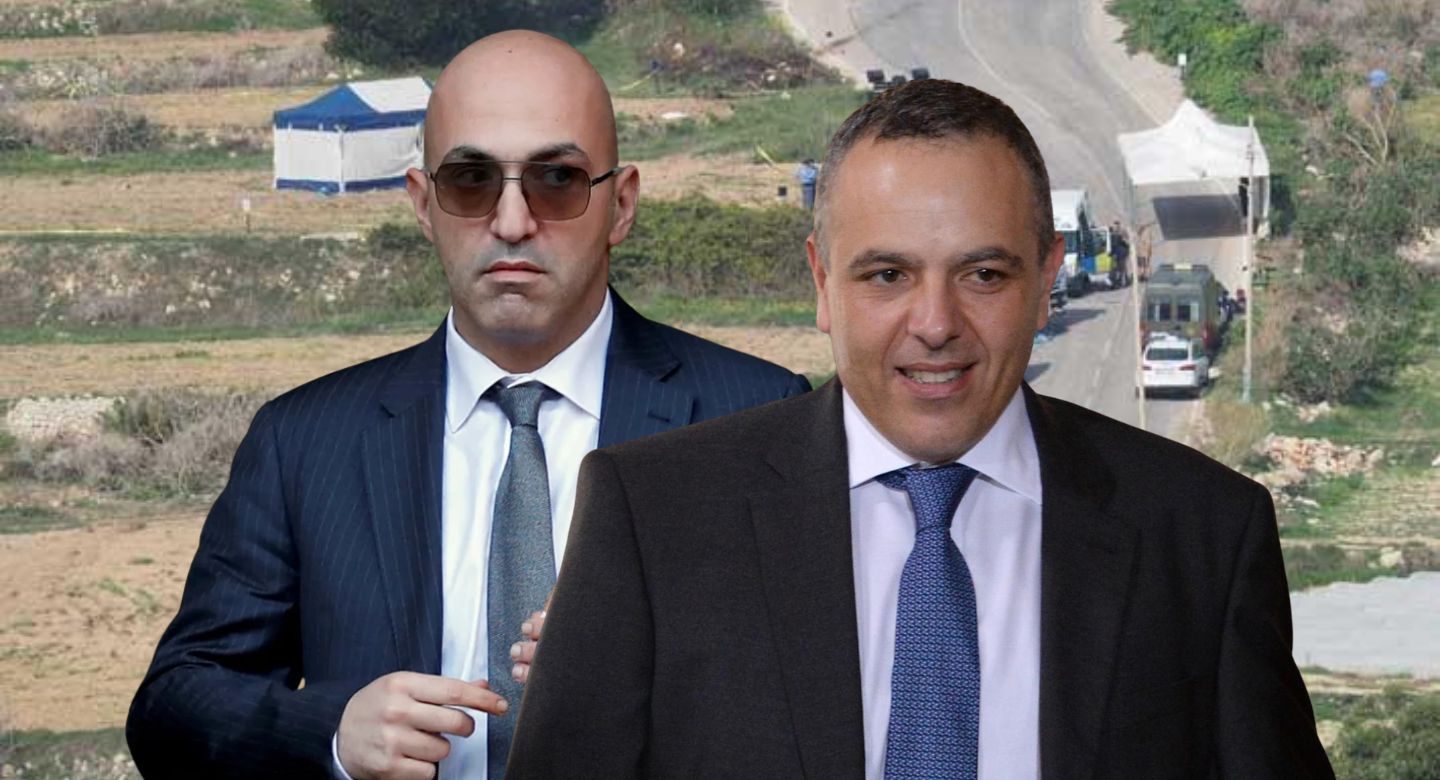
Police traced the phones used to trigger the bomb that killed Daphne Caruana Galizia through cell tower data, surveillance footage, and the involvement of international experts and forensic analysts, Assistant Commissioner Keith Arnaud told jurors on Friday.
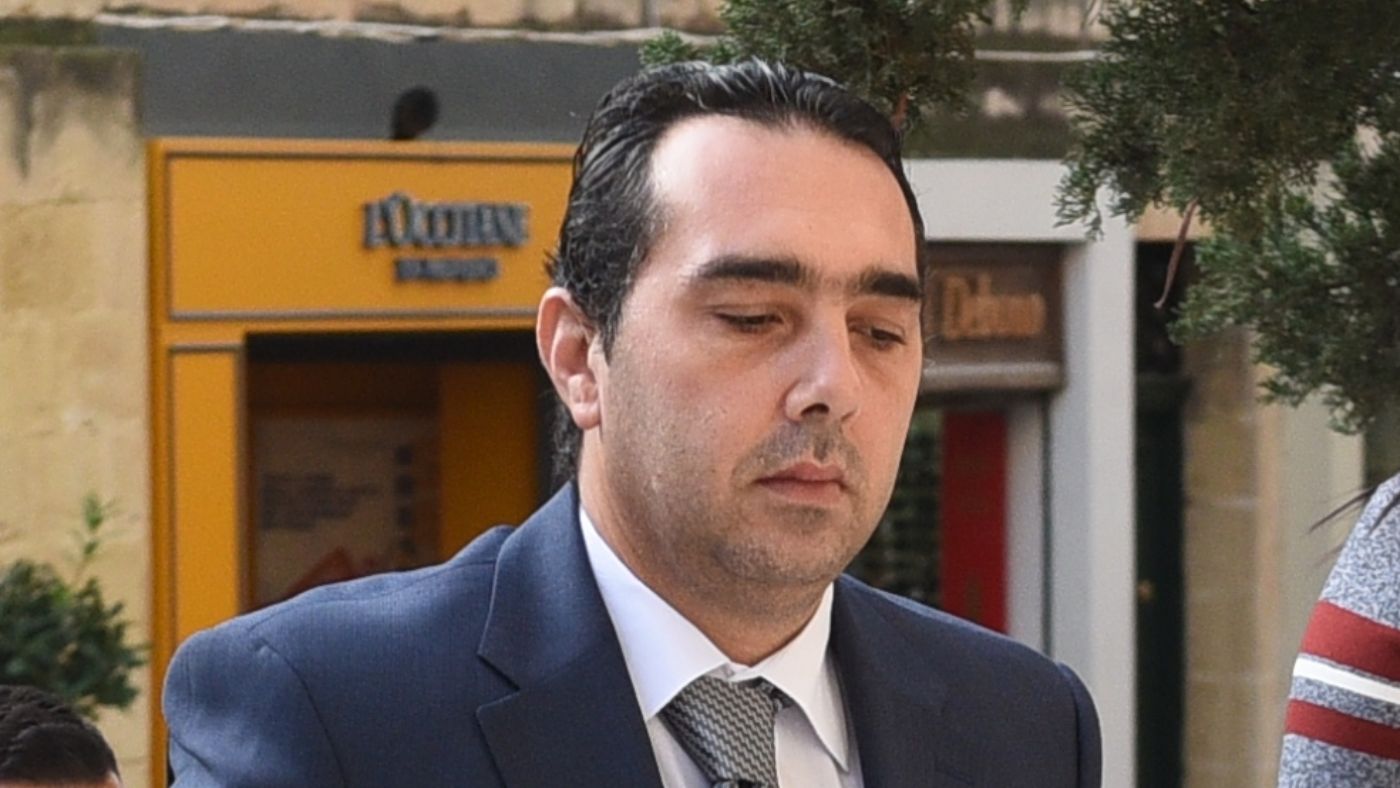
Arnaud, who now heads the major crimes unit, was the first witness to testify in the trial by jury against Yorgen Fenech, who stands charged with complicity in the voluntary homicide of Caruana Galizia and criminal association for the purpose of committing a crime.
Fenech denies the charges.
Arnaud told the court that, in 2017, he was still an inspector investigating murders alongside his colleague Kurt Zahra. He recalled how the investigation began at the scene of the explosion in Bidnija on 16 October 2017, with police immediately moving to preserve the area until foreign experts arrived.
“This was not the first car bomb attack we had over the last few years,” Arnaud told the jury, explaining that investigators needed to pursue two main lines of inquiry: the physical evidence at the scene and the mobile phone data that could explain how the bomb was activated.
He said it was clear from the scene that the bomb had been placed directly beneath the driver’s seat and that the force of the explosion had moved outwards from that point.
Police decided not to touch anything until international experts arrived, Arnaud said. The crime scene was completely cordoned off to ensure that evidence was not tampered with. Europol, FBI and Netherlands Forensic Institute experts were later involved in different parts of the investigation.
Arnaud told jurors that Caruana Galizia’s son, Matthew, was one of the best sources police had at the scene for establishing the immediate facts. He had explained that his mother had just uploaded her final blog post, then went back into the house to retrieve a cheque book before leaving for a bank appointment.
Investigators believed the person or persons responsible were watching Caruana Galizia’s movements because the bomb was triggered while she was driving. Police therefore began searching for possible vantage points.
Two areas were identified: Victoria Lines and an area near Ġnien l-Għarusa tal-Mosta. Arnaud said a witness living near Victoria Lines had reported seeing a small vehicle with a partial QZ registration plate on the day of the murder and on previous days.
At the Victoria Lines site, police found a secluded vantage point which Arnaud described as “basically a balcony overlooking Bidnija”, saying that even a cheap pair of binoculars would have allowed someone to clearly follow movements near Caruana Galizia’s home.
Cigarette butts found at the site confirmed that the police had found the right spot, another step which eventually led them to the suspected executors.
The court also heard how investigators used phone data to identify the numbers allegedly used to trigger the bomb. Arnaud said one number ending in -4366, sent a message at 2.58pm to another number ending in -3752, after which both phones went silent.
The SMS contained the command “#rel1 = on”, which investigators understood to be the instruction that activated the device attached to the bomb.
Arnaud said the phones had been activated months earlier but were used almost exclusively to communicate with each other, indicating that they were burner phones.
Police also identified three other numbers, ending in -8820, -8823 and -8824, which were active around Bidnija and stopped operating shortly after the explosion. Their movements and activity suggested they were the personal phones belonging to the same group coordinating the attack, Arnaud said.
The mobile phone data eventually led police to the Marsa potato shed, a location frequented by George and Alfred Degiorgio, who were already known to police. Arnaud said the data matched locations linked to the brothers, including St Paul’s Bay and Marsa.
The investigation also focused on the Maya, a boat registered to the Degiorgio brothers. Arnaud said footage showed the boat leaving the Grand Harbour on the day of the murder and returning shortly after 3pm. Police later filmed the Maya again on 21 November 2017 and commissioned an expert comparison, which concluded that the same boat appeared in the footage.
After all the data was gathered, Arnaud explained how the police moved towards making its arrests in late November 2017, noting that the first time he ever walked into Castille was to brief the Prime Minister and several other key officials about the latest updates on the investigation.
By 4 December, the police moved in to raid the Marsa potato shed. Before the raid, Arnaud and his former superior officer, disgraced former Assistant Commissioner Silvio Valletta, went for a second meeting with the Office of the Prime Minister to brief them about the final details of the plan.
Arnaud further noted that the executors appeared to be already aware of the raid, and although the police anticipated a lack of cooperation during interrogation, they could not immediately pinpoint how they knew about the raid ahead of time.
The dead giveaway was that George Degiorgio had already written his partner’s phone number on his wrist, in anticipation of an arrest. Melvin Theuma had previously testified to say that Yorgen Fenech had warned them about the raid in advance but did not know how the executors managed to obtain this information.
Arnaud’s testimony continues in the afternoon after a brief pause.
Sign up to our newsletter Stay in the know
"*" indicates required fields

Verdict: 8-1 – Yorgen Fenech not guilty


‘May God help you in your decision’: Fenech jury begins deliberations
Judge expected to wrap up trial tomorrow

Judge: Theuma’s pardon does not make his testimony automatically true
Tags
#Alfred Degiorgio
#Bidnija
#Castille
#Daphne Caruana Galizia
#George Degiorgio
#keith arnaud
#kurt zahra
#malta police force
#Silvio Valletta
#Valletta
#Vince Muscat
#Yorgen Fenech
Other News
Verdict: 8-1 – Yorgen Fenech not guilty
‘May God help you in your decision’: Fenech jury begins deliberations
Judge expected to wrap up trial tomorrow
Judge: Theuma’s pardon does not make his testimony automatically true

Where are the messages between Keith Schembri and Keith Arnaud? – defence asks
Theuma promised pardon before Fenech’s arrest, defence tells jury

Prosecution tells Fenech jury it wants ‘the whole truth’ uncovered

‘Keith Schembri effectively gave himself a pardon’, Fenech defence claims
Fenech defence: Evidence pointing to Keith Schembri was deliberately blocked by police
Fenech defence alleges ‘cover-up and frame-up’ as testimony ends

‘If I could turn back time’: Fenech challenged over failure to report murder plot