
Maltese people continue to report above-average levels of satisfaction with their quality of life but nonetheless expressed significant concern about physical and mental health, affordability, work-life balance, and the quality of their environment, according to the latest Eurobarometer survey.
The survey, which collected a total of 505 responses from Maltese people between 9 April – 3 May, focused on five broad aspects: outlook on the future, ways to face global challenges, quality of life, citizens’ priorities, and citizens’ attitudes towards the EU and its institutions.
The data also pointed towards an apparent contradiction: an overwhelming majority of Maltese people reported being satisfied with their quality of life. At the same time, half of the respondents believe their physical and mental health could be improved, indicating elevated levels of stress.
Overall, Maltese people’s outlook on the future appears to be more positive on a personal and national level than it is about the EU and the world at large.
While 85% of Maltese respondents are totally optimistic about their own personal prospects, with a 73% positive response rate for Malta’s prospects as a country, the percentages are lower for the EU (70%) and even lower for the world as a whole (40%).
Notably, the 73% of respondents who are optimistic about Malta’s prospects represent an eight-percentage-point increase over last year. Conversely, the 40% who are optimistic about the world’s prospects represent a 5-percentage-point decrease from last year.
Maltese people reported feeling hopeful (42%), confident (37%), determined (31%), and serene (30%), but also somewhat anxious (30%).
Another category in which Maltese respondents stand out compared with the average across all 27 EU member states is the differing levels of belief about whether the EU should take a more proactive role in tackling global crises and security risks.
While 68% of respondents across the EU believe the EU should be doing more, 84% of Maltese people believe this is the case, a significant difference of 16 percentage points.
A similar gap can be observed in how many people believe the EU needs more resources to face global challenges: while a strong majority of 73% of European citizens believe the EU should have more firepower, the percentage rises to 91% among Maltese citizens.


As for Maltese citizens’ priorities regarding strengthening Europe’s position on the global stage, a clear, noticeable shift in priorities since the last Eurobarometer survey in February emerges.
Defence and security (56%, up by four percentage points) is now by far Malta’s number one priority at the European level, with the next three major priority areas scoring 25% each: energy independence and infrastructure (up by seven percentage points), competitiveness and the economy (up by three percentage points), and education and research (down by five percentage points).

In February’s Eurobarometer, the three key priorities highlighted by Maltese citizens were uncontrolled migration flows, cyber attacks, and active wars and conflicts near Europe, suggesting that the global news cycle’s increased focus on armed conflict following the subsequent shocks from the ongoing Russian invasion of Ukraine and the US-Israeli war on Iran earlier this year has forced a shift in perception.
When it comes to answering specific questions about quality of life, 50% of Maltese respondents believe that physical and mental health is the most important indicator, followed by social life (41%), affordability (39%), quality of the environment (37%), and work-life balance (37%).
In response to a question about what respondents believe could be improved in terms of their quality of life, the biggest concern was physical and mental health (46%), nine percentage points above the EU average of 35%.

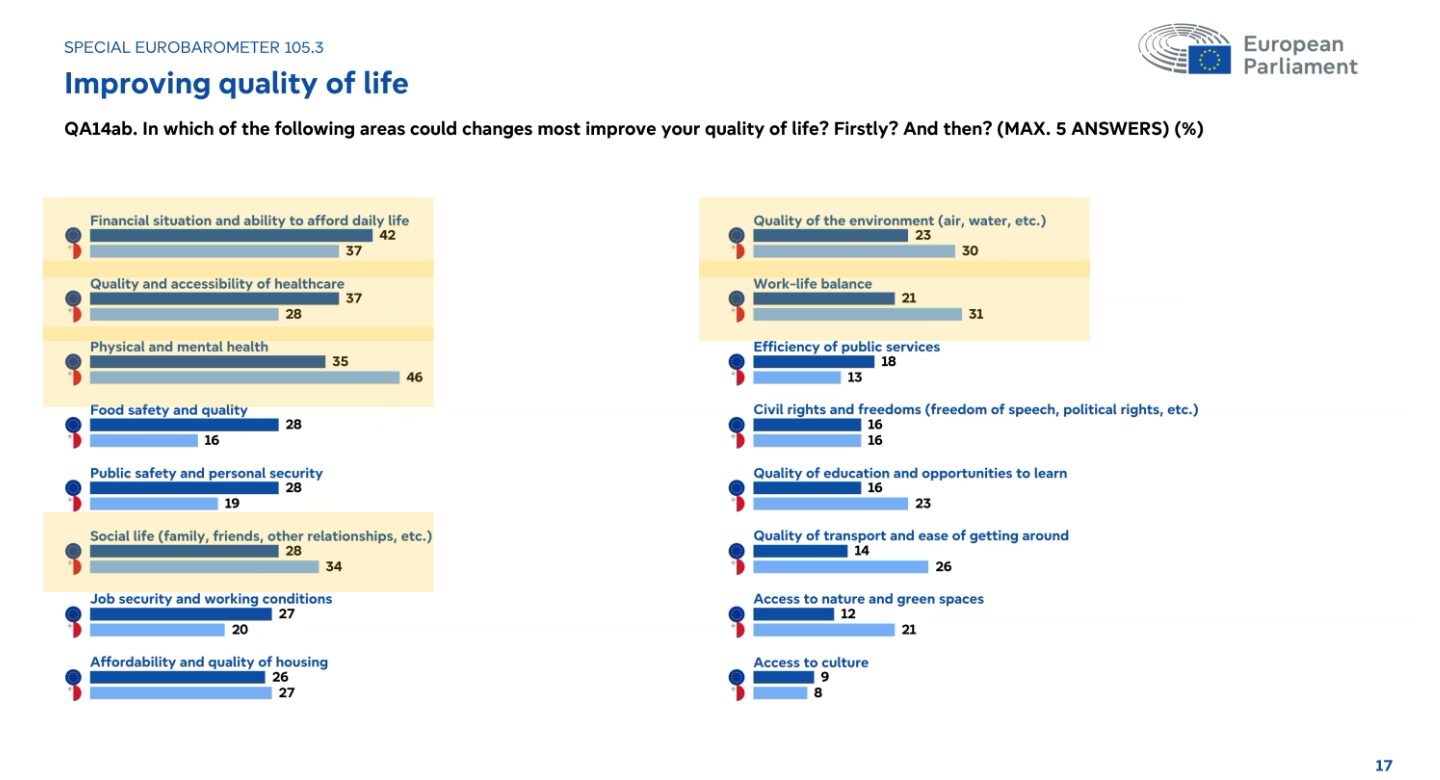
While nearly half the population singled out physical and mental health as a key concern, locals appear less concerned about their ability to access quality healthcare (28%) than the EU average (37%).
Again, affordability (37%), social life (34%), work-life balance (31%), and quality of the environment (30%) ranked among the other top quality of life concerns highlighted by Maltese respondents.
Maltese respondents scored above average when it comes to concerns about work-life balance and the quality of the environment. Work-life balance concern for Maltese people is ten percentage points more than the EU average and seven percentage points above the average for quality of the environment.
Sign up to our newsletter Stay in the know
"*" indicates required fields

Abela gets another drubbing by PL delegates
Galdes ‘parked’ at National Skills Council

MTA in financial meltdown

International press freedom groups urge Abela to open media bill to scrutiny
Tags
#eurobarometer
#European Union
#Iran
#Israel
#Malta
#mental health
#physical health
#quality of life
#Special Eurobarometer
Other News
Abela gets another drubbing by PL delegates
Galdes ‘parked’ at National Skills Council
MTA in financial meltdown
International press freedom groups urge Abela to open media bill to scrutiny
Buttigieg stops short of direct action against Carlo Stivala’s new illegal structure
Revealed – Minister awards €53,300 property lease direct order to his own agency chair
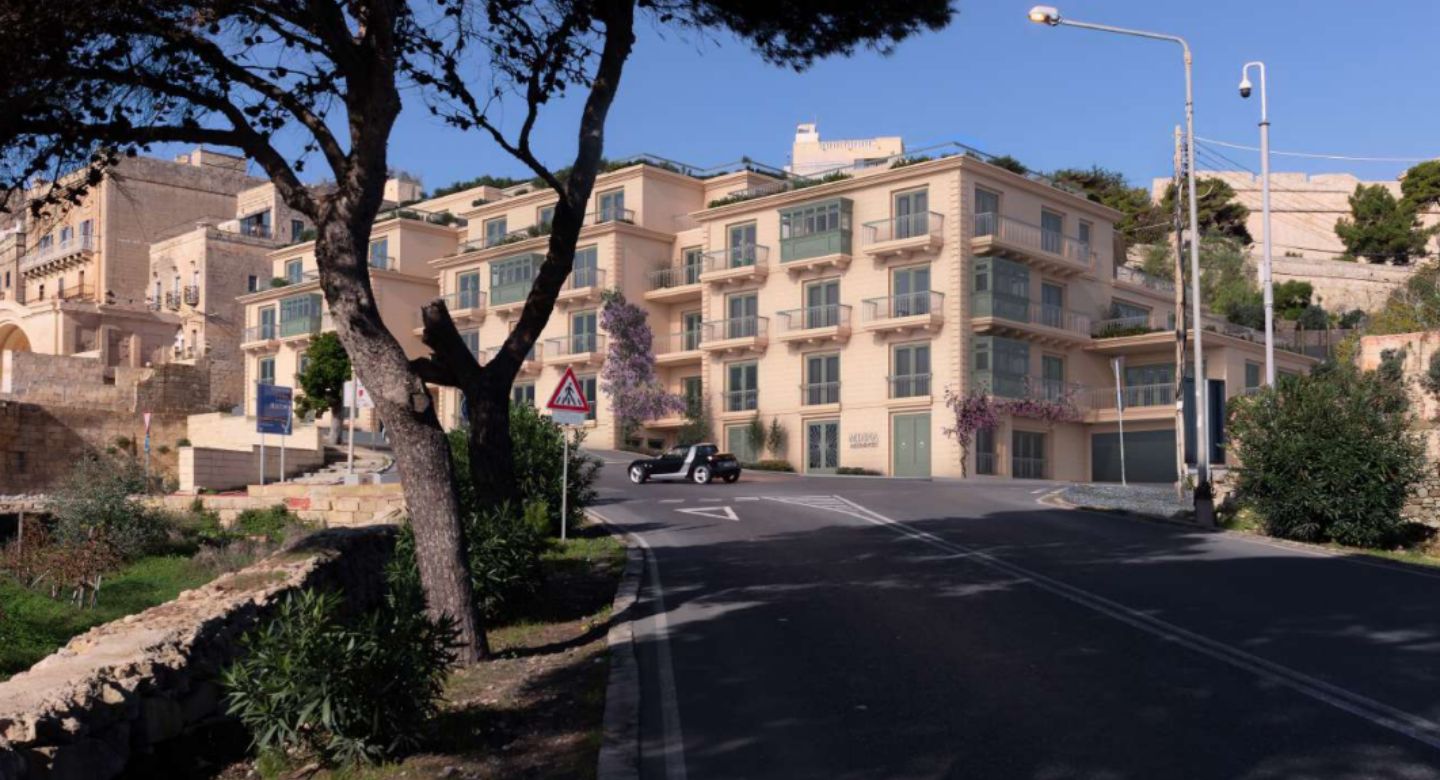
PA postpones Saqqajja flats decision amid ground stability concerns
Convicted PL executive candidate given promotion before election

Galdes points fingers at Owen Bonnici over latest social housing standstill
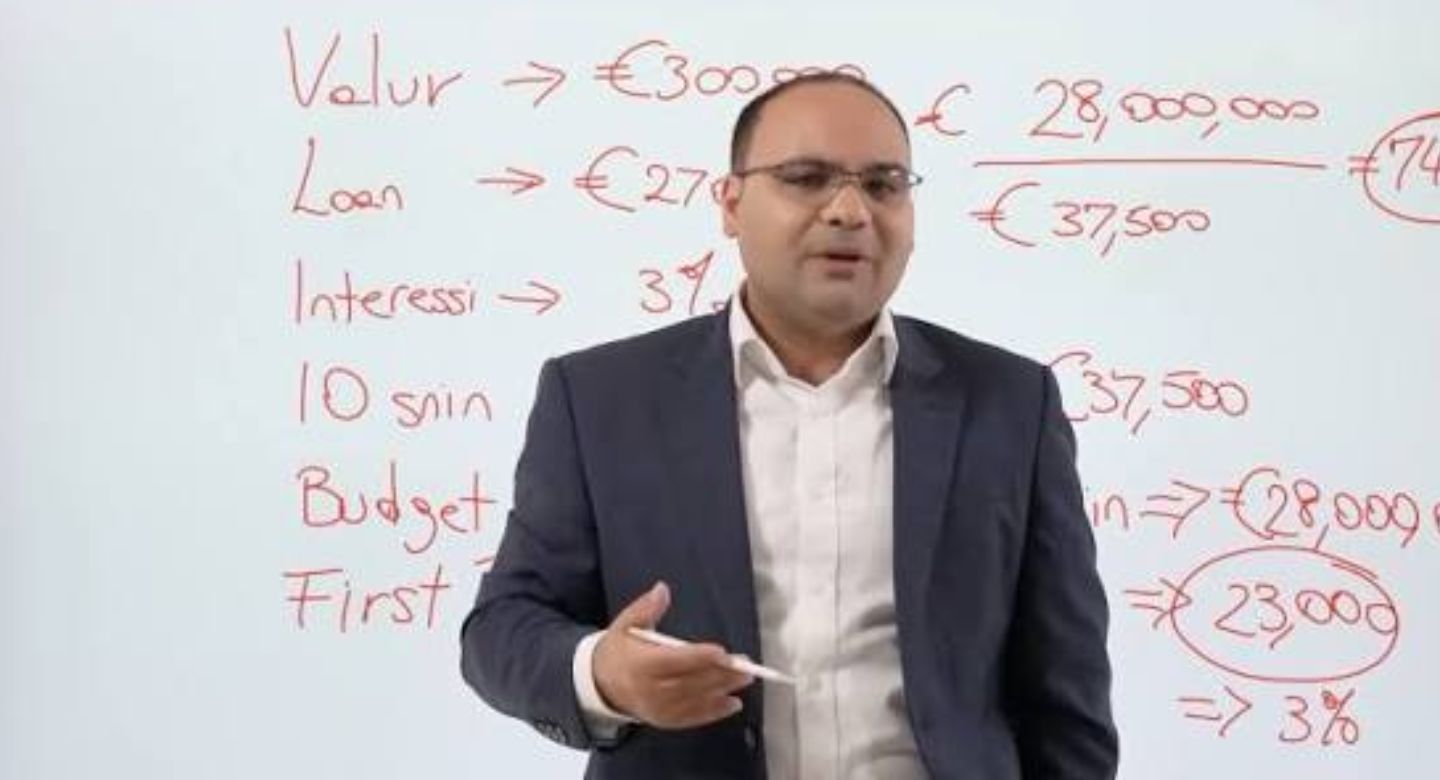
Clyde Caruana misses deficit target by €312 million

PBS ‘hides’ Ricky in response to PN court case

Because they are not really happy. It’s just another facet of the Maltese “way-of-life”. They simply do not want to admit they are not “happy”.
This “optimism” is lack of awareness, lack of perception, lack of foresight and lack of critical thinking.
And then there’s the “but on the whole”… which is not really a true look at the whole, but a mere defeatist attitude in the guise of “optimism”.
It’s serf-mentality: don’t let the masters catch you expressing your real thoughts.
What a country. What a people.