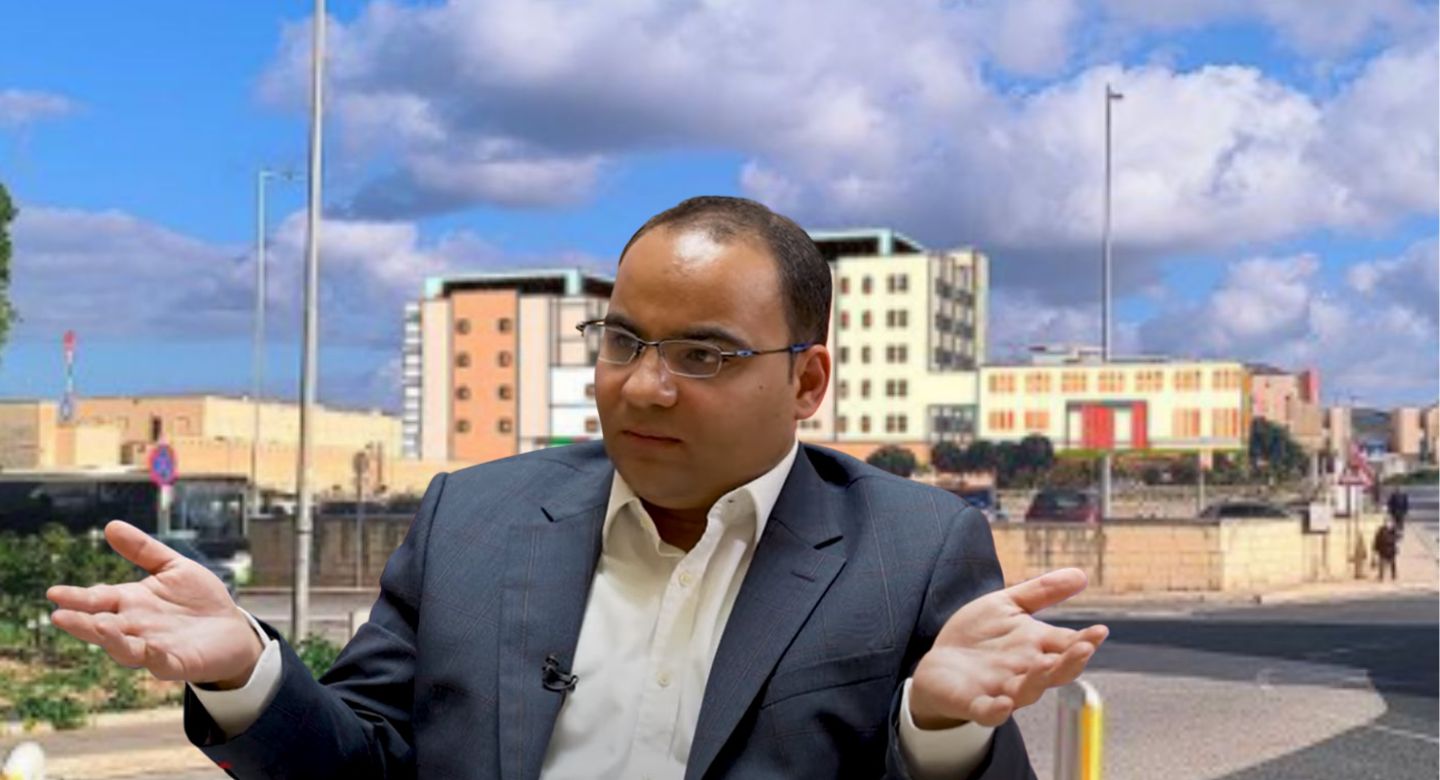

The government has suddenly issued a €120 million direct order to a consortium led by Bonnici Brothers – known for their proximity to Prime Minister Robert Abela – for the long-delayed extension of Mater Dei Hospital. The direct order was issued even though the original 2024 public tender for the same project still appears to be under appeal by the same contractors.
The decision, taken in an unprecedented move just weeks before a rumoured general election, effectively sidelines a competitive process that had initially valued the project at €80 million, or €40 million less than the newly awarded direct order.
Finance Minister Clyde Caruana, who is responsible for public procurement and the public purse, did not respond to questions from The Shift on why the government opted for a direct order instead of awaiting the outcome of the ongoing appeal and reissuing a competitive tender, as is usually done.
Health Minister Jo Etienne Abela also failed to reply.
The Shift asked both ministers to clarify how the direct order complies with public procurement rules, particularly in light of EU regulations requiring transparency and competition, and how it could be issued while the original tender process is still legally unresolved.
According to the government’s e-tenders portal, the original call (CT2329/2024) is still officially marked as pending and in the “evaluation stage”. This is corroborated by the Public Contracts Review Board (PCRB), which confirms that the original appeal filed by the same consortium, CE-BB Projects Limited, is still pending and yet to be decided.

Despite this, the government has proceeded to award the same contract directly to the Bonnici-led consortium, eliminating any form of competition and significantly increasing the project’s costs.
No explanation has been given so far as to how the same project originally estimated at €80 million has now ballooned to €120 million.
The development follows months of controversy surrounding the procurement process for the Mater Dei extension, a project urgently needed to address chronic overcrowding at the hospital’s emergency department.
The original unawarded tender, issued in 2024, surprisingly attracted only one bid – from CE-BB Projects – which quoted €136 million, far exceeding the government’s estimate.
The consortium is made up of Bonnici Brothers and CE Installations. The latter is owned by the Labour’s local councillor Marlon Brincat.
In response, the Health Ministry moved to cancel the tender in 2025, citing concerns over the excessive bid. However, the consortium challenged this decision before the PCRB, arguing that the government’s cost estimates were unrealistic and that cancelling the tender was discriminatory and lacked transparency.

Through its lawyers, Matthew Paris and Jonh Gauci, the consortium requested that the PCRB block the cancellation and award them the contract instead. The process is still ongoing.
The irony of the unprecedented situation has not gone unnoticed.
Bonnici Brothers is widely regarded as being close to Prime Minister Robert Abela. Its managing director, Gilbert Bonnici, was previously a business partner of the Prime Minister in property development. The consortium’s partner, CE Installations, is owned by a Labour Party local councillor.
Over recent years, Bonnici Brothers has been awarded multiple multi-million-euro public contracts and direct orders.
The Mater Dei extension is intended to expand the hospital’s emergency department and add new facilities, including additional capacity linked to the long-promised replacement of Mount Carmel Hospital.
Sign up to our newsletter Stay in the know
"*" indicates required fields

Malta’s deficit narrows to 2.1% of GDP, but debt climbs to €11.4bn
‘Entitled’ retired judge and family frustrating government officials


Benefit fraud ‘mastermind’ paid €126,000 as TM medical consultant

PA removes Stivala’s illegal paving after chief acknowledged 5,000 cases awaiting direct actio
Tags
#Bonnici Brothers
#Clyde Caruana
#direct order
#Gilbert Bonnici
#Jo Etienne Abela
#Marlon Brincat
#Mater Dei
#Robert Abela
Other News
Malta’s deficit narrows to 2.1% of GDP, but debt climbs to €11.4bn
‘Entitled’ retired judge and family frustrating government officials
Benefit fraud ‘mastermind’ paid €126,000 as TM medical consultant
PA removes Stivala’s illegal paving after chief acknowledged 5,000 cases awaiting direct actio

Watchdog exposes government recruitment chaos but keeps ministries unnamed

PA boss’s manoeuvre is a ‘joke’ – NGOs insist on his exit

Government’s chief civil servant tells PL president that he has no conflict

No board meetings but still paid from public coffers

Malta’s public healthcare increasingly dependent on foreign workers
Abela’s promised €16.5m racetrack still stuck at the starting line

Restaurant and takeaway prices rise 5.6% as food costs bite

Half of what clyde caruana said we had in the war chest directly into Bonnici’s treasure chest!…..how yhat for “Malta l-ewwel u qabel kollox”!
Jithanzru kienu u jibqaw sa l-ahhar!
How did the value increase from 80 to 120 million? Simply. They had to increase the commussions as well as the number of entitled important persons.