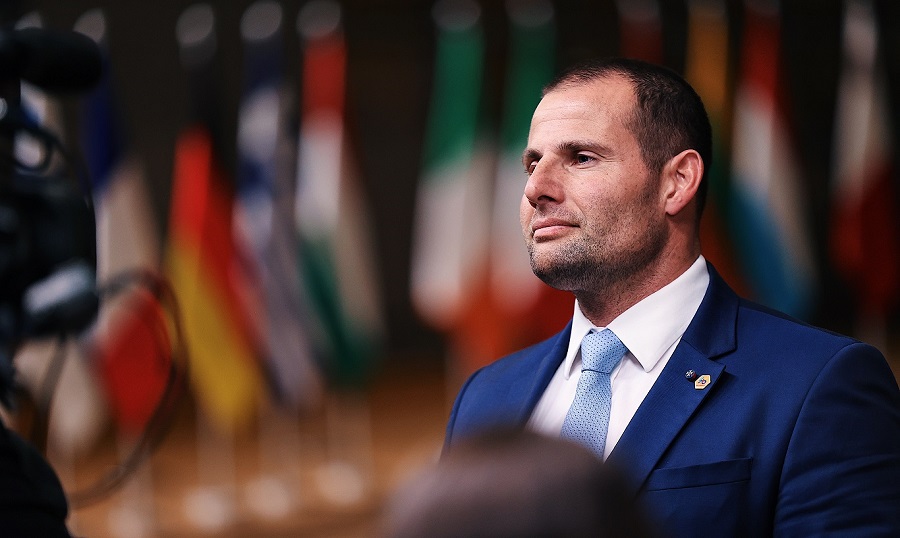

Prime Minister Robert Abela’s latest remarks suggesting Malta could toy with joining US President Trump’s so-called “Board of Peace” have sent shockwaves through Labour’s hard core, prompting hundreds to take to social media to rubbish his declarations.
Among the most vocal critics of what many described as a unilateral move are prominent Labour insiders, including University of Malta Vice-Rector Carmen Sammut, former Labour MEP Cyrus Engerer, ambassador and former Labour MP Maria Camilleri, and former One TV head Aleks Farrugia.
Sammut dismissed Abela’s remarks, saying she hoped it was “a very sad joke”. She warned that the Prime Minister’s declaration amounted to a betrayal of everything the Labour Party has traditionally stood for and could not be justified as being in the national interest.
“No, it is not in the national interest. In fact, it would be a betrayal of who we are as a people,” Sammut wrote on social media. “Malta experienced colonial subjugation and, following Independence, consistently kept regional interests at heart, supported the Palestinian cause and upheld humanitarianism.”
She also questioned the financial rationale behind even entertaining the proposal.
“How can you explain to taxpayers on these tiny islands that it is in their national interest to consider giving even a single euro, let alone the reported asking price of one billion dollars, to Trump?” she asked. “He has appointed himself chair of a board that would run Gaza for life, excluding Palestinians, under the guise of a peace deal.”
Others echoed her concerns.
Many called on the Prime Minister to immediately “stop his nonsense”, while several questioned the financial implications of Abela’s remarks, given reports that permanent board members would need to fork out up to $1billion to secure a seat alongside Trump.
Former Labour MEP Cyrus Engerer branded Abela’s pronouncement “disgusting”, while former Torċa editor Aleks Farrugia questioned how the Prime Minister’s intentions could possibly align with the spirit of Malta’s Constitution.

Social media was inundated with disparaging comments, with some predicting that Abela would soon be forced into another U-turn – a scenario critics say has become familiar since he took over Castille.
Behind the scenes, unease appears equally pronounced. Sources close to the government described the Prime Minister’s remarks as “irresponsible” and driven by “his own thinking”.
“This was never discussed in Cabinet, and no one knows who he discussed it with before making these public statements,” sources told The Shift.
“It has become a habit for Abela to make such stunning declarations without consulting anyone,” a staunch Labour insider added.
Trump’s so-called Board of Peace is a newly announced initiative widely seen as an attempt to establish a self-styled international body that challenges the authority of the United Nations. Trump has appointed himself chairman, with all decisions – including membership – resting solely in his hands.
This Board of Peace was formally unveiled by President Trump at the World Economic Forum in Davos last week as a new international body initially intended to oversee reconstruction and governance in the Gaza Strip following the prolonged conflict and a UN-backed ceasefire reached in late 2025.
Under the structure outlined by the White House, Trump would chair the board indefinitely, with member states serving three-year terms unless they pay a widely cited $1billion fee to secure permanent status – a feature that has attracted sharp criticism.
International reactions have been mixed.
Some countries, most notably the United Arab Emirates, have accepted invitations to join, signalling support for the initiative’s stated aim of promoting stability and economic recovery.
However, many established democracies have been cautious or openly critical.
European Union officials have warned that the board’s mandate and governance concentrate excessive power in the hands of a single individual and risk undermining the role of the United Nations and established multilateral institutions.
France has indicated it will not join under the current terms, while Italy has declined outright, citing constitutional and legal concerns.
At an emergency EU summit, leaders reaffirmed their commitment to a rules-based international order and expressed scepticism about the Board of Peace’s place within that framework.
The initiative has also sparked diplomatic friction. Canada’s invitation was reportedly withdrawn following critical comments on the proposal, while broader divisions have emerged between Europe and Washington over the board’s legitimacy and scope.
Sign up to our newsletter Stay in the know
"*" indicates required fields

Employers slam Clyde Caruana’s cheap talk

PA’s handling of rival crematorium applications raises a stink
Super CEO’s wife seconded to Mater Dei top job

Caruana again dodges questions over KM Malta’s finances as airline in dire straits
Tags
#Board of Peace
#comments
#Constitution
#Ian Borg
#neutrality
#Roberty Abela
Other News
Employers slam Clyde Caruana’s cheap talk
PA’s handling of rival crematorium applications raises a stink
Super CEO’s wife seconded to Mater Dei top job
Caruana again dodges questions over KM Malta’s finances as airline in dire straits

Another chairmanship for the Mizzis as Byron Camilleri appoints Antonio
Dizz repays €8 million bond after completing Tigne shopping mall company sale
PN loses more experience as Alex Borg sacks his spokesman

Abela gets another drubbing by PL delegates
Galdes ‘parked’ at National Skills Council

MTA in financial meltdown

International press freedom groups urge Abela to open media bill to scrutiny