

Television Malta (TVM), the nation’s publicly funded broadcaster, has been thrust into the centre of controversy following the announcement of its new programme schedule.
The changes, which prominently feature presenters closely linked to the Labour Party, have prompted an outpouring of criticism from viewers, political observers, and industry insiders alike, questioning the editorial independence of the broadcaster, which is financed by taxpayers to the tune of €6 million annually.
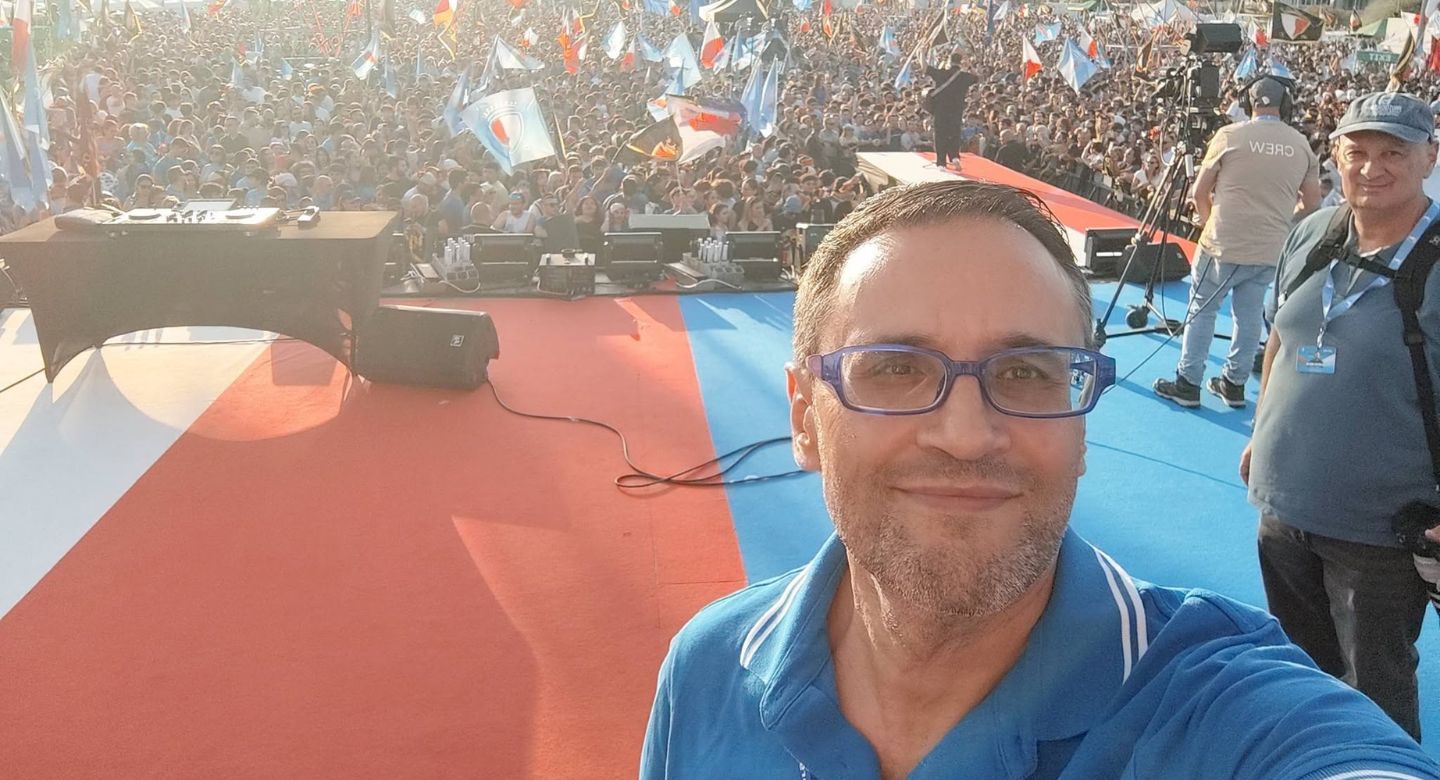
The controversy began earlier this month when TVM revealed details of its autumn line-up. Among the appointments was Ricky Caruana, a DJ-turned-podcaster known for his brash style and limited journalism experience, who has been handed the Friday evening debate slot.
The decision immediately sparked scepticism, with critics describing Caruana as unprepared and lacking the gravitas expected of a national broadcaster’s primetime host.
The backlash intensified when it emerged that Luke Dalli, a defence lawyer for disgraced former Prime Minister Joseph Muscat, would also front a political programme on the station.
Dalli already occupies a publicly funded role as chairman of the Arts Council, raising questions over the consolidation of influence by figures with close ties to government.
The announcement was greeted with a storm of online criticism, with hundreds of social media users accusing PBS – the state-owned operator of TVM – of succumbing to political capture.

Some of the sharpest criticism has been directed not only at the individuals appointed but at the wider composition of the broadcaster’s schedule.
Observers have noted that several other new presenters, including Paula Cauchi, daughter of former Labour MP Gino Cauchi and herself a former ONE TV presenter, have been allocated current affairs programmes.
They will join existing contributors such as Saviour Balzan, the owner of Malta Today and a communications consultant for government, as well as former Labour mayor Quintin Scerri and Albert Gauci Cunningham, who recently secured a full-time role at PBS.
For many viewers, the appointments confirm suspicions that TVM is becoming an extension of the Labour Party’s media strategy. “It is evident that this schedule was not designed within PBS, but dictated by the Office of the Prime Minister,” one veteran broadcaster told The Shift.
“The broadcaster has never been so openly biased, and it risks revisiting the low standards of the late 1980s.” Several insiders went further, suggesting that the changes may even signal preparations for an early election campaign, with primetime discussion slots being reserved for sympathetic voices.
The appointment of Dalli has been particularly contentious. Beyond his professional connection to Muscat, critics have highlighted his personal history with current Prime Minister Robert Abela. Earlier this year, Dalli resigned from ONE TV in protest at Abela’s refusal to support his mother, Helena Dalli—the former European Commissioner—for the presidency of Malta.
His re-emergence on the national broadcaster so soon afterwards underscores the depth of Labour’s internal networks within the media landscape.
The reaction from viewers has been swift and sharp. Hundreds of comments have been posted across social media platforms, with many pledging to boycott the broadcaster altogether.
Comparisons have been drawn with the Mintoff era, when state broadcasting was widely viewed as an arm of government. PBS, its editorial board, and directors have all faced a barrage of criticism, with some commentators accusing them of “massacring” the credibility of national television.
Pro-Labour supporters, however, have sought to deflect criticism by pointing to precedents under the Nationalist administrations. They note that figures such as Joe “Peppi” Azzopardi, Lou Bondi, and Norman Vella—each of whom was seen as aligned with the PN—dominated the broadcaster’s schedule for years.
From this perspective, the current appointments are portrayed as a continuation of a long-standing tradition in which whichever party holds government exerts influence over PBS.
Nevertheless, critics argue that such comparisons cannot excuse present failings. They point to the substantial public funding allocated to PBS – €6 million annually – as reason enough for the broadcaster to demonstrate independence, transparency, and high standards of programming.
Concerns have also been raised over the lack of disclosure regarding lucrative contracts awarded to outsourced presenters, some of which reportedly amount to thousands of euro per week. The absence of accountability in this area, coupled with lacklustre productions, has only deepened public frustration.
For TVM, the current storm represents more than just a backlash over individual appointments. It goes to the heart of its role as a national broadcaster in a small democracy where political allegiances often overshadow public service obligations.
While loyalists on both sides may continue to trade accusations about past practices, the fundamental question remains whether TVM can uphold its mandate to inform, educate, and entertain in a manner that is fair, balanced, and worthy of the public trust.
Sign up to our newsletter Stay in the know
"*" indicates required fields
Super CEO’s wife seconded to Mater Dei top job

Caruana again dodges questions over KM Malta’s finances as airline in dire straits

Another chairmanship for the Mizzis as Byron Camilleri appoints Antonio
Dizz repays €8 million bond after completing Tigne shopping mall company sale

Tags
#Castille
#lou bondi
#Luke Dalli
#ONE TV
#Ricky Caruana
#Saviour Balzan
#TVM
Other News
Super CEO’s wife seconded to Mater Dei top job
Caruana again dodges questions over KM Malta’s finances as airline in dire straits
Another chairmanship for the Mizzis as Byron Camilleri appoints Antonio
Dizz repays €8 million bond after completing Tigne shopping mall company sale
PN loses more experience as Alex Borg sacks his spokesman

Abela gets another drubbing by PL delegates
Galdes ‘parked’ at National Skills Council

MTA in financial meltdown

International press freedom groups urge Abela to open media bill to scrutiny
Buttigieg stops short of direct action against Carlo Stivala’s new illegal structure
Revealed – Minister awards €53,300 property lease direct order to his own agency chair
We should all stop paying taxes altogether.
Quality programmes!!!😂😂🥰
More brain washing is on the way for all gahans out there!
Bingo!