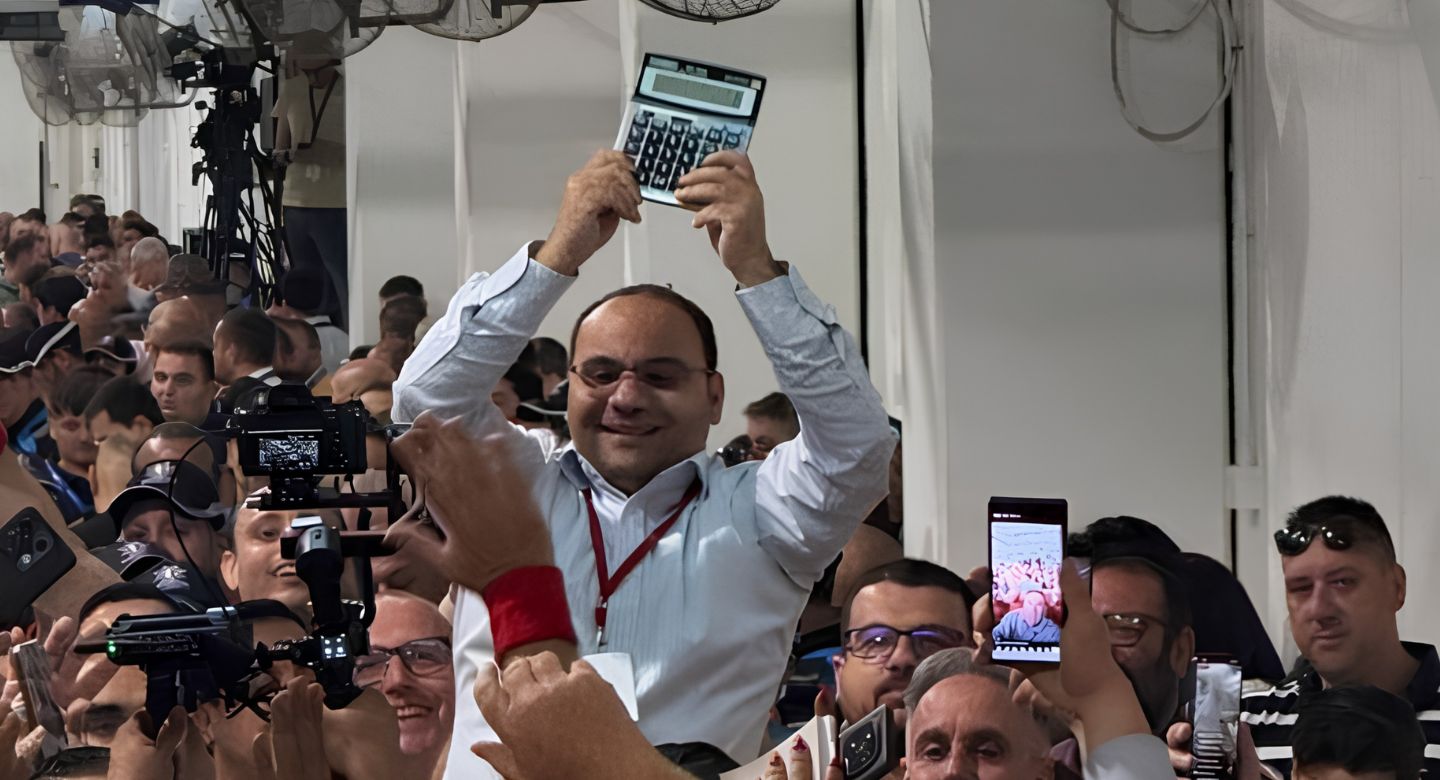

Months after he said he had completed a report warning of the consequences of population growth, Clyde Caruana was publicly arguing that Malta needed another 10,000 foreign workers a year to sustain its economic expansion.
“We need to get the other 10,000 from somewhere and that is where foreign workers come in,” the then Jobsplus chairman told The Malta Independent in March 2019. His calculation was straightforward: the economy was adding about 13,000 jobs a year, while no more than 3,000 Maltese were entering the labour market.
Archive interviews compiled by The Shift show how consistently the future finance minister made that case.
In 2016, as chairman of the Employment and Training Corporation, Caruana said Malta had nearly exhausted its domestic labour supply. By August 2017, he was preparing proposals to recruit abroad. “Attracting them again, and in larger numbers, is a top priority now,” he told Times of Malta.
In February 2018, Caruana estimated that Malta would need another 28,000 to 30,000 foreign workers over four years if growth continued at the same pace. A month later, he qualified that forecast. Malta could still absorb more people, he said, but there were limits. Employers would also have to invest in productivity.
By January 2019, Caruana was arguing about pay. Restricting the supply of workers, he said, would push wages up quickly enough to put Malta’s competitiveness at risk.
When pressed that March on how long recruitment on this scale could continue, Caruana acknowledged that schools, hospitals and public transport were already feeling the strain. He singled out housing as perhaps the greatest challenge. Yet he still defended the policy because Malta’s pension system depended on working people paying for those already retired. With fewer births, he argued, a growing workforce would help keep it solvent.
Sign up to our newsletter Stay in the know
"*" indicates required fields

WasteServ’s ‘lowest waste’ claim leaves out a mountain of rubble


From promotion ban to Assistant Commissioner: How Labour rehabilitated Mario Tonna

Robert Abela rewarded disgraced police commissioner with consultancy on day of resignation

Planning board member doubles as director of sales for Exante

Tags
#Clyde Caruana
#TCNs
Other News
WasteServ’s ‘lowest waste’ claim leaves out a mountain of rubble
From promotion ban to Assistant Commissioner: How Labour rehabilitated Mario Tonna
Robert Abela rewarded disgraced police commissioner with consultancy on day of resignation
Planning board member doubles as director of sales for Exante

Fact-Check: Enemalta’s defence of Konrad Mizzi on Mozura wind farm
