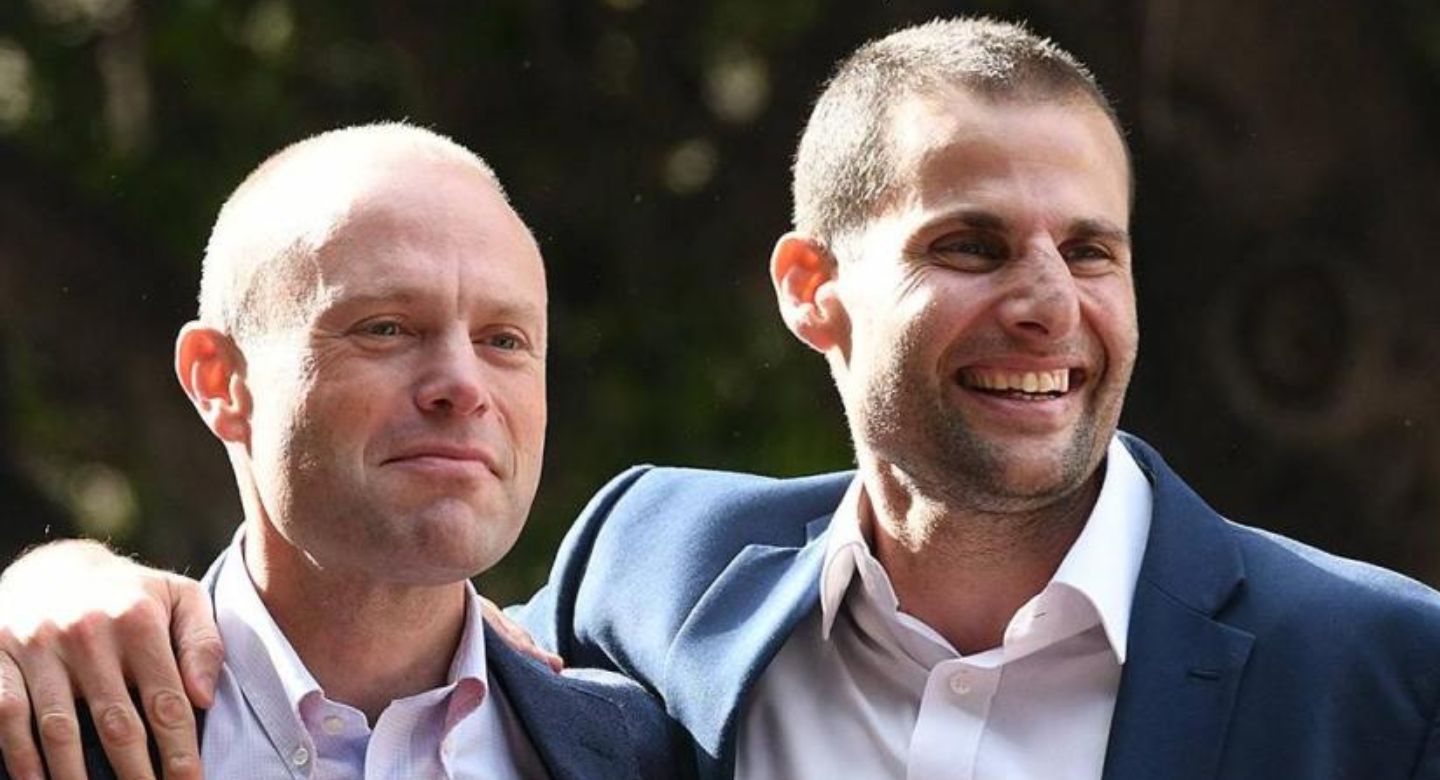
There is something rather cringeworthy about Joseph Muscat emerging, one week after Yorgen Fenech’s acquittal, to explain to us lesser mortals what the verdict really means. Apparently, it means that almost everyone was wrong except Joseph Muscat.
Well, he would say that, wouldn’t he?
Muscat began with the safest available proposition: the jury’s verdict must be respected. Jurors should not be called idiots, accused without evidence of prejudice, bribery or intimidation, or otherwise abused for performing one of the most difficult civic duties imaginable. At least not without evidence, the provision of which is not the point of this piece. For present purposes, the jury decided that the prosecution had not proved Fenech’s guilt beyond reasonable doubt.
It did not issue Joseph Muscat with a certificate of political – or any other – innocence. It did not declare the Electrogas deal spotless, poor Keith Schembri a misunderstood angel or the Muscat administration a model of constitutional propriety. Indeed, my headline just after the verdict – ‘Daphne was right’ – remains as true now as it was before Muscat’s performance before the media.
One of his principal targets was, inevitably, the Public Inquiry into Daphne’s murder: the inquiry that found the State, under his governance, responsible for creating the climate of impunity that facilitated it.
Muscat says the verdict contradicts the inquiry.
The inquiry was held too early, he now believes, and its members – particularly former chief justice Joseph Said Pullicino – should engage in ‘soul-searching’. He then accepts the inquiry’s conclusions while (hardly) explaining why its central conclusions have supposedly been demolished.
A particularly Muscatian form of acceptance.
His argument, like much else about him, is false. A public inquiry examines state responsibility and institutional failure. A criminal jury decides whether one accused person has been proved guilty of particular charges to an exceptionally high standard. They ask different questions. Fenech’s acquittal does not reverse the finding that the State created a culture of impunity.
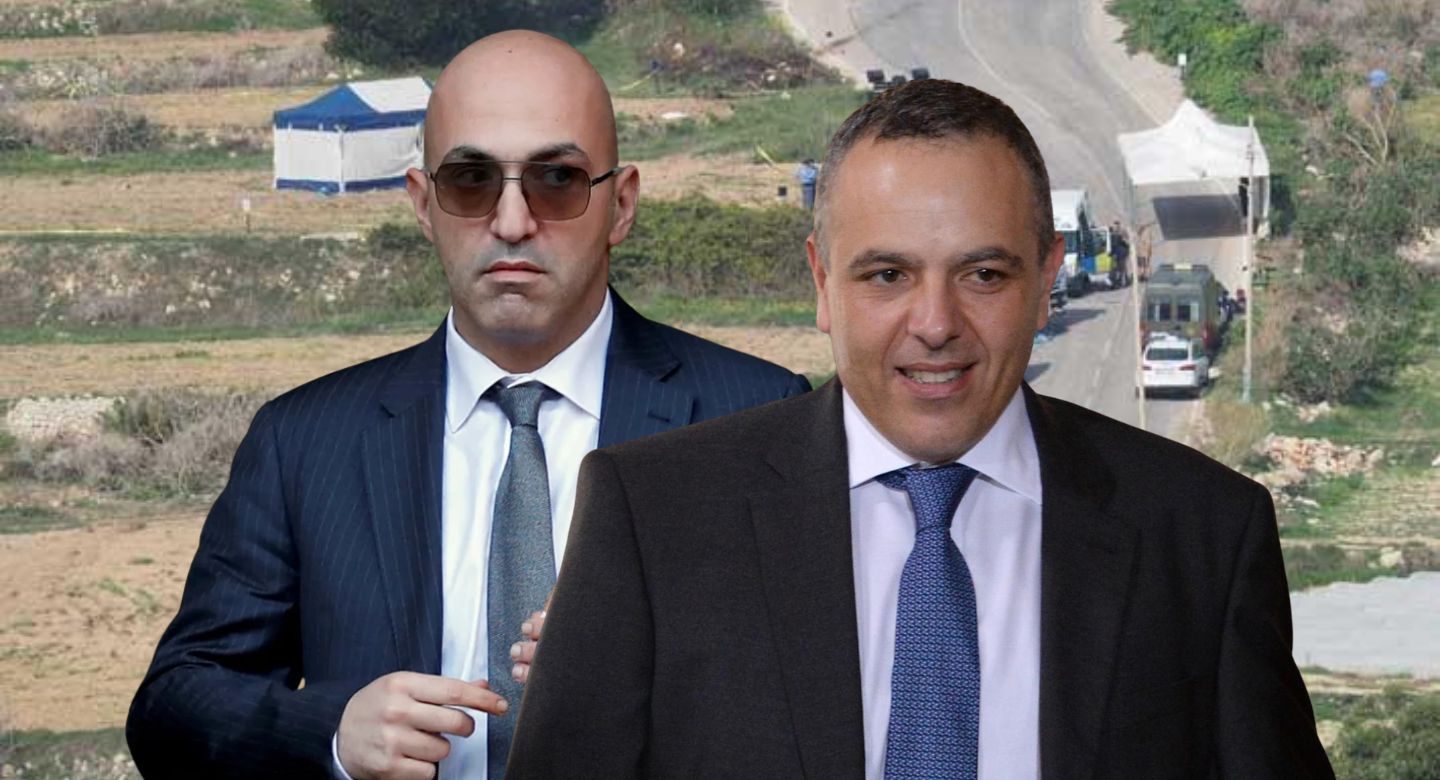
Still less does it erase the extraordinary intimacy between Muscat’s chief of staff and the owner of 17 Black.
Nobody has conniptions because a businessman shakes hands with a minister at a reception. The point here was that Keith Schembri, while occupying the most powerful unelected position in government, secretly stood to receive money from a company owned by a major beneficiary of government decisions.
Under questioning, Muscat conceded that his administration’s pro-business model ‘may have been abused at certain moments’. How reassuringly abstract. Who abused it? In whose interest? At which moments? Abuse apparently drifted into government like bad weather: regrettable, occasionally inconvenient and nobody’s particular responsibility.
He also reminded us that it was he who brought in the FBI after Daphne was assassinated.
Let’s believe him and suggest that someone gives the man his medal.
But calling in foreign investigators after a journalist is blown up is not heroic political virtue. It is the minimum expected of a functioning government. Nor does convicting the bombers answer who commissioned the murder or explain how a Europol report somehow found its way into Fenech’s possession.
Muscat and Schembri, like Sergeant Schulz, know nothing.
Then came a difficulty even Muscat’s talent for confident explanation could not make disappear.
Schembri testified under oath that a ‘very important person’ – identified behind closed doors as Muscat – directed him to meet Fenech’s lawyers.
Muscat was not called to testify and therefore gave no evidence under oath. The press conference appears to have been his chosen substitute for a day in court. He insisted that Fenech’s lawyers had never asked him to put them in touch with Schembri.
Was Schembri lying under oath? Muscat would not say. The context, he told us, was ‘totally different’. What was that context? He declined to explain, and there we have the press conference in miniature: a direct contradiction in which nobody is lying, resolved by an explanation Muscat will not give.
Asked whether he still stood by the man he defended so doggedly in 2019, Muscat announced that henceforth he would vouch only for his wife and children. He had, however, telephoned Schembri before the press conference. The political guarantee has expired, it seems, but the courtesy call remains.
Was Muscat gullible, manipulated or complicit? He reached for a proverb: ‘The husband is the last to know.’ This might be charming in a bedroom farce. It is less persuasive as an account of the governance of Malta. A prime minister appoints his chief of staff, gives him power, receives warnings about him and bears responsibility for keeping him in office. If Muscat’s defence is that the most powerful person at his side repeatedly fooled him, that is not vindication. It is an admission of catastrophic judgement.
And, pray tell, Dr Muscat, why did you resign?
Not, he assures us, because his political position had become grotesquely untenable. Not because protesters filled the streets while revelations emerged about his closest collaborator. He resigned because he wished to avoid even the slightest impression that he might influence the investigation.
Well, he would say that, wouldn’t he?
Finally, Muscat said that if further investigations are required to establish who commissioned Daphne’s murder, they should be carried out immediately and thoroughly.
On that, at least, we agree.
They should examine every relevant lead, payment, communication, leak and person named under oath. They should establish why Fenech sought a pardon three times, what lay behind the payments revealed in evidence, and why he took to his yacht on the night of his arrest.
Yorgen Fenech was acquitted, at least that’s the current finding.
Joseph Muscat’s administration was not.
In fact, the acquittal, in many minds, served as an accusation directed at Keith Schembri and, by necessary inference, his boss.
Which is maybe why Muscat felt compelled to reassure his fan-base that he remains as pure as the driven snow, at least in his own mind.
Sign up to our newsletter Stay in the know
"*" indicates required fields
Amathia – the less I know the better


Who was being surveyed, and why?

Minister Bedingfield – the worst expression
Those questions
Tags
#Joseph Muscat
#Keith Schembri
#trial
Other News
Amathia – the less I know the better
Who was being surveyed, and why?
Minister Bedingfield – the worst expression
Those questions

Daphne was right

You’re not extraneous
We’ve only got Muscat to thank

Muscat’s phantom hospital and the network behind it

Why should parents have to fight for the obvious?

Power cuts: when desperate, just lie

Say what, Bobby?