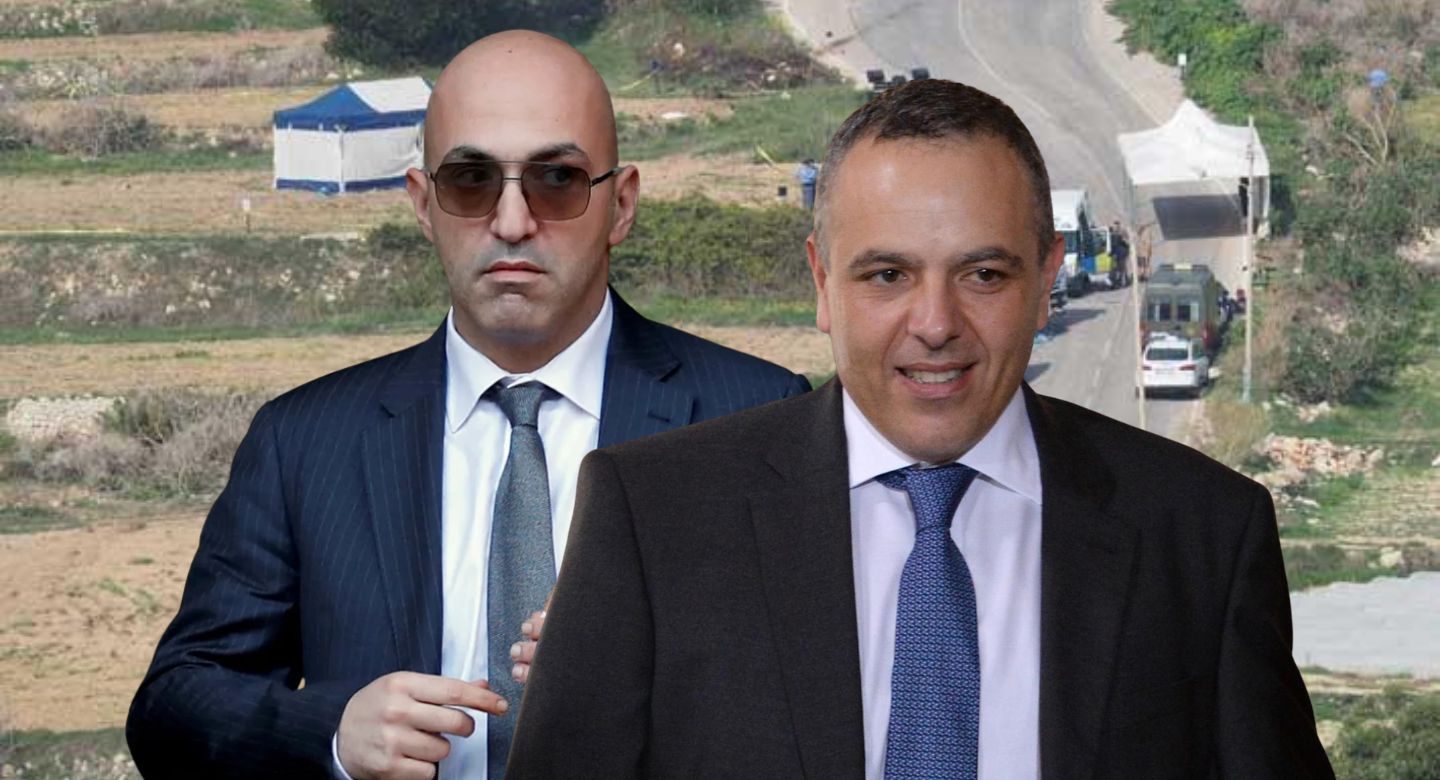

Yorgen Fenech has been acquitted. He can now hope to fade into the sunset, innocent in the eyes of the law and free to resume his gilded life.
It is axiomatic, under our legal system, that the jury’s verdict, leaving aside the remote possibility of a prosecution appeal, must be respected. It disposed of the charges brought against Fenech and in that limited context, that is what it is.
However, an acquittal does not erase the evidence heard in court, rewrite history or answer the questions that Fenech’s own testimony has left burning our retinas, at least those of us, who are many, who are looking.
First, there is the oh-so-desired Presidential pardon
Fenech asked for one not once, but three times. A pardon is not a souvenir handed out to anyone who has had an unpleasant few days. It is sought in exchange for information about serious criminal wrongdoing. He said he could expose extensive corruption and provide evidence of bank transactions and other events. Given his testimony, it sure looks as if he had other stuff to spill.
So what was this information? Who did it concern? Why was a pardon so important to a man who insists that he had nothing to do with Daphne Caruana Galizia’s murder? He is not obliged to, but surely he needs to explain, maybe we will start to understand why Joseph Muscat refused to give it him.
Then there is the yacht.
What was Fenech doing sailing away from Malta in the early hours of the morning when the police intercepted him in November 2019? He has offered explanations, naturally. There are always explanations.
This was not an ordinary businessman beginning an ordinary jolly on an ordinary day. Fenech knew that the investigation was closing in. Melvin Theuma had been arrested. The edifice of protection, information and reassurance surrounding Fenech was collapsing.
Where was he really going? Why then? And what did he believe was about to happen? Even in the light of his acquittal, these remain burning questions.
Then there is the money.
Fenech admitted under oath that he paid sums that for normal humans are eye-watering. Through Theuma he contributed towards the legal and other expenses of the men accused of carrying out the murder. He admitted giving Theuma money before the murder, although he maintained that he had told him to stop whatever was being planned.
Why would an innocent man pay such vast sums to the alleged middleman and the alleged killers of a journalist? And could Fenech and his lawyers, pretty please and while we’re about it, explain how knowing about a murder plot and not telling anyone about it doesn’t add up to complicity? I’m a lawyer, and I’m finding it difficult to get my head around that.
Instead of telling people who could have prevented the murder about it before it happened, it looks as if Fenech was quite a handy conduit of leaked information towards the plotters, rather than the other way round.
Fenech’s remarkable explanation was that he was being pressured and wanted to keep Theuma calm. Perhaps the jury accepted that. But it remains a remarkable explanation. Most people who find themselves being extorted by someone claiming involvement in a murder go to the police. They do not maintain the relationship, transmit information from inside the murder investigation and fund the defence of the suspected killers.
We are therefore expected to accept that Fenech knew before the event, paid money before and after it, transmitted inside information after it, repeatedly sought a pardon and was found sailing away from Malta as the investigation approached him – but bore no criminal responsibility.
Which brings us to the question that cannot formally be asked of them but that I am allowed to put out there: what the frigging frack was the jury thinking?
Jurors are not required to explain their verdict. Their deliberations are secret, as they must be, and nobody may interrogate them about how they reached their decision. The legal system has spoken: by eight votes to one, unanimous in all but puerile form, Fenech was found not guilty.
Faced with Fenech’s own admissions – not merely Theuma’s evidence, not rumour and not political commentary – how did the jurors conclude that the prosecution had failed to prove even criminal association beyond reasonable doubt?
They were entitled to do so. The rest of us are entitled to be bewildered.
The verdict also creates a problem that cannot be made to disappear by urging “prudence” in public comment. Someone commissioned the murder of Daphne Caruana Galizia. The people who detonated the bomb have been convicted. The suppliers of the bomb have been convicted.
The person who wanted Daphne dead and set the machinery in motion remains, officially, unidentified.
Fenech, giving evidence under oath, pointed directly at Keith Schembri. He portrayed Schembri – not himself – as the mastermind. That was not an accusation made by a blogger, an opposition politician or a protester outside Castille. It was the sworn defence of the man whom the State had accused of commissioning the murder, now acquitted in no small measure as a result of his testimony.
What happens to Keith Schembri now?
He denies involvement, of course. Judge Edwina Grima ordered the evidence emerging from the trial to be sent to the Police Commissioner so that it may be determined whether criminal proceedings should be taken against third parties. That is about as close as a judge can come, in these circumstances, to ordering the police to do their job fully.
The police cannot place the judgment in a filing cabinet and wait for public attention to move elsewhere. Fenech’s accusations must be investigated to the end. Either there is evidence against Schembri or there is not. Malta is entitled to an answer supported by an investigation, not another shrug wrapped in procedural language.
And what about Joseph Muscat? His former lawyer, his successor in office, says his (that is, Abela’s) government is extraneous to the murder. Freud might have some thoughts on that positioning, I would think.
Bear in mind, Schembri was not merely an official somewhere in Muscat’s administration. He was Muscat’s closest political collaborator, confidant and famously bosom friend. Muscat permitted him to sit at the heart of government while Schembri maintained a close personal relationship with Fenech. More than a little Petrus was quaffed, do remember.
Schembri attended briefings about the murder investigation. Fenech testified that Schembri was receiving information in real time and passing it to him. How could this happen inside the Office of the Prime Minister without consequences?
Why did Muscat resign when he did? If he and everyone around him were as pure as the driven snow, why did his government begin collapsing precisely around the same time?
Muscat continues to behave as though history has vindicated him. It has done nothing of the sort. An acquittal of Fenech is not an acquittal of Joseph Muscat, Keith Schembri or the system they operated. If anything, it makes the unanswered questions about them more urgent.
Then there are the former police chiefs: Silvio Valletta and Lawrence Cutajar, and the order of mention is deliberate. What are they thinking now? What does Valletta think about his personal familiarity with Fenech while occupying one of the most sensitive positions in the murder investigation? What does Cutajar think about the evidence concerning leaks, warnings and his contacts with Edgar Brincat?
How do they explain a murder investigation in which information appears to have travelled more rapidly towards the suspects than towards justice?
Fenech’s acquittal answered one narrow legal question. It answered none else and there are plenty more.
Sign up to our newsletter Stay in the know
"*" indicates required fields

Our students can’t read – Labour is delighted


His Own Idea, He Said.
When desperation kicks in

Is Clifton Grima pushing a Trojan reform?
Tags
#Joseph Muscat
#Keith Schembri
#Lawrence Cutajar
#Robert Abela
#Silvio Valletta
#trial
#Yorgen Fenech
Other News
Our students can’t read – Labour is delighted
His Own Idea, He Said.
When desperation kicks in
Is Clifton Grima pushing a Trojan reform?
When it’s Ricky who loves you

Scorched by sycophancy

The call for a radical justice reform


Not shutting up

So what’s changed?

Demolishing accountability

WELL, HE WOULD SAY THAT, WOULDN’T HE?
Spot on!!
“The person who wanted Daphne dead and set the machinery in motion remains, officially, unidentified.”
Correction: The persons (plural) who wanted Daphne dead can be identified if law enforcement and investigations were not ‘weaponised’ and obstructed by those dirty crooks in Castille and the Office of the AG who are connected to the Deep State. The plot to silence her is very complex and cannot be solved by the police force who happen to have no values and intelligence in order to see the entire picture. They simply act like sheep and take orders from the Mafia Boss and then told to lie or say “I cannot remember” to build up on a cover-up.
Disgraced ex-PM Joseph Muscat who lies and denies everything (who cannot even identify his unknown peasant mother from a Russian ghetto who abandoned him at birth) and his cartel of criminals know for certain who ordered her brutal assassination. The TRUTH will prevail and eventually serve justice against Joseph Muscat and his co-conspirators, observing how he used his then-CoS Keith Schembri as his front-seat driver.
The Truth Drug must be introduced when both Judge and Jury fail.