
Six of Robert Abela’s newly appointed ministers appear to have little meaningful executive authority, highlighting the extent to which Malta’s largest-ever Cabinet has become a vehicle for political accommodation rather than effective governance.
An analysis of the ministerial responsibilities published in the Government Gazette shows that at least six of the 21 ministers have been assigned portfolios with limited executive functions, little administrative reach and few levers of direct government action.
The most striking examples are Ministers Omar Farrugia and Rosianne Cutajar, both of whom hold Cabinet positions but exercise little real power.
Farrugia, who secured more than 2,000 first-count votes while contesting the prime minister’s district, was promoted from parliamentary secretary to minister. Yet he was given responsibility for youth and the electoral manifesto, a portfolio so narrowly defined that it lacks many of the functions typically associated with youth policy. Even sport, which would normally form part of such a remit, has been allocated elsewhere.
Political sources interpreted the appointment as a promotion in title rather than influence.
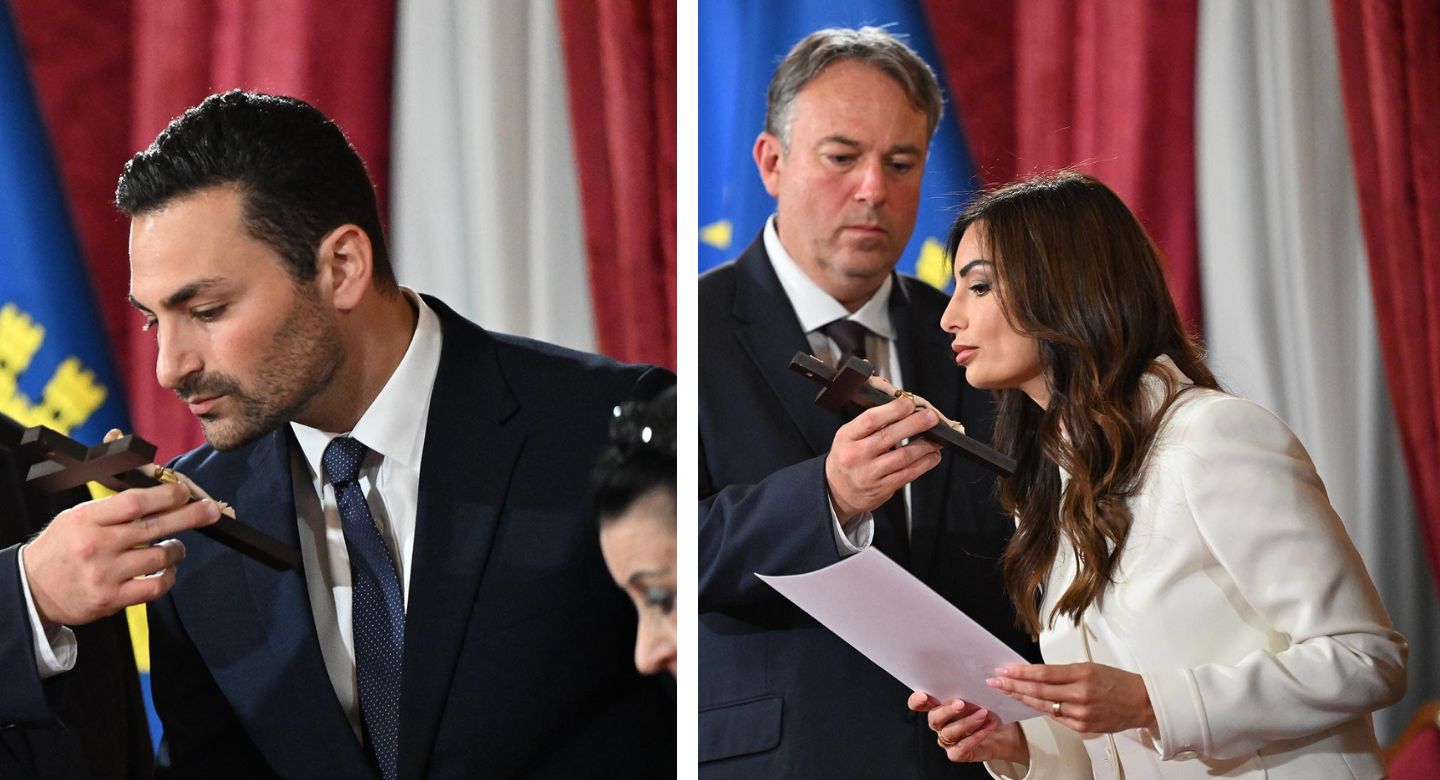
Rosianne Cutajar’s return to Cabinet is similarly symbolic.
Forced to resign as parliamentary secretary following a series of scandals involving tax irregularities, questionable government employment arrangements and her links to murder suspect Yorgen Fenech, she has now been appointed minister for equality and reform. While politically sensitive, both sectors have historically occupied the margins of government administration and carry limited executive authority.
Other portfolios appear equally lightweight.
Chris Bonett’s ministry for sustainable mobility is largely centred on Transport Malta’s operations, while Keith Azzopardi Tanti’s responsibility for EU funds, social dialogue and consumer protection covers areas that are primarily administered through agencies and authorities.
Julia Farrugia’s ministry for inclusion and the voluntary sector is similarly thematic, with little direct control over major government functions.
A demotion also appears to have been handed to Jo Etienne Abela. As a surgeon having previously held the health portfolio, he now retains tourism, an economically important sector but one largely driven by private operators rather than direct government administration.
Health, meanwhile, has been transferred to Deputy Prime Minister Ian Borg, underlining the significance attached to a sector that has struggled with major scandals, growing waiting lists, staffing shortages and mounting public dissatisfaction during the last legislature.
Alongside Borg, only a handful of ministers have been entrusted with substantial executive authority, including Clyde Caruana, who controls the government’s finances; Silvio Schembri, responsible for the economy; Glenn Bedingfield, overseeing security; Jonathan Attard, in charge of construction; and Miriam Dalli, who retains responsibility for energy and the environment.
The proliferation of such narrowly defined ministries reflects the prime minister’s decision to create Malta’s largest Cabinet in modern history. With 21 ministers and two parliamentary secretaries drawn from a parliamentary group of fewer than 40 Labour MPs, the executive has become one of the largest in the EU despite Malta’s size.
The situation mirrors one of the longstanding criticisms levelled at the Labour administration since the era of disgraced former prime minister Joseph Muscat: the steady expansion of government structures to accommodate political interests rather than administrative necessity.
Government sources said the expanded Cabinet was designed primarily to satisfy competing political interests within Labour’s parliamentary group and reduce the risk of internal opposition.
The financial implications are substantial.
Based on the Office of the Prime Minister staffing frameworks, ministerial and parliamentary secretariat structures are estimated to cost taxpayers around €18.2 million annually. This figure covers only the political layer of government and excludes civil servants, consultants, advisers and departmental expenditure.
Each minister is entitled to a secretariat of up to 19 staff, most appointed to ‘positions of trust’, creating what sources described as a series of mini-governments operating alongside the permanent public administration.
The result is a top-heavy executive in which several ministers appear to have little substantive authority while retaining all the privileges and costs associated with the Cabinet office.
Rather than opting for a leaner, more efficient administration, Abela has chosen to distribute ministerial titles across a broader group of MPs. The consequence may be a government that is larger, more expensive and potentially less effective than the one it replaces.
Sign up to our newsletter Stay in the know
"*" indicates required fields

Dizz secures bondholders’ approval nine days before €8 million repayment deadline

PN takes PBS to court over impartiality, citing Ricky Caruana as an example
PA set to approve Saqqajja Hill flats by debt-hit clubbing boss

€9million overrun as Siġġiewi social housing project remains stuck
Tags
#Cabinet
#Chris Bonett
#Clyde Caruana
#Ian Borg
#Jo Etienne Abela
#Joseph Muscat
#Malta
#Ministries
#Omar Farrugia
#Robert Abela
#Rosianne Cutajar
Other News
Dizz secures bondholders’ approval nine days before €8 million repayment deadline
PN takes PBS to court over impartiality, citing Ricky Caruana as an example
PA set to approve Saqqajja Hill flats by debt-hit clubbing boss
€9million overrun as Siġġiewi social housing project remains stuck

Steward Malta ordered to pay €154,000 for unpaid hospital meals
Convenience Shop chain up for possible sale amid growing financial pressures
Portelli’s Gozitan clan falling apart as businessmen clash

‘Johann out’

Is Clifton Grima pushing a Trojan reform?


Minister axes Luke Dalli from TVM, citing ban on second jobs

MGA defends regulatory framework amid alleged €250 million gambling tax evasion
Who are you talking to, exactly? Effective governance and all that jazz is not what is sought under this hybrid capitalist-democratic monstrosity. The vast majority, who elect them in the first place, do not care about this.
I wrote a comment to this effect, but it never saw the light of day. It’s useless to continue believing in a fairy tale which has inherent contradictions. Democracy needs a rehaul.
Otherwise, by all means, keep preaching to the converted. And keep seeing more of the same. At least it provides fodder for these articles.
and chris fearne was conveniently given the foreign affairs ministry. tista ma taqbilx maghna imma tista tahdem maghna,
Very little pigging opportunities for our favourite ‘Hon’ Member from Qormi not to mention limited feasts for her little oinks who now want in on every cent that ministry can provide and Rozi had better start dishing out the feed. Heads will soon be rolling to make way for the new vultures.