

The debate held at the University of Malta on Monday should have been an occasion that showcased the best of democratic culture: rigorous disagreement, intellectual curiosity, and a willingness to confront uncomfortable truths. Instead, much of it resembled a partisan rally transplanted into an academic institution.
In what has now become a regular pattern during elections, chants of “Viva il-Labour, Viva il-Labour, hey hey” and “Nazzjonalisti, Nazzjonalisti” echoed through a university hall that ought to cultivate critical thinking rather than tribal reflexes. That image is more revealing than many may wish to admit.
The problem is not that students are not politically engaged. The problem is the form that engagement takes in Malta: not independent participation grounded in ideas, but inherited partisanship reinforced by structures that reward loyalty over thought.
When organised blocs of students behave as extensions of the Labour Party or the Nationalist Party inside the country’s highest educational institution, it reflects a political culture where identity matters more than argument.
Some will argue that criticising students risks discouraging political participation. But this confuses participation with mobilisation. Genuine political participation involves questioning power, scrutinising policies, challenging assumptions, and being willing to criticise one’s own side.
Chanting slogans on command is not democratic engagement; it is political branding. A democracy cannot mature if citizens are trained from youth to become supporters first and thinkers second.
The debate itself reflected many of the deeper tensions shaping Maltese politics. Prime Minister Robert Abela defended the government’s economic record, pointing to strong growth, employment and social measures while portraying stability as the country’s central political need. He stressed “credibility” – quite a stretch for his government’s track record, deeply embedded in corruption, scandals and delayed projects, most of which were never delivered.
His interventions repeatedly framed government criticism as detached from the economic realities faced by many families. Yet this familiar emphasis on economic performance once again sidestepped wider institutional concerns: governance standards, accountability, and the concentration of power that have increasingly troubled citizens.
This is precisely why the atmosphere at the debate was so troubling. The university should be one of the few places insulated from the suffocating binary that dominates Maltese public life. Instead, the same two-party logic that controls national discourse is deeply embedded there, too.
The Labour Party and the Nationalist Party have spent decades building systems of influence that extend far beyond Parliament. Their dominance reaches into institutions that are supposed to function independently and impartially, from the Broadcasting Authority to the Electoral Commission, and into the social and cultural spaces where future generations are politically formed.
Opposition Leader Alex Borg attempted to position himself as the voice of generational renewal, focusing heavily on issues affecting younger people, including housing affordability, opportunities, and what he described as public frustration with political arrogance.
His style was clearly aimed at energising students and presenting a fresher face for the Nationalist Party. But while he criticised Labour’s record, there was little indication that the Nationalist Party was prepared to fundamentally rethink the two-party structures from which it has historically benefited just as much.
Momentum Leader Arnold Cassola stood apart by repeatedly redirecting attention toward governance, institutional reform, transparency, and democratic standards.
His interventions highlighted a perspective often marginalised in Maltese political discourse: that economic success alone cannot compensate for weakened institutions and declining public trust.
Cassola’s emphasis on structural reform underscored precisely what was missing from the exchanges between the two dominant parties – a serious discussion about how Malta’s democratic system itself is functioning.
Similarly, ADPD Leader Sandra Gauci attempted to broaden the debate beyond partisan confrontation by raising issues connected to sustainability, quality of life, overdevelopment, social justice and long-term planning.
Her contribution reflected the frustration many smaller parties experience in Malta: even when substantive policy alternatives are presented, they struggle to gain traction in a political environment dominated by personality clashes and party machinery.
She had arguably the most significant quote of the debate. She said her father and Abela’s father were at school together. His father ended up being President, but her father was a cleaner. “I am here for those who think that because you don’t have millions in the bank, you don’t have a voice. I am here as the daughter of a cleaner who, through hard work and sacrifice, and with great humility, taught his three children that you can move forward on merit… He cleaned other people’s dirt, and today I want to clean politics from corruption.”
Paul Salomone of Aħwa Maltin also tapped into anti-establishment frustration, reflecting the growing sense among sections of the electorate that both major parties have become detached from wider concerns about “national identity”, governance, and social cohesion.
His party’s position as a far-right party – a question he avoided – is controversial. It is appealing to some and hated by others. Yet his proposal to use Magħtab for land reclamation shows his lack of knowledge of broader issues beyond migration. That proposal is pure madness; it would be a toxic time bomb.
Yet despite these differing perspectives, the overall dynamic of the debate remained dominated by the gravitational pull of Labour versus Nationalist tribalism. Alternative voices were physically present, but politically peripheral.
Audience reactions made that unmistakably clear. The loudest moments were not triggered by complex arguments or policy proposals, but by partisan applause lines.
One of the most striking aspects of the debate was not only what was said, but what remained absent.
None of the dominant political forces seriously confronted the need for deep political reform, despite Malta increasingly displaying the symptoms of a flawed democracy: excessive concentration of power, weak institutional independence, clientelism, hyper-partisanship, and electoral structures that disadvantage smaller parties.
Reform should have been central in a university debate precisely because universities are meant to interrogate systems, not simply reproduce them.
Yet there was little discussion about whether the current political architecture adequately represents citizens, whether state institutions are sufficiently independent, or whether the media environment enables genuine pluralism.
These omissions are not accidental. The existing system benefits the two dominant parties, and neither has much incentive to dismantle mechanisms that help sustain its power.
This is where the role of students becomes especially important. Universities should produce citizens capable of resisting political capture rather than becoming instruments of it.
Students should be the constituency most resistant to empty partisan spectacle because higher education is supposed to sharpen scepticism and intellectual independence. Instead, in Malta, partisan identity is too often absorbed before critical reasoning has a chance to challenge it.
The danger is not simply noise in an auditorium. The danger is normalisation. When political tribalism becomes accepted behaviour in academic spaces, democracy itself becomes impoverished.
Public debate turns performative. Loyalty replaces inquiry. Opponents become enemies rather than interlocutors. And institutions gradually lose their ability to function as spaces for independent thought.
Malta does not lack politically interested youth. It lacks a political culture that encourages young people to think beyond the two-party framework they inherit. Until that changes, debates like Monday’s will continue to resemble miniature mass meetings rather than exercises in democratic deliberation.


Sign up to our newsletter Stay in the know
"*" indicates required fields
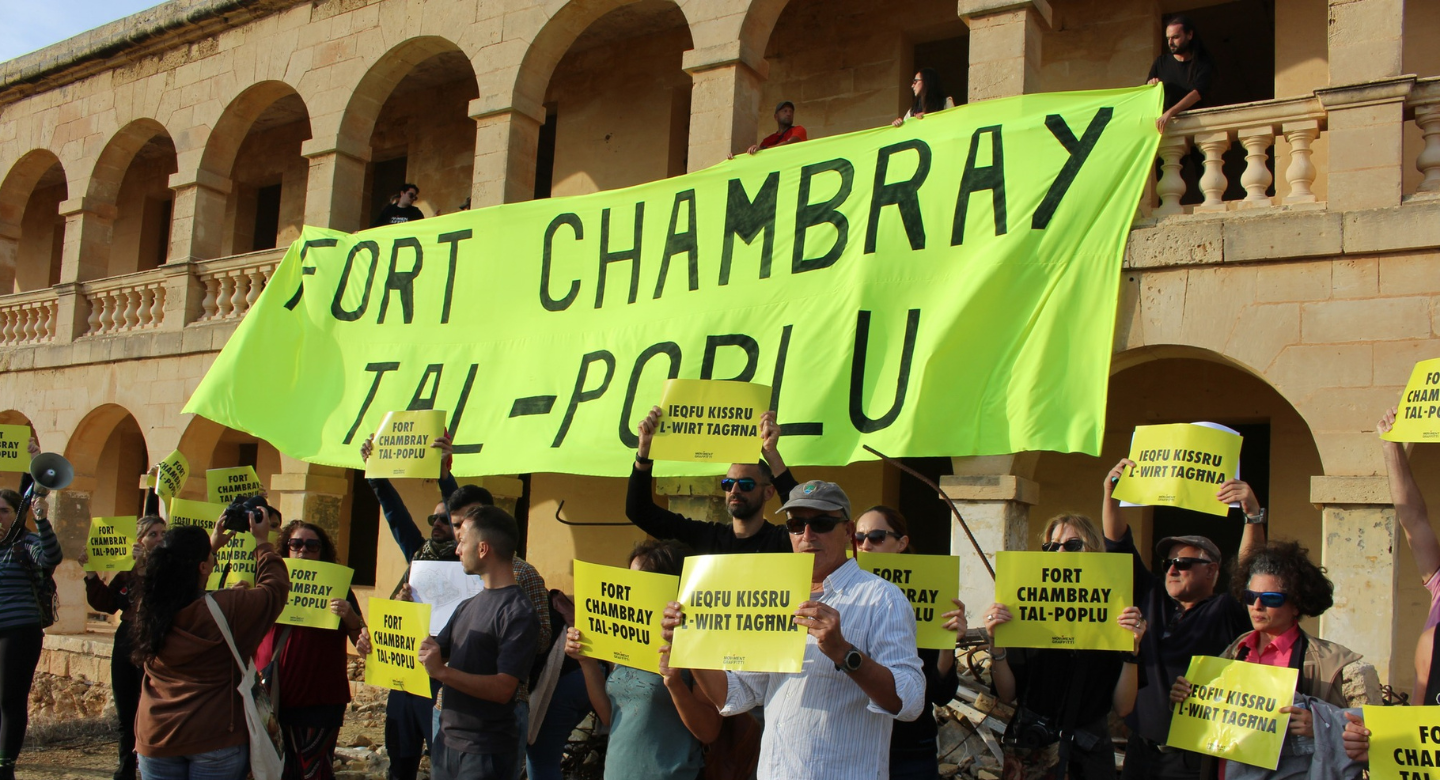
Government makes U-turn on Chambray, leaves protection and public access unclear


Dalli’s trusted aide leaves regulator after clash over interference

Dripping poison


Rare PL-PN unity as Siġġiewi vows to stop crematorium

Tags
#ADPD Sandra Gauci
#Critical thinking
#Democracy
#elections 2026
#Labour Party Robert Abela
#Momentum Arnold Cassola
#Nationalist Party Alex Borg
#political debate
#political reform
#tribalism
#university students
Other News
Government makes U-turn on Chambray, leaves protection and public access unclear
Dalli’s trusted aide leaves regulator after clash over interference
Dripping poison
Rare PL-PN unity as Siġġiewi vows to stop crematorium

MeDirect rejects bond disclosure allegations, warns Vaswani of damages claim
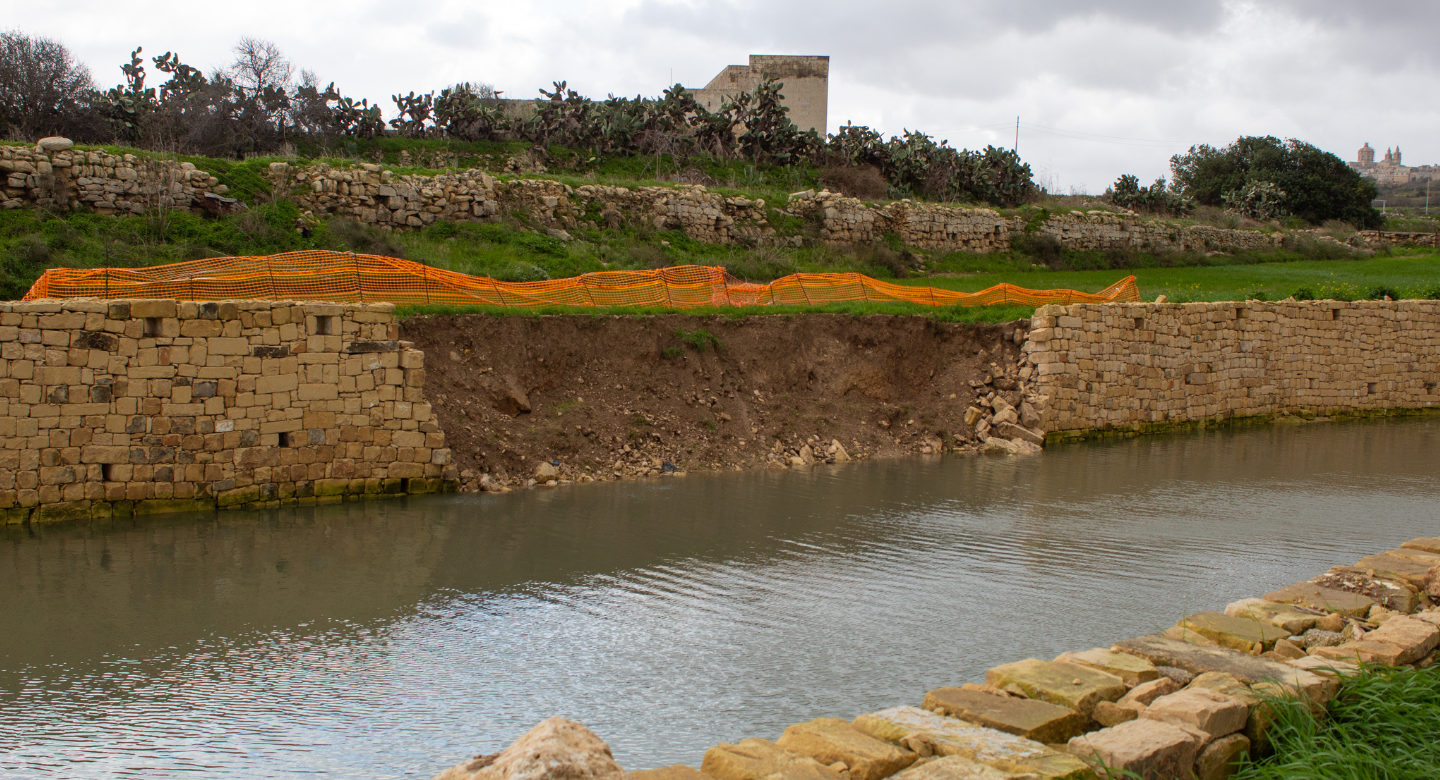
Dalli finds the culprit of Wied Speranza: water in a valley
Pama directors’ bonuses rise 21% as operating profit falls

Clyde Caruana livid as Lydia crosses the line

Minister ordered to appoint Luke Dalli as PBS deputy chairman

Kurt Farrugia ‘forgot’ to publish direct orders

Malta increases its dependency on imported electricity as population surges

Spot on!!
I thought we are still in the month of May not December. This election seems like it’s Christmas with all the financial promises.