
By quietly dismantling a long-standing system of public asset declarations, Prime Minister Robert Abela is steering Malta further down the transparency rankings, defying both domestic watchdogs and international anti-corruption standards. At the heart of the controversy is a simple but troubling question: What is he hiding?
For years, ministers were required to file detailed annual declarations of assets and income, including those of their spouses. These were tabled in Parliament, scrutinised by journalists and civil society, and formed a cornerstone of the country’s integrity framework.
That system has now been hollowed out, without parliamentary debate, without public consultation, and despite explicit warnings from the Commissioner for Standards in Public Life.
The last time the public could see a full and detailed account of their ministers’ assets was in 2022. Declarations for 2023 were never tabled in parliament.
For 2024, ministers did not submit the traditional ministerial declarations at all. Instead, under a Cabinet decision taken in late 2025, ministers now complete the same simplified asset declaration form as ordinary MPs – a document that omits entire categories of information previously deemed essential to transparency.
Most notably, the new form does not require ministers to declare income, nor the assets of their spouses. Even more significantly, these declarations are no longer published.
Unlike the old ministerial declarations, which were tabled and publicly accessible, MP declarations are filed with the Speaker and released only upon request. In practice, this means that information once available by default is now hidden behind procedural barriers.
The change has alarmed the very authority tasked with upholding ethical standards in public life. In a letter dated 6 January 2026, the Commissioner for Standards in Public Life wrote to Abela, challenging the new practice. The Commissioner pointed out that ministers had failed to submit detailed declarations for 2024 “in the traditional manner” and warned that the revised system weakens transparency and may be incompatible with obligations under the Standards in Public Life Act.
Crucially, however, the Commissioner also acknowledged the limits of his powers: While he can flag ethical concerns, he cannot overturn Cabinet decisions or compel compliance. The Prime Minister, in effect, is marking his own homework.
This retreat from openness flies in the face of clear recommendations from international bodies that Malta has repeatedly pledged to follow.
The OECD, in a review commissioned at the request of the Standards Commissioner himself, urged Malta to broaden, not narrow, the scope of asset declarations. Its recommendations include more granular reporting, electronic submission directly to the Commissioner to facilitate verification, and stronger mechanisms to detect conflicts of interest.
Rather than implementing these proposals, the government has chosen to do the opposite.
The Council of Europe’s anti-corruption body, GRECO, has been even more explicit. It has repeatedly called on Malta to expand declaration requirements to cover spouses and senior executive officials, to make all declarations systematically and publicly accessible online, and to ensure proactive checks backed by effective sanctions. The direction of travel demanded by GRECO is clear: more transparency, more scrutiny, more enforcement.
Abela’s government has chosen less.
At the EU level, while there is not yet a binding directive specifically regulating asset declarations for national ministers, the broader policy context is unmistakable. Transparency and accountability of public officials are central pillars of the EU’s evolving anti-corruption and rule-of-law framework.
Malta is already under regular scrutiny through the European Commission’s annual Rule of Law Report, where perceptions of integrity and public accountability matter. The quiet downgrading of ministerial disclosures is unlikely to go unnoticed.
The domestic consequences are equally serious. Under the Standards in Public Life Act, ministers are bound by ethical obligations designed to promote trust in public office. The failure to submit detailed, publicly accessible asset declarations arguably constitutes a breach of the spirit of that framework.
Yet the institutional architecture leaves the Prime Minister insulated from consequences, able to cite procedural compliance while dismantling substantive safeguards.
Internationally, the risks are reputational rather than immediately financial. GRECO evaluations could find Malta “not in sufficient compliance”, triggering intensified monitoring and follow-up reporting by mid-2026.
OECD benchmarking exercises may further dent Malta’s standing on governance and integrity indicators.
While no EU funds are automatically cut as a result, rule of law concerns increasingly influence policy dialogue and conditionality discussions in Brussels.
Against this backdrop, Abela’s silence is telling. There has been no robust public justification for why ministers no longer need to declare income, why spouses’ assets are now deemed irrelevant, or why information once routinely published must now be requested. Nor has there been any explanation for why Malta is retreating from the standards it once claimed to uphold.
Transparency is not an administrative inconvenience; it is a safeguard against abuse of power. When a Prime Minister chooses opacity over openness, and does so in defiance of his own watchdog and international norms, suspicion is not paranoia, but a rational response.
The unanswered question remains: why is Robert Abela so determined to keep ministers’ finances out of public sight?
Sign up to our newsletter Stay in the know
"*" indicates required fields

Kurt Farrugia ‘forgot’ to publish direct orders


Malta increases its dependency on imported electricity as population surges


Turkish bank fails to lift €25 million security tied to Shoreline’s dispute
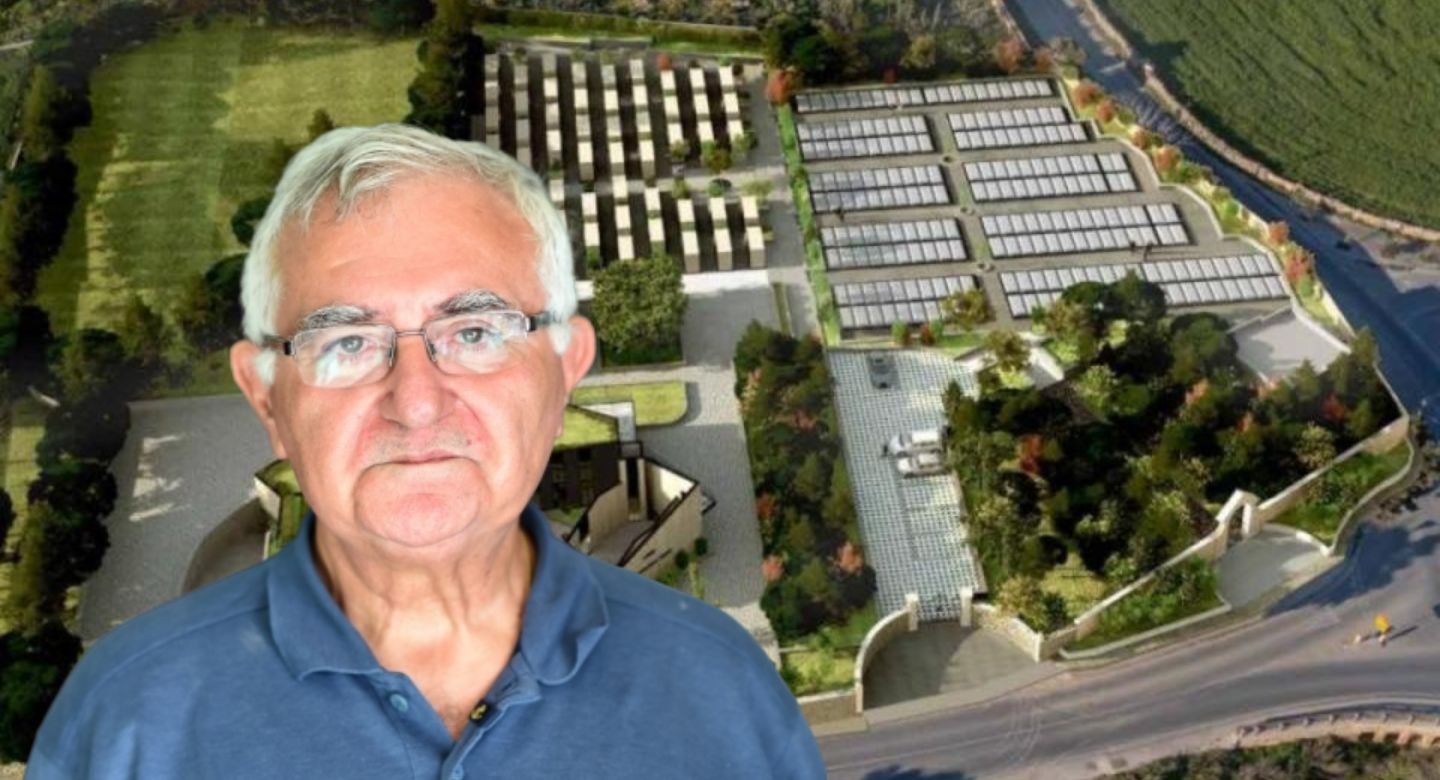
Controversial crematorium is in John Dalli’s ‘back garden’ – ERA missing in action
Tags
#accountability
#asset declarations
#GRECO
#Malta Prime Minister Robert Abela
#OECD
#Rule of Law report EU
#transparency
Other News
Kurt Farrugia ‘forgot’ to publish direct orders
Malta increases its dependency on imported electricity as population surges
Turkish bank fails to lift €25 million security tied to Shoreline’s dispute
Controversial crematorium is in John Dalli’s ‘back garden’ – ERA missing in action

Doctors demand halt to health centre testing before further talks

Malta last in EU Parliament attendance rankings
One in four licensed short lets concentrated in St Paul’s Bay and Sliema

Bonnici hails progress at housing project caught in crisis that sank Galdes

Employers slam Clyde Caruana’s cheap talk
PA’s handling of rival crematorium applications raises a stink
Super CEO’s wife seconded to Mater Dei top job

Nowadays politics is their private business. Keep your noses out of it. Their newly acquired assets and boosted income are “commercially sensitive information”. There’s hardly one Labour MP who has not become a multi-millionaire in the past 12 years. The establishment is accountable to no one.
Bingo.
Prosit CAROLINE imnalla tku u inthom li tikxfu il HAZEN TAL CABINET EZEMPJU RIDRECK GALDES.
NIDUBITA HEMMX WIEHED NADIF.
IL MAGORANZA TAL POPLU GAHAN ITEHOM FTIT FRAK U GHAX JISTAW JOHORGU JIEKLU PIZZA KUNTENTI
NAPULJUN JGHID LI L IKBAR GLIEDA LI KELLU KIENET BIEX JIPPROVA IFIEHEM INJORANT.
SEWWA QAL ZAMMIT LOUIS LI INIES QABDA GAHAN
Cap cap gahan
True but it’s easy to get around it by having a separation of assets with one’s spouse
U zgur li ghandu x jahbi! Min jaf kemm business fil bini qed jaghmlu bil mohbi, jinhbew wara isem l izviluppatur..dik hi l verita! Min fejn tahsbu li gabuhom il-miljuni li ghandhom? Ghalfejn tahsbu li gennu lil kullhadd fuq l kantun!? Ghalfejn tahsbu li mohhom biss f dan s settur? Ghalfejn tahsbu li kull rokna mimlija bini ikrah minghajr qatt ma saru policies u regolamenti? Ghalfejn tahsbu li rrid jaghmel l bidla fil-planning reform bill? Ghalfejn tahsbu li hallew lil kullhadd jibni fl odz?? Imbarazz kollha kemm huma! Ghal Malta qeghdin hemm msieken!! U l poplu sieket, kollox sar jghaddi ghax ta l ahhar mohhu wkoll fuq l kantun!!
All labour cabinet and back benchers have become corrupt scum.
The reason why Robert Abela chose this path of secrecy can easily be explained if one keeps his ex-minister Roderick Galdes’s recent case in mind.