
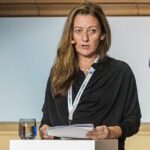
European Parliament President Roberta Metsola’s response to the arrest of Venezuelan leader Nicolás Maduro has the unmistakable air of studied caution at a moment that demands clarity.
By retreating into familiar language about democracy, international law and “peaceful outcomes”, the European Parliament president has offered little more than a procedural reflex to an extraordinary rupture in Venezuela’s political reality.
In a statement circulated on social media, Metsola said the Venezuelan people “deserve to live free after years of oppression”, reaffirming the European Parliament’s position that it does not recognise Maduro as the country’s legitimate, democratically elected president.
Her remarks underscored a familiar European refrain: that political change, however urgent, must be grounded in law and the expressed will of the electorate rather than imposed by force.
Her comments came as international reaction gathered pace following confirmation from US President Donald Trump that Maduro had been captured and removed from Venezuela in a surprise military operation.
The announcement has injected new volatility into an already fragile regional and diplomatic landscape, raising questions about sovereignty, precedent and the long-term consequences of intervention.
Metsola’s insistence that the Venezuelan people “deserve to live free” is unobjectionable, but it is also well-worn. Such formulations have echoed from Brussels for years, even as Venezuela’s democratic institutions were hollowed out and repression deepened.
Repeating them now, without seriously grappling with the implications of a foreign military operation kidnapping a head of state, risks sounding detached from events rather than principled.
More striking is what her statement avoids. Metsola does not address the legitimacy, risks or precedents of unilateral US action, nor does she articulate any concrete European role beyond rhetorical support.
By framing the coming days as “critical” while declining to say what Europe will actually do, she leaves the impression of an institution content to comment from the sidelines as others shape outcomes on the ground.
This caution may be deliberate. Yet leadership in moments of upheaval is measured not by adherence to diplomatic boilerplate but by the willingness to confront uncomfortable questions. Does Europe endorse the manner in which Maduro was removed? If not, what consequences follow? If it does, on what legal or moral basis? On these points, Metsola is silent.
The result is a statement that is simultaneously earnest and evasive. At a time when Venezuela’s future, and the credibility of international norms, are both at stake, the European Parliament’s voice sounds curiously faint, more concerned with reaffirming past positions than with shaping the present.
Metsola’s muted response to the extraordinary events in Venezuela stands in stark contrast to the more explicitly political language adopted by European Commission President Ursula von der Leyen, whose remarks, though also cautious, have articulated a clearer European stance on the unfolding crisis.
In a statement on social media, von der Leyen said: “We stand with the people of Venezuela and support a peaceful and democratic transition. Any solution must respect international law and the UN Charter.”
She stressed that the European Union was “closely monitoring the situation” and underlined the need to ensure that EU citizens in Venezuela could “count on our full support”.
That language, while still anchored in diplomatic restraint, conveys a more assertive position than Metsola’s broad reiteration of principles. Von der Leyen’s emphasis on solidarity with the Venezuelan people and a “peaceful and democratic transition” sets a tone that suggests a more active political judgment.
Whereas Metsola’s phrasing could be read as almost interchangeable with any standard call for democratic norms, von der Leyen’s comments locate Europe’s support explicitly with the people of Venezuela at a moment of acute geopolitical upheaval.
The difference matters. In a rapidly unfolding crisis with global implications, European leadership faces not only the challenge of affirming shared values but of articulating them in terms that resonate beyond abstract principles. Von der Leyen’s language, for all its caution, begins to do that; Metsola’s falls short of matching it in clarity or assertiveness.
The comparison exposes a deeper institutional imbalance. While Metsola speaks for a democratically elected parliament, her caution underscores how little power that institution is willing, or able, to project in fast-moving geopolitical shocks. Von der Leyen, heading a body often accused of technocracy, has paradoxically come to sound more political, more decisive, and more consequential.
Europe’s credibility abroad is shaped not only by its commitment to democracy and law, but by its capacity to articulate hard judgments when those principles collide with real-world force.
On Venezuela, Metsola has chosen reassurance over resolve. Von der Leyen, whatever one thinks of her instincts, has shown that European leadership need not be quite so reticent.


Sign up to our newsletter Stay in the know
"*" indicates required fields

Labour discovers manners

Essence de Kink

Abela doubles down


Why walls keep crashing down
Tags
#European Parliament President Roberta Metsola
#Maduro
#Venezuela
Other News
Labour discovers manners
Essence de Kink
Abela doubles down
Why walls keep crashing down

Dripping poison

Bonnie says, ‘name them, Clyde’

Pull the pardon

Our students can’t read – Labour is delighted

His Own Idea, He Said.
When desperation kicks in

Is Clifton Grima pushing a Trojan reform?
Metsola’s reaction was very appropriate for the present circumstances and balances of power in the world. It is called Real Politik.
You should not expect anything great from Metsola. Her specialty is posing for photos.
Those you quoted who are upset with what the USA did, do not live in the USA – nor do their families, Their families aren’t exposed to seeing some stand like zombies full of Fentanyl/Tranq, and the war on drugs (while a joke itself) can never be won if it is expected simply to eradicate the demand for drugs. This isn’t to say that what the USA did was “good” in terms of respect for international law. Rather, it is to say that the criticism comes from those who don’t have a horse in the race. On Metsola’s statement and the others – it is the other’s statements that are full of the usual baloney. “With full respect for international law” – really? Do governments that support terrorist financing, drug smuggling, weapons smuggling, human trafficking (the list goes on) “fully respect international law?” This isn’t whataboutism, but let’s be real please. The blathering of politicians isn’t the point here – for Trump, this is about the suffering of the American people. And there is plenty of it.
True. But irrelevant to thrust of article. Still illegal.
What if Greenland becomes part of the USA.
Would the EU still murmur the same reaction?
Mr. Osterman Real Politik demands the the following:
Realpolitik describes a pragmatic approach to politics.
A nation may choose to focus on its own interests and goals rather than purely moral or ethical considerations.
The focus is often on diplomacy and compromise in order to achieve high-level objectives, even, if, at times, at the expense of some less important goals.
Notice please the “ethical considerations”
A complete disregard to international law
Mr. OOsterman, real Politik requires the following:
realpolitik, politics based on practical objectives rather than on ideals. The word does not mean “real” in the English sense but rather connotes “things”—hence a politics of adaptation to things as they are. Realpolitik thus suggests a pragmatic, no-nonsense view and a disregard for ethical considerations. In diplomacy it is often associated with relentless, though realistic, pursuit of the national interest.
Note the “ethical considerations”