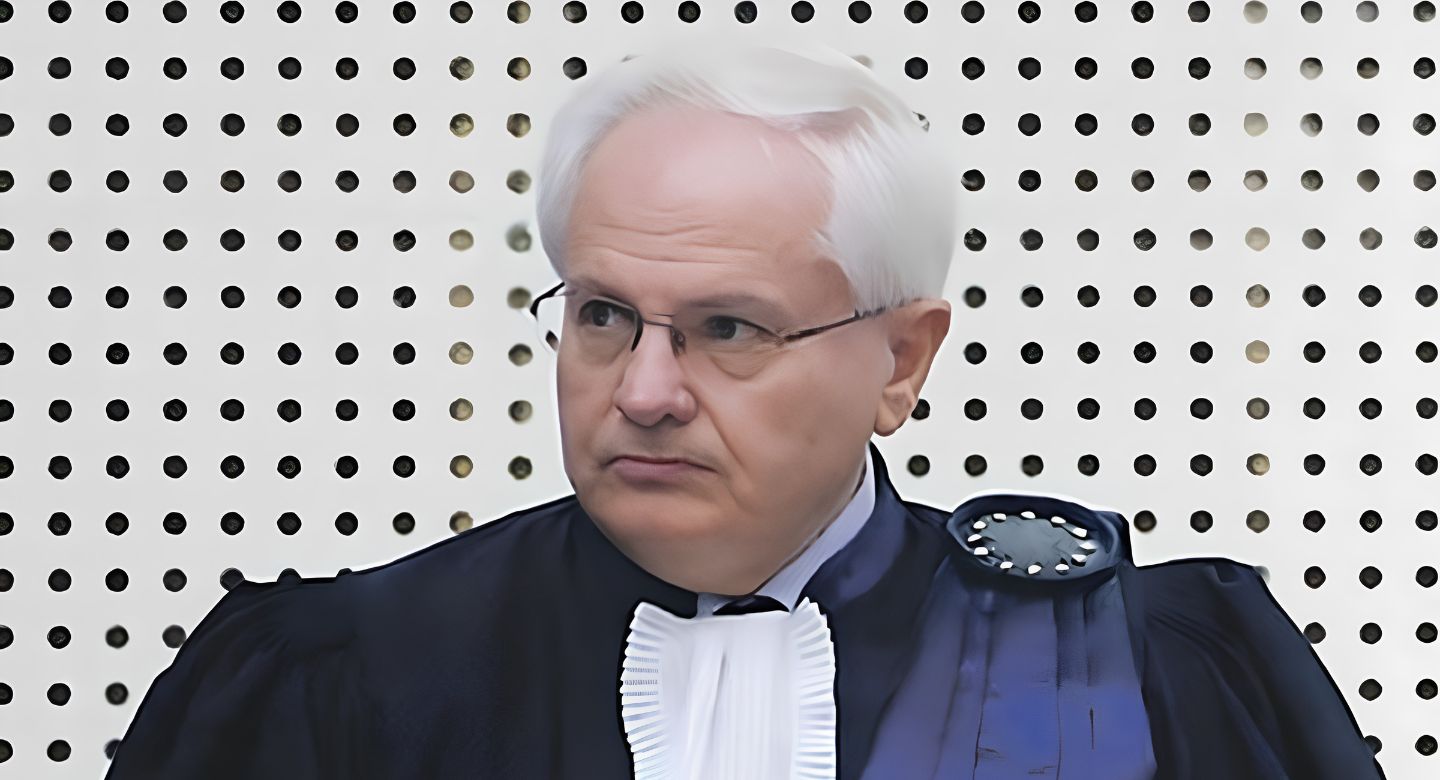

Former Chief Justice Vincent de Gaetano said he withdrew from chairing the Daphne Caruana Galizia inquiry because of Muscat’s government’s “constant attempts at interference”.
“In email after email, there was always one suggestion or another – how questions should be asked, by whom and so on,” De Gaetano said.
But former Prime Minister Joseph Muscat has come out fighting, vehemently denying there was any interference. He attempted to mock the former Chief Justice, saying, “De Gaetano has every right to interpret the facts as he understood them, like a scalded dog who thinks all water is boiling”.
So former Chief Justice De Gaetano claims Muscat’s government interfered. Joseph Muscat denies it. Who should we believe?
On the one hand, we have De Gaetano, a highly reputable, principled, and trustworthy figure in the legal and public spheres, both locally and in Europe, where he served for nine years as a Judge at the European Court of Human Rights. In 2024, he was appointed to the Board of Directors of the international Rule of Law Empowerment Association (ROLE), serving alongside globally recognised legal figures.
De Gaetano also previously served as Chief Justice and President of the Constitutional Court. He’s known for his strict impartiality, high ethical standards, strict adherence to the law, and his commitment to the truth.
Then we have Joseph Muscat, the 2019 Person of the Year in Organised Crime and corruption.
Muscat had said he would leave “no stone unturned” to establish who was behind Caruana Galizia’s assassination. He’s now insisting he never interfered with the inquiry. Muscat thinks time clouds the memory enough for him to ram his alternative reality down our throats.
Unfortunately for Muscat, the real facts are indisputable. Muscat resisted that public inquiry for almost two years. He did everything in his power to prevent it. As early as 19 October 2017, four UN experts called for a “prompt, thorough and independent public inquiry”. Muscat ignored them.
From December 2017 onwards, Caruana Galizia’s family lawyers advised that Malta’s obligations under Article 2 of the European Convention on Human Rights required an investigation independent of the authorities potentially implicated in the institutional failures that enabled her murder. The family spent almost two years pleading for a public inquiry. Muscat insisted it was unnecessary or premature.
By 30 November 2018, the family’s lawyers warned they would resort to the European Court of Human Rights. On 26 June 2019, the Parliamentary Assembly of the Council of Europe adopted Resolution 2293 requiring Malta to establish that public inquiry within three months.
Just five days before the deadline expired, Muscat finally relented, but only after sustained international pressure.
Muscat didn’t set up that inquiry voluntarily. He did so under duress. When he did, he tried to manipulate it from the start.
He selected Professor Ian Refalo, who acted as legal counsel to the FIAU and represented the government in several cases, including its opposition to Jonathan Ferris’ request for whistleblower status. Refalo was also an adviser to the Justice Ministry. He represented Adrian Hillman, whose alleged financial relationship with Keith Schembri was under investigation.
Another choice was Anthony Abela Medici, a former Labour Party candidate. Muscat appointed him Commissioner for Voluntary Organisations. The Caruana Galizia family had to fight to have both men removed.
After resisting that inquiry, Muscat tried to rig it. The original terms of reference he drew up were wholly unacceptable and failed to provide adequate safeguards for the inquiry’s independence.
Muscat, through Owen Bonnici, then asked De Gaetano to chair the board. But according to the former European Court of Human Rights Judge, Muscat’s government wanted to control how questions were asked, who should ask them, how the inquiry should regulate its procedure and even that there should be two separate reports at the end – one for the public and one for the prime minister. De Gaetano said he felt he was “being used”.
When Muscat was finally forced to appoint different board members, he vented his anger at them when he was called to testify. On 4 December 2020, Muscat accused the board of going beyond its remit and of calling irrelevant witnesses. He accused them of leading “a political exercise” and of having “failed miserably”.
Muscat was no ordinary witness. He was the prime minister under whose administration those institutional failures occurred. He was the former superior of several key witnesses. His attempt to delegitimise the entire inquiry while it was hearing evidence was nothing more than an attempt to intimidate, condition, and politically discredit the board.
Now Muscat has turned on the inquiry board member Joseph Said Pullicino. Muscat claimed he only accepted Said Pullicino because he expected the other two members to provide a “counterweight” to him, accusing them of being weak.
“Weak” because they did their duty, followed the evidence and produced a unanimous report condemning the glaring failures of his government – instead of performing the counterbalancing political function Muscat expected them to.
Muscat’s comments are institutionally, ethically and morally deplorable. Muscat viewed the inquiry as a political game he could control and from which he would emerge “invictus”.
Now that he’s realised he’s no longer in control, Muscat is attacking two former Chief Justices and the two respected Judges who served on that inquiry board. That’s not only improper and in appalling taste, but it’s also corrosive of judicial independence and symptomatic of his vindictiveness.
Muscat’s wild accusations reveal his growing isolation and bitter frustration that, no matter how hard he tries, his many skeletons keep tumbling out of the closet.


Sign up to our newsletter Stay in the know
"*" indicates required fields

Is Clifton Grima pushing a Trojan reform?

When it’s Ricky who loves you

Scorched by sycophancy

The call for a radical justice reform

Tags
#de geatano
#inquiry
Other News
Is Clifton Grima pushing a Trojan reform?
When it’s Ricky who loves you
Scorched by sycophancy
The call for a radical justice reform

Not shutting up

So what’s changed?

Demolishing accountability

WELL, HE WOULD SAY THAT, WOULDN’T HE?
Amathia – the less I know the better
Who was being surveyed, and why?

Minister Bedingfield – the worst expression
Gaetano had complete credibility and was a threat to the regime. and now is a thorn in the side. Narcissists believe only their version of the truth and when your expensive lawyers inform you that you are still in the firing line, you fight back, in a typical narcissistic way, nothing changes. corruption starts at the top. leaders sometimes believe they are smarter than everyone as they are at the top. unfortunately, others aspire to the position and so keep looking for the creack in the armour and its there. time will tell.
Where I come from Muscat’s name represents the Mafia, nefarious organisations within government, a continuing effort to avoid justice at all costs. Hopefully he and his wife will get the Karma that they are long overdue.