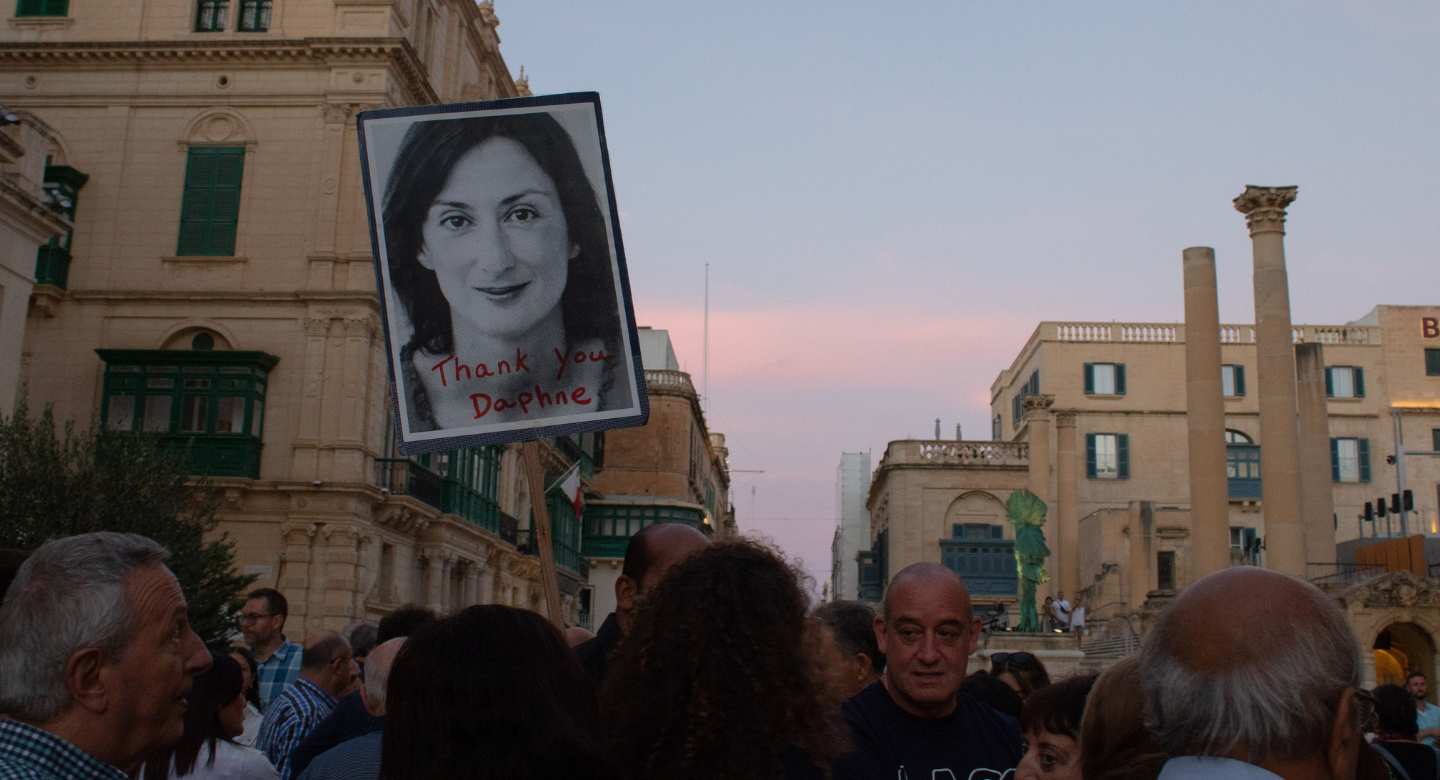

In a particularly heavy afternoon during the murder trial of Daphne Caruana Galizia, in which alleged mastermind Yorgen Fenech stands accused of voluntary homicide, jurors sat through multiple testimonies from first responders who were among the very first to arrive on the scene of the crime.
After Assistant Commissioner and head of Major Crimes Unit Keith Arnaud concluded his lengthy testimony on Wednesday morning, jurors heard from two other police officers who were the first on the scene, and former Netherlands Forensics Institute (NFI) crime scene investigator Marcel Van Beest.
Former AFM Brigadier and explosives expert Jeffrey Curmi, who did not directly participate in the magisterial inquiry about the murder but was nonetheless tasked with carrying out a comparative analysis of various car bombings in Malta., also testified towards the end of today’s hearing.
Superintendent Antoine Cilia, who in 2017 was deployed with the Rapid Intervention Unit, said his involvement began when the first report of the car bombing came over police radio. He was in his office at Ta’ Kandja at the time and that only four RIU vehicles happened to be available when the bombing occurred.
Cilia told the court that the first three police officers were on site by 3.10pm, while he arrived at 3.19pm. He read from the report he filed in the immediate aftermath of the attack.
He recalled seeing debris from the vehicle as well as the victim’s remains, while Civil Protection Department personnel were extinguishing the burning car and smaller grass fires near the explosion site.
The witness said the vehicle was “completely destroyed” and that the blast damage appeared to radiate outwards from the car, an impression which was later confirmed by post-blast experts. Cilia said the scene was cordoned off to ensure evidence was not tampered with.
Police constable Melvin Cefai, who was stationed in Mosta at the time, also testified as one of the first responders. He said officers could not do anything to save the victim because the vehicle was engulfed in flames. It was completely destroyed as a result of the damage caused.
“We tried to use fire extinguishers, but we couldn’t keep up with the blaze,” Cefai told the court. He said Matthew Caruana Galizia was in a state of panic and shock, and that officers sought to calm him down as best as they could.
Van Beest, who worked with the NFI at the time, then explained how the Dutch forensic team assisted Maltese police and the Armed Forces of Malta in processing the scene.
He said investigators divided the site into 28 sectors, starting from the source of the explosion and expanding outward. Evidence was tagged, photographed, bagged and documented through what he described as a closed-loop chain of custody system.
The team searched for metallic and electronic components, possible parts of the explosive device, the victim’s remains, and any material that could help reconstruct what had happened. Drone footage was also used.
Van Beest said swabs were taken from the suspected explosion site and the crater to identify explosive residue. Jurors were shown a visual crime scene dossier compiled by the NFI, including photographs of the blast trajectory, burn marks, vehicle debris and damage.
The NFI concluded that an explosive device had been placed under the driver’s seat, based on the damage caused to the vehicle and the way the car’s sheet metal bent outward from the blast.
Curmi, who was testifying by video link from his office within the Maltese embassy to the Netherlands, said he had declined to be appointed as an expert in the murder inquiry and had suggested bringing in foreign experts instead. He was later asked to compare the bomb used in Caruana Galizia’s murder with other bombings in Malta.
Curmi said he compared nine magisterial inquiries and found links with two other cases: the 2017 attempted murder of Romeo Bone and a 2018 bombing in Għargħur.
There was a “significant probability” that the person who manufactured the bomb used to kill Caruana Galizia also manufactured the devices used in those cases, he said.
In the interest of public safety, The Shift is withholding the detailed explanation which Curmi gave when describing how various types of Improvised Explosive Devices (IEDs) are made, and what investigators look for when carrying out a comparative study.
The trial continues on Thursday morning.
Sign up to our newsletter Stay in the know
"*" indicates required fields

Verdict: 8-1 – Yorgen Fenech not guilty


‘May God help you in your decision’: Fenech jury begins deliberations
Judge expected to wrap up trial tomorrow

Judge: Theuma’s pardon does not make his testimony automatically true
Tags
#Armed Forces Of Malta
#Civil Protection Department
#Daphne Caruana Galizia
#Jeffrey Curmi
#keith arnaud
#malta police force
#Marcel Van Beest
#Matthew Caruana Galizia
#RIU
#Yorgen Fenech
Other News
Verdict: 8-1 – Yorgen Fenech not guilty
‘May God help you in your decision’: Fenech jury begins deliberations
Judge expected to wrap up trial tomorrow
Judge: Theuma’s pardon does not make his testimony automatically true

Where are the messages between Keith Schembri and Keith Arnaud? – defence asks
Theuma promised pardon before Fenech’s arrest, defence tells jury

Prosecution tells Fenech jury it wants ‘the whole truth’ uncovered

‘Keith Schembri effectively gave himself a pardon’, Fenech defence claims
Fenech defence: Evidence pointing to Keith Schembri was deliberately blocked by police
Fenech defence alleges ‘cover-up and frame-up’ as testimony ends

‘If I could turn back time’: Fenech challenged over failure to report murder plot
Excuse my ignorance. Since for the actual atrocious murder of Daphne Caruana Galizia, 5 men have already been convicted, why is Fenech’s trial for being the “mandant” burdened with the actual murder details? Does not the accusation he’s facing preceed all this? Or is it to hopefully find a loophole for him to get off the hook?
Because the trial has to operate under the assumption – or rather, the need – for the jurors to forget all they know about the case and focus solely on the evidence at hand. It has nothing to do with loopholes. It’s about going over the evidence, piece by piece.