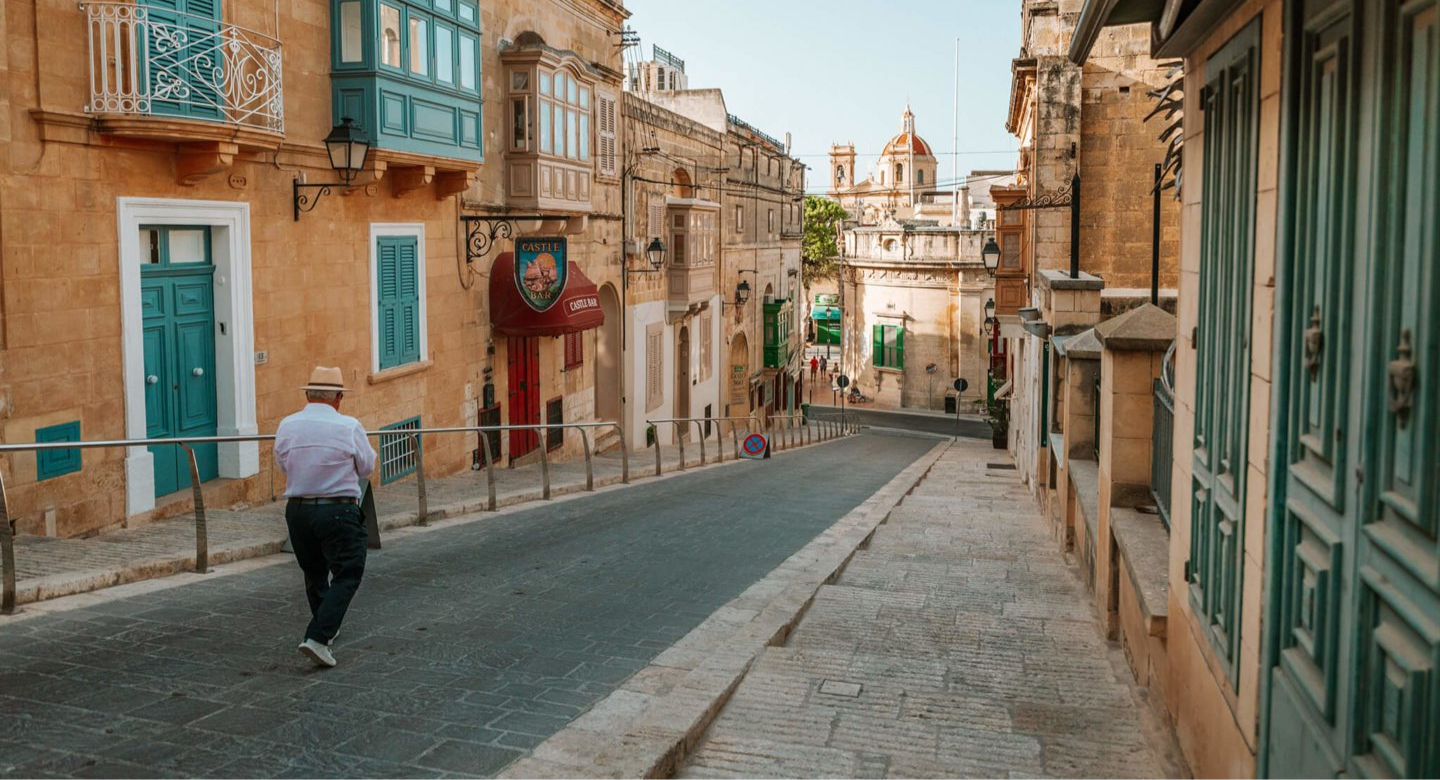

There is something almost indecently neat about the suggestion that Salvatore Riina – architect of massacres, butcher of judges, mastermind of motorway bombs – may have spent part of his fugitive years not in some dank Sicilian cave but in Gozo, inhaling sea air and enjoying the anonymity of a man whose greatest crime was double‑parking.
The ‘Capo di Tutti Capi’ (the boss of all bosses) as the unremarkable tourist.
The claim arrives dressed in the usual theatrics of Italian investigative television, breathlessly carried in print and repeated that way here, complete with Massimo Giletti’s grave stare and the conveniently revived memory of pentito (repentant) Gaetano Grado.
After years of strategic silence, Grado now recalls two villas, a quiet routine, a man who was polite, discreet, forgettable. The kind of neighbour who might hold the door open for you, not blow up half the judiciary.
And, inevitably, the local embellishment. Sources insist they remember him taking his morning espresso and pastizz (pastry) at Tapie’s in Victoria. None of them, when pressed, actually saw him.
But this is not really about whether Riina ever set foot in Gozo, or whether he ever occupied a villa now spoken of with the embarrassed caution of a family scandal. One of those villas, we are told, now belongs to Anton Refalo – ‘Twanny ta’ Bronka‘ to those who prefer their politics with a parish‑level nickname.
Refalo was quick to insist he acquired the property years later. The report itself said so; he hardly needed to. His reaction had that unmistakable quality of the lady protesting rather too much: a burst of indignation so emphatic it risked doing the rumour‑mongers’ work for them.
A touch more restraint might have served him better, especially since he had no need to be so indignant, given that he had nothing to do with renting the property to Riina.
But the villa is a distraction. The point is the atmosphere.
This entire episode, with almost cinematic precision, drops Malta back into the frame it knows too well: a jurisdiction where opacity is habit, regulatory elasticity is a feature, not a flaw, and the shadow of organised crime never quite feels foreign.
Hovering over all of this is the memory of Daphne Caruana Galizia. She spent years explaining, to the fury of the professionally offended and the perennially offensive, that Malta’s problem was never a single scandal. It was the pattern. The system. The cultivated fog. What many dismissed as exaggeration was, in fact, architecture.
Truth be told, no court has certified Riina’s Gozitan retreat. No archive has produced a passport stamp, a lease agreement, or an espresso receipt preserved in forensic amber. There is no neat evidential packet tied up with a bow for the comfort of the pedants.
But then, we have never needed a smoking gun to earn a reputation. Reputation, the way they (not in my name) achieved it for us, is cumulative. It is built on the steady, mechanical recurrence of stories in which improbability, power, silence and convenience all seem unusually familiar with one another.
And that, regrettably, is the only part of this story that requires no imagination at all.
Sign up to our newsletter Stay in the know
"*" indicates required fields
When it’s Ricky who loves you

Scorched by sycophancy


The call for a radical justice reform


Not shutting up
Tags
#Gaetano Grado
#Gozo
#Mafia
#Minister Anton Refalo
#Salvatore Riina
Other News
When it’s Ricky who loves you
Scorched by sycophancy
The call for a radical justice reform
Not shutting up

So what’s changed?

Demolishing accountability

WELL, HE WOULD SAY THAT, WOULDN’T HE?
Amathia – the less I know the better
Who was being surveyed, and why?

Minister Bedingfield – the worst expression
Those questions

Toto ronA KIEN xi QAMMIELGHAX GHAND IT TAPIE IL GIMGHA L OHRA KAFE FIT TAZZA U TOAST IZ ZOMLOK ONE EURO U PASTIZZ 50 CENTS
Not to sound insulting to this keyboard warrior, all the above squeezes dry…we who know and have seen TOTO’ every monday afternoon come to pick his “Corriere dello sport” from a small stationaty shop in palm street, driving a white LHD Merc 190D; knew he was living in a rented villa (belonging to one of his clan ??) in the valley in ghasri, opposite the basilica…considering that this guy used to come & go to sicily with impunity….obviously we did not know who he was at the time…
Exactly. Thats was the rumor among locals, that he lived in a villa in Ghasri.
It’s a wonder he didn’t kidnap Salvador and put him at his poolside as an artefact?