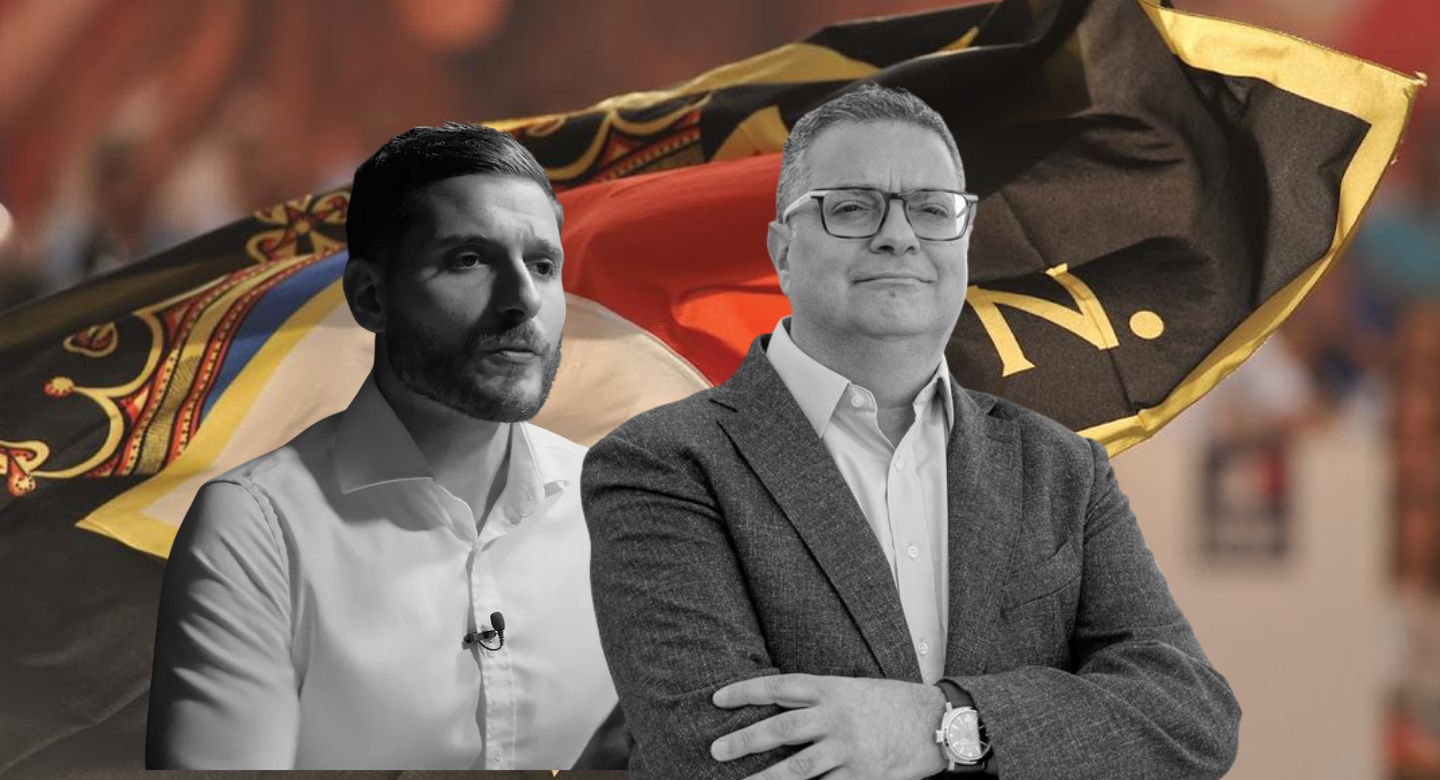
The race between Adrian Delia and Alex Borg for the PN leadership has revealed that what is at stake is not merely a contest between two personalities, but a choice between gravitas and showmanship, between substantive vision and media veneer.
The choice is between the two. It is what it is. And in Malta’s electoral system, as it stands, having an Opposition Leader who can deliver is crucial, especially after Bernard Grech’s dismal performance.
Delia, for all the bruises of his first tenure as party leader, returns to the fray with a renewed seriousness. His platform is clear-eyed and rooted in institutional realities.
Delia does not speak of platitudes but of plans—proposing concrete reforms to the party’s governance, a disciplined fiscal approach to tackle mounting party debt, and a clear strategy to preserve key assets.
His emphasis is not on slogans but on structural repair. In short, Delia has returned with recommendations rather than rhetoric.
Borg, on the other hand, has thus far treated the leadership campaign more as a branding exercise than a moment of political reckoning.
His interventions have been characterised by a striking vagueness, peppered with empty promises of ‘modernisation’ and ‘change’ without a clear articulation of how either is to be delivered.
His calls for ‘generational renewal’ ring hollow when stripped of substance, more evocative of a marketing campaign than a political programme.
There is, in Borg’s campaign, a performative gloss that betrays a lack of political maturity. His statements, often flippant and self-referential, suggest a greater concern for optics than outcomes.
The contrast could hardly be more jarring. While Delia speaks of audit committees, transparent budgeting, and strategic asset management, Borg offers vague appeals to a ‘new direction’ without anchoring them in policy or political realism.
Every time Borg is asked a clear question about his stand on an issue, he waffles and mumbles, and repeats the line that he would “create a committee to assess it”, clearly reluctant to take a stand on anything except his clear support for developers, as he did on the controversial Fort Chambray project.
While Delia speaks with the authority of hard-earned experience—however turbulent—Borg appears to be playing at politics, mistaking visibility for vision.
The Nationalist Party, still struggling from years of internal disarray, is not in need of a poster boy. It needs a reinvention—a sober, painstaking reconstruction of its moral authority, organisational coherence, and relevance in the face of Labour’s electoral dominance.
It is difficult to see how Borg, with less than three years in Parliament and no record of serious political achievement, is remotely equipped to undertake such a task. His inexperience is not merely a liability in strategic terms; it is emblematic of the very superficiality the party must now move beyond.
Delia’s critics are right to remember the fissures of his first leadership. But they would be wrong to assume that those scars have left no wisdom in their wake. He has emerged from political exile not embittered but sharpened—more focused, more deliberate, and less willing to indulge the petty theatrics that have plagued the party’s recent history.
The party may yet reject him, but it cannot dismiss the validity of the questions he is raising: What kind of leadership does the PN truly need? What kind of leader is willing to risk unpopularity in order to rescue the party from irrelevance?
This is important because of the way the electoral system – which needs serious addressing – is currently set. Parliament’s power is in the hands of these two parties. It should certainly be reformed to allow independent candidates and third parties to stand a chance, but, at the moment, this is what we have.
Borg’s candidacy, for all its Instagram polish and youthful exuberance, fails to provide answers. If anything, it encapsulates the very complacency that has left the Nationalist Party stranded between nostalgia and novelty, with neither anchoring its direction.
Malta’s Opposition does not need a media darling. It needs a leader who understands that reinvention is not a campaign slogan, but an act of discipline, courage, and political endurance.
Until Borg demonstrates any of these qualities, his bid remains what it currently is: a youthful indulgence in a moment that demands adult leadership.
Sign up to our newsletter Stay in the know
"*" indicates required fields
Owen Bonnici: From human rights violator to echo chamber-in-chief

With Labour under fire, the PN still can’t find its voice

Titlef l-appell il-biljunarja mill-Angola akkużata bil-ħasil tal-flus b’14-il kumpanija f’Malta


An epic failure of blockbuster proportions
Tags
#Adrian Delia
#Alex Borg
#PN Leadership race
Other News
Owen Bonnici: From human rights violator to echo chamber-in-chief
With Labour under fire, the PN still can’t find its voice
Titlef l-appell il-biljunarja mill-Angola akkużata bil-ħasil tal-flus b’14-il kumpanija f’Malta
An epic failure of blockbuster proportions

‘Je suis Charlie’ my foot

The light of a new dawn

Leaked recordings: Who benefits?

It is our duty to question

Get off that high horse, Bobby

Justice before clickbait

Well done for your correct analysis. As time goes by the difference between them is becoming more evident
Great article! Exactly as it is!
Hawn Eluf ta’nies ta rieda tajb li jsegwu is-shift f’dan il-pajjiz zghir mimli b’nies gahan.
Il poplu Malti ghandu bzonnkhom ukoll f’din il-glieda buex ingibu lura d-demokrazija f’pajjizna fl’istituzjonjjiet kollha specjalment il qrati u l pulizjja.
Kullhadd jrid jaghti semu. Specjalment meta tkun qed tikumbatti ma nies li mohhom u l-poter biex isalvaw bniedem kriminali u korrott.
Tiftakruh l-kliem li kienu ex priministri, li jekk hemm bzonn anke ghand ix-xitan imorru.
Jiena wahda nghid li t-talb huwa l’akbar arma li tusta isalvana min din il-hajja materjalista li gabuna fiha il-politici li ma jemmnu b’xejn hlief il-gid tad-dinja u l-flus.
I never was a sympathiser of Delia, although the current situation demands even the best of the worst, and your article is surely an eye opener and an excellent analysis.
You may have convinced me. however I still have to hear a genuine comment by delia about daphne caruana galizia, a withdrawal of his ‘bicca blogger’ comment and a commitment to honour her heroism in defending the independence of the press and exposing political and business corruption in all spheres.
Acqua passata
Unfortunately, neither Adrian Delia nor Alex Borg has what it takes to turn the PN into a serious opposition force.
Delia comes with too much baggage and has shown he puts himself before the party. Still, if I had to choose, I’d go with him — at least he has the Vitals case under his belt, though much of that win was thanks to civil society.
As for Alex Borg, I agree with Caroline Muscat: all style, no substance. Slogans won’t save the PN.
The party needs to face the fact it’s no longer the dominant force of the ’90s. If it wants to stay relevant, it must connect with NGOs, civil society, and ordinary people.
Each time the PN stays silent or vague on policies favouring the rich, another voter decides to stay home.
And let’s be honest — unless Malta’s electoral system is reformed to give smaller parties a real chance, our democracy will keep stagnating.
Araw kazin ta’ Jon Mallia with Alex Borg u garanzija li titqalla tisimghu! Jaqbez b passjoni kbira ghal l izviluppaturi w jghid li progett ta mijiet ta’ blokkok kantuni ser ikun progett ta kwalita u ta bzonn ghal Ghawdex u ghax ser jimtela appartamenti ser inkunu qed nirrestawraw l patrimonju taghna! Xi bniedem vojt u qarrieqi! Kieku l PN sura diga telqu l-barra!! Dal bniedem qed juri lil kullhadd x isarraf! Tal-biki!!
It tnejn li huma mhux ha jwasslu ghal rebha nazzjonalista elezzjoni ohra. Tajjeb qedin.mela irridu nistennew 5 snin ohra. Ara fiex gibtuh il pn. Il pn ghandu bzonn inaddaf hafna nies u ma jhalliex lil kulhadd johrog elezzjoni ohra. Zaghzagh b idejat godda irridu u l iskaduti jaghmlu pjacir lil kulhadd u jwarrbu.
If Alex Borg is elected it will definably be game over for the PN. He is not mature enough to lead such a party. Your article hit the nail on the head