
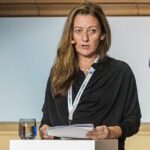
David Griscti, former president of the Azad Foundation and long-time Nationalist Party (PN) supporter, has publicly thrown his weight behind Adrian Delia, describing the former PN leader as “mature, loyal and ready” to take the helm once more.
In a wide-ranging interview, Griscti laid out a vision for a reformed PN—one that must distance itself from big business and focus on transformative policies for the common good.
“Adrian Delia has grown tremendously,” said Griscti. “He understood, much like Eddie Fenech Adami did, that leadership is not a solo act. Despite the pressure he was under, he rolled up his sleeves and fought battles that many others walked away from—and he won,” referring to the Vitals scandal that Delia won in court and got three public hospitals returned to the public.
Griscti, who led the Azad Foundation from 2013 to 2017, recounted his political journey with the PN, beginning as a teenager and spanning decades. While he had stepped away from active involvement in recent years, he said his belief in the PN’s role in shaping Malta’s future remains strong—but only if the party adapts.
A party at a crossroads
Griscti was candid in his criticism of short-term policies pursued by both major parties in recent years, particularly the Labour government’s focus on GDP at the expense of quality of life.
“We’re seeing economic development being prioritised over investment in services,” he said. “Overcrowding is a real issue. The pursuit of short-term profits is undermining the long-term well-being of the Maltese people.”
He argued that the PN has a duty to break from this model and offer a new political vision that appeals to the growing number of disenchanted voters.
“There’s a large section of the electorate that feels unrepresented,” he explained. “The PN must reorient itself away from partisanship and towards citizen-focused governance.”
Central to that transformation, he suggested, is the need to create an independent agency on human rights—a proposal put forward by Delia. The agency would ensure complaints of maladministration or discrimination are resolved within a year, with automatic redress if deadlines are not met.
Defending Delia
Griscti also took aim at the allegations that plagued Delia’s early tenure as PN leader, particularly in 2017 when questions were raised about his legal work for clients owning properties in London – claims that he looked into in detail.
“If there was substance to those claims,” he said, “the Labour government—who had every incentive—would have acted. They didn’t.”
Pressed on whether this was due to institutional inertia rather than innocence, Griscti conceded systemic failures in law enforcement, but remained firm: “There’s no evidence. And we cannot allow public discourse to operate on guilt by association.”
Griscti also dismissed criticisms surrounding Delia’s past tax issues, calling them “the kind of bureaucratic disputes that many professionals face, eventually resolved.” He argued that such matters had been unfairly amplified, at times with the help of media scrutiny, but never substantiated.
Track record and leadership qualities
Far from dwelling on Delia’s past, Griscti focused on what he sees as his accomplishments in recent years. He credited Delia for spearheading the legal battle that saw the controversial hospitals deal overturned, describing it as a “victory not just for the Nationalists, but for the Maltese people.”
“He fought tooth and nail—alone—for the people,” Griscti said. “And that, in my view, is leadership.”
Griscti also praised Delia’s tenure as PN leader for financial reforms, including significantly reducing the deficit of the party’s media arm. “Despite immense internal resistance, he delivered,” he said. “Loyalty under pressure is rare in politics.”
A word on Alex Borg
Griscti was unequivocal in his assessment. “Alex Borg is a strong communicator,” he said, “but communication alone is not leadership. I haven’t seen maturity or substance in his proposals.”
Recalling Borg’s reaction to criticism over the Fort Chambray controversy, Griscti said the young MP responded “hysterically,” adding that he does not yet possess the fortitude required for national leadership.
Looking forward
Griscti believes the PN must make a deliberate, considered choice about its future—one based not on novelty or image, but on proven ability.
“Leadership is about track record, about substance, about being able to deliver under pressure,” he said. “Adrian Delia has shown he can do that. He has the tools, the experience, and the vision.”
He added that generational change in the PN should not be about age, but about values and attitude. “This is a pivotal moment. The party is obliged to learn from the past and chart a course for the future.”
Griscti ended on a hopeful note, invoking the spirit of former PN leaders: “As Eddie Fenech Adami once did, we need leaders who put the citizen first and rise above partisanship. I believe Adrian Delia is once again that kind of leader.”
Sign up to our newsletter Stay in the know
"*" indicates required fields

Fighting impunity: Casa for stronger EU anti-corruption laws

Army veteran tells his story: AFM ‘from bad to worse’


Teenage workplace victim Matthew Bartolo’s family: ‘instead of helping us, they’re breaking us’

Repubblika: ‘we can’t go back to normal as if nothing is happening’
Tags
#Adrian Delia
#Alex Borg
#David Griscti
#PN Leadership
Other News
Fighting impunity: Casa for stronger EU anti-corruption laws
Army veteran tells his story: AFM ‘from bad to worse’
Teenage workplace victim Matthew Bartolo’s family: ‘instead of helping us, they’re breaking us’
Repubblika: ‘we can’t go back to normal as if nothing is happening’
Malta’s prison-to-prison pipeline: a community living in terror

‘Self-regulation is destined to fail, we need an international regime,’ climate change expert says

Medical professionals distance themselves from doctor associated with anti-vaxxer groups

Public inquiry conclusions ‘could prevent murder of other journalists’ – Reporters Without Borders

iGaming industry’s future hinges on government ensuring greylisting ‘doesn’t drag on for years’

EXCLUSIVE: ‘Unregulated money flow in politics undermines democracy’


‘It’s an uphill battle, but it’s possible’

It needs to stop being a party pf lawyers