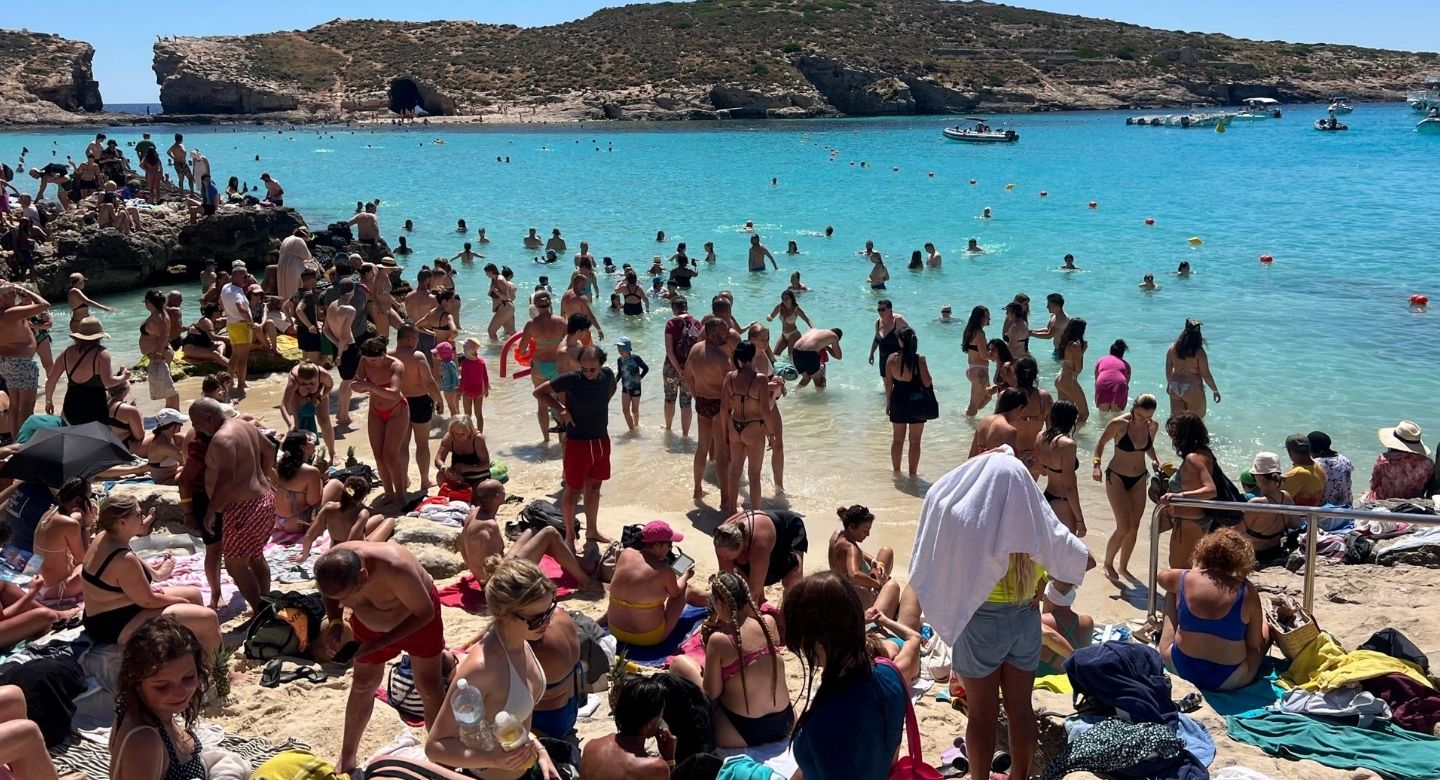

Malta could need to attract almost two million additional tourists every year to sustain a massive pipeline of new hotels and extensions submitted before the government’s latest tourism restrictions took effect, The Shift can reveal.
The Shift is informed that Planning Authority applications validated by 15 June 2026 include proposals for approximately 30,000 additional hotel beds. The figure covers both new hotels and extensions to existing establishments but excludes short-let apartments like Airbnb’s.
The unprecedented surge in applications emerged despite years of warnings that Malta already has more tourist accommodation than it can sustainably fill and that further expansion would place even greater pressure on the country’s crumbling infrastructure.
Based on an average stay of between five and six nights, filling all 30,000 new beds throughout the year would require between 1.8 million and 2.2 million additional tourist arrivals annually.
This scenario raises further questions about the government’s volume-driven cheap tourism model and whether Malta’s infrastructure can sustain the number of visitors needed to make the proposed hotel investment commercially viable.
In 2022, a carrying-capacity study conducted by Deloitte found that Malta would need to attract 4.7 million tourists annually by 2027, each staying fewer than seven nights, to absorb the accommodation capacity already projected at the time.
The new 30,000-bed applications would add millions more guest nights to that calculation, with industry stakeholders calling the situation ‘madness’.
At 70% occupancy, the proposed capacity would generate approximately 7.7 million additional tourist nights annually. This would intensify existing pressure on Malta’s roads, electricity and water networks, sewage infrastructure, waste-collection system, beaches and public space.
The government had announced new Tourism Accommodation Regulations in November 2025, presenting them as a shift from quantity towards higher-quality tourism.
The regulations were formally published on 15 April 2026 and came into force two months later, on 15 June.
Under the reform, the Malta Tourism Authority will no longer favourably consider new hotels, extensions or redevelopments exceeding the height limits in local plans. New hotel projects are capped at 200 rooms and must be rated at least three stars.
However, the reform did not impose a moratorium on new hotels or establish an overall limit on Malta’s bed stock.
The transition period also left projects already in the system to be dealt with through the applicable transitional arrangements, including the possibility of building two extra floors over and above the planning rules.
The Shift asked the MTA to state how many new hotels and additional beds had been submitted by the cut-off date. Carlo Micallef, the MTA’s CEO declined to provide the figures, instead directing the questions to the Planning Authority.
The Shift subsequently asked PA chief executive Johann Buttigieg how many hotel applications were validated by 15 June under the previous regime. It also requested a list identifying the category and location of each project and the number of beds proposed.
Buttigieg did not reply despite repeated reminders.

The Shift is informed that in the two-month interval between publication and implementation of the new rules, there was a rush of applications filed by developers.
In 2023, parliamentary information revealed that 21 hotels containing 2,256 beds had been approved during the previous two years, while another 20 applications remained pending.
Research published by The Shift in 2024 subsequently found that the PA was considering at least 99 new hotel applications. They were concentrated in already heavily developed tourism areas, including Sliema, St Julian’s, Valletta, Gżira, St Paul’s Bay and Gozo.
Malta Hotels and Restaurants Association president Tony Zahra had described the continued expansion as “complete madness”, warning that overcapacity was forcing some four-star hotels to sell rooms for as little as €45 a night during the quieter months.
Despite those warnings, Zahyra was completely ignored, with the latest revelations suggesting that tens of thousands more beds could still be added before the government’s promised shift towards quality has any meaningful effect.
Sign up to our newsletter Stay in the know
"*" indicates required fields

Galdes ‘parked’ at National Skills Council


MTA in financial meltdown

International press freedom groups urge Abela to open media bill to scrutiny
Buttigieg stops short of direct action against Carlo Stivala’s new illegal structure
Tags
#hotels
#permits
#Planning Authority
#policy
#rush
Other News
Galdes ‘parked’ at National Skills Council
MTA in financial meltdown
International press freedom groups urge Abela to open media bill to scrutiny
Buttigieg stops short of direct action against Carlo Stivala’s new illegal structure
Revealed – Minister awards €53,300 property lease direct order to his own agency chair
PA postpones Saqqajja flats decision amid ground stability concerns

Convicted PL executive candidate given promotion before election

Galdes points fingers at Owen Bonnici over latest social housing standstill

Clyde Caruana misses deficit target by €312 million

PBS ‘hides’ Ricky in response to PN court case

Bank accused of misleading prospective bond investors

Just what we need. More tourists in a third world country that is not even capable of guaranteeing proper electricity supply. A country that is served by third country nationals who are treated like slaves and who are allocated bed space every 8 hours. A country that now looks like an irregular slab of concrete with no open spaces, no green areas, over crowded pedestrian streets, over commercialized beaches, traffic congestion, insane noise and light pollution and which frankly has way too many people on it, including way too many unruly and cheap tourists. Malta has well and truly been raped of all its natural beauty and charm, and now, yet another nail in its coffin. Such a shame! What we do need is a change in direction, a reassessment of the current status, and a five year plan to restore the country and undo some of the damage that this country, which is now gorging on empty calories has, and continues, sustaining.
Great! Just what the island needs, not.
That will result in additional cars on the road, more traffic for the residents trying to live their life.